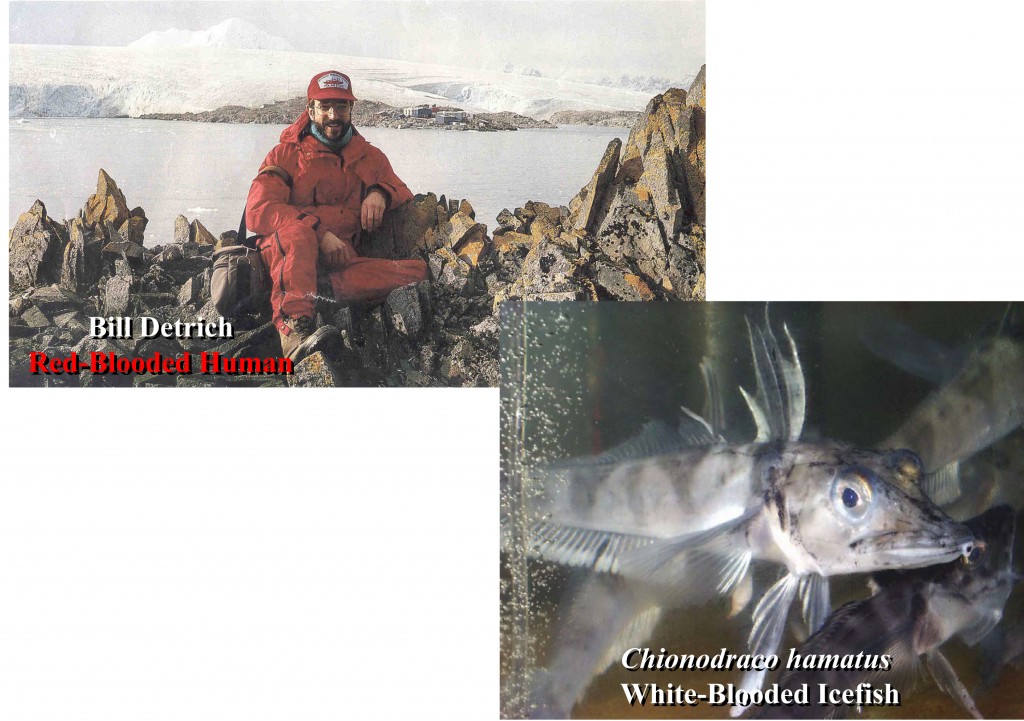
H. William Detrich
· Professor Emeritus, Marine and Environmental SciencesVerifiedNortheastern University · Civil and Environmental Engineering
Active 1976–2024
Research topics
- Computational biology
- Evolutionary biology
- Biology
- Genetics
Selected publications
Towards complete and error-free genome assemblies of all vertebrate species
Nature · 2021 · 2980 citations
- Biology
- Evolutionary biology
- Computational biology
has worked over a five-year period to evaluate and develop cost-effective methods for assembling highly accurate and nearly complete reference genomes. Here we present lessons learned from generating assemblies for 16 species that represent six major vertebrate lineages. We confirm that long-read sequencing technologies are essential for maximizing genome quality, and that unresolved complex repeats and haplotype heterozygosity are major sources of assembly error when not handled correctly. Our assemblies correct substantial errors, add missing sequence in some of the best historical reference genomes, and reveal biological discoveries. These include the identification of many false gene duplications, increases in gene sizes, chromosome rearrangements that are specific to lineages, a repeated independent chromosome breakpoint in bat genomes, and a canonical GC-rich pattern in protein-coding genes and their regulatory regions. Adopting these lessons, we have embarked on the Vertebrate Genomes Project (VGP), an international effort to generate high-quality, complete reference genomes for all of the roughly 70,000 extant vertebrate species and to help to enable a new era of discovery across the life sciences.
Towards complete and error-free genome assemblies of all vertebrate species
bioRxiv (Cold Spring Harbor Laboratory) · 2020 · 195 citations
- Biology
- Evolutionary biology
- Computational biology
Abstract High-quality and complete reference genome assemblies are fundamental for the application of genomics to biology, disease, and biodiversity conservation. However, such assemblies are only available for a few non-microbial species 1–4 . To address this issue, the international Genome 10K (G10K) consortium 5,6 has worked over a five-year period to evaluate and develop cost-effective methods for assembling the most accurate and complete reference genomes to date. Here we summarize these developments, introduce a set of quality standards, and present lessons learned from sequencing and assembling 16 species representing major vertebrate lineages (mammals, birds, reptiles, amphibians, teleost fishes and cartilaginous fishes). We confirm that long-read sequencing technologies are essential for maximizing genome quality and that unresolved complex repeats and haplotype heterozygosity are major sources of error in assemblies. Our new assemblies identify and correct substantial errors in some of the best historical reference genomes. Adopting these lessons, we have embarked on the Vertebrate Genomes Project (VGP), an effort to generate high-quality, complete reference genomes for all ~70,000 extant vertebrate species and help enable a new era of discovery across the life sciences.
Recent grants
NIH · $35k
Genomic Instability and the Evolution of the Antarctic Notothenioid Fishes
NSF · $440k · 2004–2007
NSF · $639k · 2010–2013
Antarctic Notothenioid Fishes: Sentinel Taxa for Southern Ocean Warming
NSF · $1.3M · 2015–2020
NSF · $570k · 2013–2016
Frequent coauthors
- 39 shared
John H. Postlethwait
University of Oregon
- 35 shared
Sandra K. Parker
NOAA National Marine Fisheries Service Northeast Fisheries Science Center
- 31 shared
Thomas Desvignes
University of Oregon
- 30 shared
Chris T. Amemiya
University of California, Merced
- 24 shared
Nathalie R. Le François
Espace pour la vie
- 23 shared
Jacob M. Daane
University of Houston
- 21 shared
Matthew P. Harris
Boston Children's Hospital
- 16 shared
Patrick Smits
Boston Children's Hospital
Similar researchers at Northeastern University
- Resume-aware match score
- Save to shortlist
- AI-drafted outreach
See your match with H. William Detrich
PhdFit ranks faculty by your research interests, methods, and publications — grounded in their actual work, not templates.
- Free to start
- No credit card
- 30-second signup