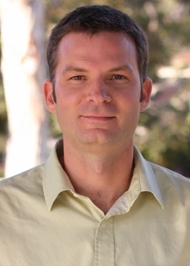
Gregson Schachner
University of California, Los Angeles · Anatomy and Cell Biology
Active 1999–2024
About
Gregson Schachner is a professor in the UCLA Department of Anthropology with a research focus on North American archaeology, including population movement, origins of villages and leadership in agricultural societies, settlement systems and analysis, ceramic analysis, and the social context of archaeological practice, particularly in the American Southwest. He holds a Ph.D. from Arizona State University obtained in 2007. Schachner has contributed to the field through various publications, including books such as 'Becoming Hopi: A History' and 'Population Circulation and the Transformation of Ancient Zuni Communities,' as well as numerous journal articles and book chapters. His work emphasizes understanding ancient societies through archaeological analysis and engaging with indigenous communities, notably the Hopi, to inform archaeological practice and interpretation.
Research topics
- Archaeology
- Geography
- Sociology
- Biology
- Ecology
- Environmental planning
- Geology
- Environmental science
- Paleontology
- Earth science
- Physical geography
- History
- Cartography
- Oceanography
- Demography
- Economic geography
- Business
- Agroforestry
Selected publications
Lithodendron. · 2024-05-17
articleOpen accessSenior authorPetrified Forest National Park (PEFO) is a unique landscape of physical beauty and paleontological treasures. Known for its ancient fossils, petrified wood, and awe-inspiring vistas, it is also well-known in the archaeological community as having some of the earliest villages on the southern Colorado Plateau. Additionally, it is home to a few large late precontact pueblos (Pueblo IV period: ~1275-1400 CE) that were once part of an extensive regional network of communities where people and goods moved across the landscape. Wallace Tank Pueblo is the largest Pueblo IV period village within the Park. This once thriving 600-room pueblo was home to the ancestors of the Zuni, Hopi, and other descendant communities. Over time the physical features of the village were damaged by historic ranching activities and natural erosion. It is now a scoured and degraded landscape where the once sustaining natural spring is not even identifiable. Because of the uniqueness of this village within the Petrified Forest environment consultations between the Park and descendant communities should consider management plans that will re-establish a spring-fed wetlands. Such a plan would not only focus on preservation of the cultural features, but also on the health of the environment and that of the descendants who maintain an emotional and spiritual connection to this ancestral village.
Journal of Anthropological Research · 2024-06-01
article1st authorCorrespondingThe Bonito Factor: How Unique Was Pueblo Bonito?
KIVA · 2022-10-02 · 5 citations
articleOpen accessSenior authorCorrespondingPueblo Bonito is the largest and most centrally located great house in Chaco Canyon. One of its most striking attributes is its abundance of “exceptional deposits” of rare and unusual objects. It is unclear, however, whether Pueblo Bonito's assemblage reflects its unique status in the Chaco world or whether it is a product of sampling bias. To answer this question, we use binomial probabilities to interpret the significance of both finding, and of failing to find, exceptional deposits in other great houses. Our analysis suggests that excavated great houses can be grouped into three categories with respect to exceptional deposits: those that likely contain frequencies comparable to Pueblo Bonito; those with frequencies substantially less than Pueblo Bonito; and those that have been insufficiently sampled to make strong inferences. Variation and uncertainty in the presence of exceptional deposits have important implications for interpreting great house functions and Chacoan sociopolitical organization.
University of Arizona Press eBooks · 2022-06-21 · 1 citations
book-chapterSenior authorJournal of Anthropological Research · 2022-05-26
article1st authorCorrespondingThe Decline of Zuni Glaze Ware Production in the Tumultuous Fifteenth Century
University of Arizona Press eBooks · 2022-09-06 · 1 citations
book-chapter1st authorCorrespondingUniversity of Arizona Press eBooks · 2021-07-06
book-chapterSenior authorVolcanic climate forcing, extreme cold and the Neolithic Transition in the northern US Southwest
Antiquity · 2021 · 6 citations
- Geography
- Archaeology
- Geology
The impacts on global climate of the AD 536 and 541 volcanic eruptions are well attested in palaeoclimatic datasets and in Eurasian historical records. Their effects on farmers in the arid uplands of western North America, however, remain poorly understood. The authors investigate whether extreme cold caused by these eruptions influenced the scale, scope and timing of the Neolithic Transition in the northern US Southwest. Archaeological tree-ring and radiocarbon dates, along with settlement survey data, suggest that extreme cooling generated the physical and social space that enabled early farmers to transition from kin-focused socio-economic strategies to increasingly complex and widely shared forms of social organisation that served as foundational elements of burgeoning Ancestral Pueblo societies.
The Sustainability of Hopi Agriculture
University of Arizona Press eBooks · 2021 · 5 citations
1st authorCorresponding- Agroforestry
- Geography
- Business
University of Arizona Press eBooks · 2021-07-06 · 2 citations
book-chapter1st authorCorresponding
Frequent coauthors
- 8 shared
Matthew A. Peeples
Arizona State University
- 7 shared
Wesley Bernardini
- 5 shared
R. J. Sinensky
- 4 shared
Deborah L. Huntley
Tetra Tech (United States)
- 3 shared
Kellam Throgmorton
Northern Arizona University
- 3 shared
Leigh Kuwanwisiwma
University of Arizona
- 3 shared
Richard H. Wilshusen
- 2 shared
Joel Nicholas
Education
- 2005
Ph.D., Anthropology
University of California, Los Angeles
- 2001
M.A., Anthropology
University of California, Los Angeles
- 1998
B.A., Anthropology
University of California, Los Angeles
- Resume-aware match score
- Save to shortlist
- AI-drafted outreach
See your match with Gregson Schachner
PhdFit ranks faculty by your research interests, methods, and publications — grounded in their actual work, not templates.
- Free to start
- No credit card
- 30-second signup