About
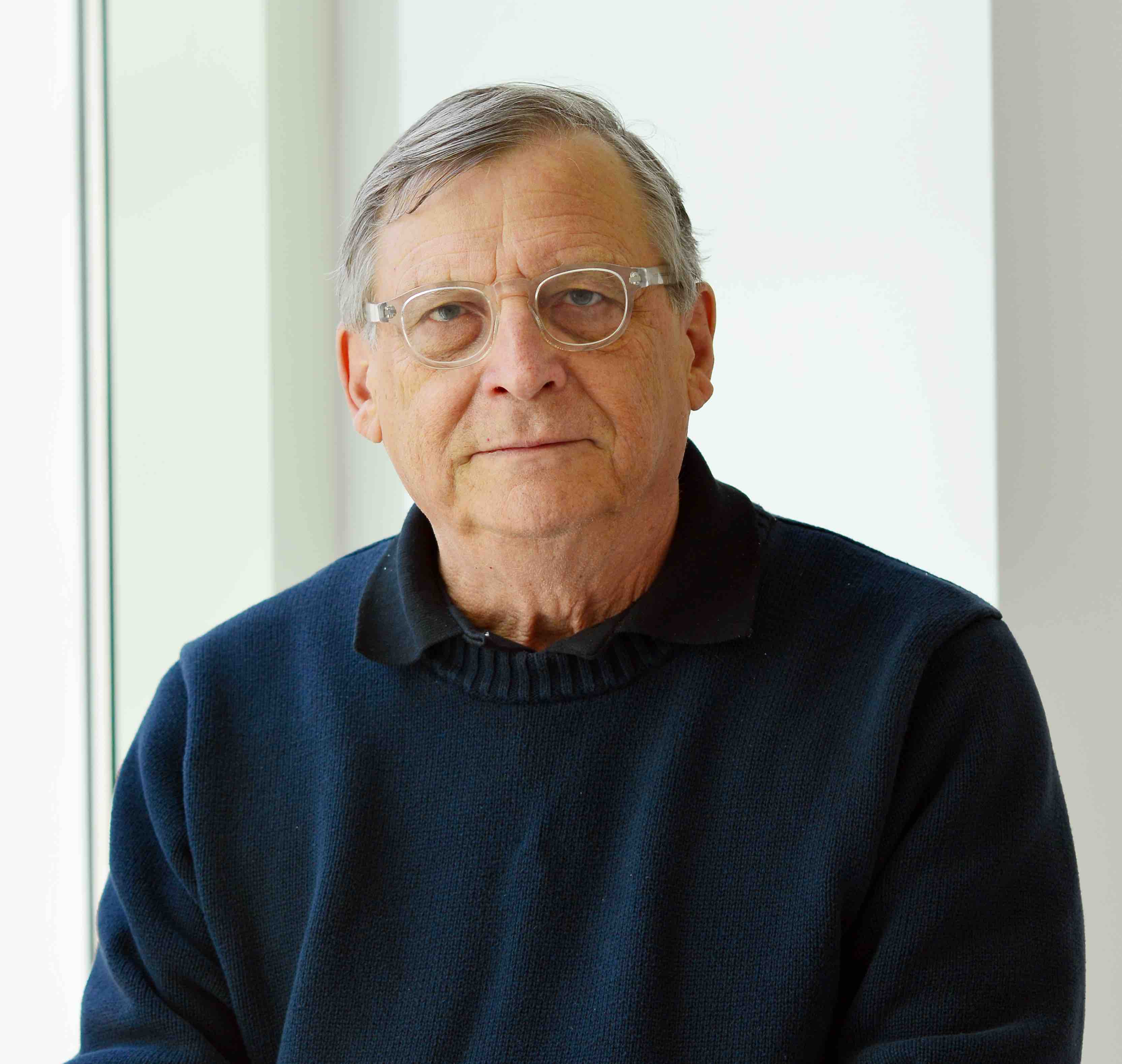
Gregory B. Baecher is a Professor in the Department of Civil and Environmental Engineering at the University of Maryland, with a focus on geotechnical engineering, reliability and risk analysis, dam safety, and coastal protection. He earned his Ph.D. and M.Sc. from the Massachusetts Institute of Technology and his B.S.C.E. from the University of California. His research emphasizes the operational safety of dams and reservoirs, particularly through the development of systems frameworks that account for operational and systemic effects, including human factors, instrumentation, and randomness, which are often overlooked in traditional engineering analysis. Professor Baecher has led significant projects such as the evaluation of spillway system reliability, the assessment of flood standards within the National Flood Insurance Program, and a major research initiative supporting the Federal Interagency Task Force for Hurricane Katrina performance evaluation. His work aims to improve understanding of complex safety risks, enhance infrastructure resilience, and inform policy and engineering practices related to water resource management, flood protection, and civil infrastructure safety.
Research topics
- Computer Science
- World Wide Web
- Data science
- Political Science
- Engineering
- Forensic engineering
- Reliability engineering
- Virology
- Risk analysis (engineering)
- Internal medicine
- Geotechnical engineering
- Meteorology
- Geography
- Civil engineering
- Business
- Medicine
Selected publications
Natural hazard analysis and mitigation since Katrina: are we ready for the future?
Water Policy · 2025-06-02
articleOpen accessCorrespondingABSTRACT Hurricane Katrina was a pivotal event that dramatically impacted policies and practice with respect to natural hazards. The massive human life and economic losses stimulated rapt attention to what went wrong and why, which in turn resulted in dramatic shifts in both engineering practice and the policies that guide it. This also accelerated national flood safety assessment and future strategy both in the United States and in The Netherlands. It is instructive to compare natural hazard policies prior to Katrina to those that arose following Katrina. How well have these changes prepared us for the future? It is becoming clear that the past is no longer prolog. Now, two decades later, our attention is turning to the growing uncertainty, to include non-stationarity in both natural and social processes. Are policy and practice evolving fast enough? How well are we postured to deal with the spectrum of potential futures?
Analyzing public response to wildfires: A socio-spatial study using SIR models and NLP techniques
Computers Environment and Urban Systems · 2025-08-01
articleSenior authorA Socio-Behavioral Compartmental Model for Wildfire Response
2025-10-30
articleSenior authorCorrespondingClimate change has increased the frequency and intensity of wildfires, posing significant risks to communities, infrastructure, and the environment. Understanding public responses to these events is crucial for effective disaster mitigation and resilience planning. However, traditional geotechnical risk studies often fail to account for the dynamic, real-time nature of public engagement with these hazards, leaving a gap in understanding how communities perceive and react to wildfire risks. To address this gap, this study leverages social media data and presents a novel methodology for measuring public wildfire responses. Using BERTopic, a transformer-based topic modeling approach, we analyze wildfire-related discussions to identify key themes and concerns. Additionally, we adapt the Susceptible-Infectious-Recovered (SIR) model to quantify public engagement across regions, capturing how awareness and participation evolve over time. Our findings offer insights for engineers, policymakers, emergency responders, and risk communication strategies, contributing to a more comprehensive understanding of public natural hazard response.
Flood Risk Without Stationarity
Civil engineering · 2024-07-01 · 2 citations
articleSenior authorThe longstanding reliance on historical climate trends to help predict future weather-related events is no longer viable. Civil engineers must adapt to the new risks of flooding and coastal storms brought about by climate change and find new solutions.
arXiv (Cornell University) · 2024-11-15
preprintOpen accessSenior authorThe increasing frequency and severity of wildfires pose significant risks to communities, infrastructure, and the environment, especially in Wildland-Urban Interface (WUI) areas. Effective disaster management requires understanding how the public perceives and responds to wildfire threats in real-time. This study uses social media data to assess public responses and explores how these responses are linked to city-level community characteristics. Specifically, we leveraged a transformer-based topic modeling technique called BERTopic to identify wildfire response-related topics and then utilized the Susceptible-Infectious-Recovered (SIR) model to compute two key metrics associated with wildfire responses - awareness and resilience indicators. Additionally, we used GIS-based spatial analysis to map wildfire locations along with four groups of city-level factors (racial/ethnic, socioeconomic, demographic, and wildfire-specific). Our findings reveal significant geographic and socio-spatial differences in public responses. Southern California cities with larger Hispanic populations demonstrate higher wildfire awareness and resilience. In contrast, urbanized regions in Central and Northern California exhibit lower awareness levels. Furthermore, resilience is negatively correlated with unemployment rates, particularly in southern regions where higher unemployment aligns with reduced resilience. These findings highlight the need for targeted and equitable wildfire management strategies to improve the adaptive capacity of WUI communities.
Natural Hazards Review · 2024-08-26 · 8 citations
articleSenior authorThe use of social media in crisis informatics has become increasingly popular across a range of disciplines. Leveraging natural language processing (NLP) techniques enables the analysis of textual data in novel ways and facilitates the use of social media data in disaster management. Analyzing text from social media with NLP can enhance situational awareness, accelerate information dissemination, and monitor affected communities, which is crucial for government agencies and emergency decision makers. However, a comprehensive literature review of NLP and social media data in disaster management is lacking, which presents an obstacle to rapid development in this field. To address this gap, this project surveys 324 related articles published between 2011 and 2022 and investigates the current trends and state-of-the-art NLP applications for using social media data in managing natural disasters. The bibliometric analysis reveals that existing literature focused more on earthquakes, floods, and hurricanes, concentrating on during-event periods, with Twitter (now referred to as X) as the most cited information source. Moreover, our systematic analysis identifies common NLP methodologies and identifies five major applications in current research. Finally, this study provides important insights and potential directions for future research in social media, NLP, and disaster management.
Sustainable Cities and Society · 2024-03-20 · 31 citations
articleExploring the potential of social media crowdsourcing for post-earthquake damage assessment
International Journal of Disaster Risk Reduction · 2023-10-14 · 26 citations
articleSenior authorData-Driven Evaluation of Project Risk Registers
2023-07-20 · 2 citations
articleSenior authorCorrespondingGeotechnical risk is an important part of managing large projects. This study developed a data-driven approach to tracking risk identification on major US transportation projects using textual analysis of historical project documents. In early phases of a project, the identification and assessment of risk is based largely on expert judgment. As a project moves through its life cycle, identified risks and their assessments evolve. Some risks are realized to become issues, some are mitigated, and some are retired as no longer important. The study investigated the comprehensiveness of early risk registers on 11 large transportation projects in comparison to how those risks changed as the projects progressed. Finite state automation methods similar to Markov chain models were used to track changes in risk attributes as the case-study projects matured. The objective was to be better able to anticipate how project risks change as projects mature and to be better able to forecast changes to risk registers through the project life cycle. Results suggest that fewer than 60% of initially identified risks, both geotechnical and other, ultimately occur in projects, while more than 40% are retired. Categorizing risk management styles illustrates that planning for geotechnical risks in the initial phase of the project is necessary but not sufficient for successful project delivery.
Appraising Situational Awareness in Social Media Data for Wildfire Response
2023-11-14 · 2 citations
articleSenior authorCorrespondingSituational Awareness (SA) is the perception of the environment and events in time and space. It comprises three stages: perception, comprehension, and projection. In rapidly evolving situations with limited resources, disaster agencies need fast and reliable information to understand SA and support decisions. This paper proposes a social media-based approach to investigate SA using data from the 2020 western US wildfire season. The study uses the Twitter Search API with a key search term “wildfire” to scrape related tweets from September 2 to October 4, 2020. Subsequently, it applies Name Entity Recognition (NER) to identify geo-information. Next, it optimizes and applies transformer-based topic modeling (BERTopic) to classify topics from the tweets. Evolution of the topics over time can help identify phases of wildfire propagation. Using the identified time and space information, the study investigates SA stages across geographic regions and validates the results against wildfire response acts by responders. The results suggest that the proposed approach can provide consistent and comparable real-time estimation of wildfire situations. The study suggests guidelines for enacting timely and appropriate decisions and prioritizing operational needs.
Frequent coauthors
- 24 shared
Zihui Ma
University of Nevada, Las Vegas
- 23 shared
John T. Christian
University of Massachusetts Lowell
- 22 shared
Lingyao Li
University of Michigan–Ann Arbor
- 20 shared
Robert C. Patev
United States Army Corps of Engineers
- 16 shared
Piotr Zieliński
University of Białystok
- 16 shared
Desmond ND Hartford
Vattenfall (Sweden)
- 15 shared
Karl Rytters
- 14 shared
Romanas Ascila
Vattenfall (Sweden)
Awards & honors
- Baecher Named Hagler Fellow at Texas A&M Uni
- Resume-aware match score
- Save to shortlist
- AI-drafted outreach
See your match with Gregory B. Baecher
PhdFit ranks faculty by your research interests, methods, and publications — grounded in their actual work, not templates.
- Free to start
- No credit card
- 30-second signup