Resume-aware faculty matching

Find professors who actually fit you

Upload your resume. Four AI agents analyze your background, rank the faculty who fit, inspect their recent research, and help you draft outreach — grounded in their actual work, not templates.

Free to startNo credit cardCancel anytime
Top matches Balanced preset
Dr. Sarah Chen
Stanford · Interpretability · NLP
91
Dr. Marcus Holloway
MIT · Robotics · RL
84
Dr. Aisha Okonkwo
CMU · Fairness · HCI
82
Nova · Professor Researcher · re-ranking top 20…
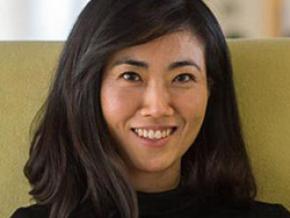
Gloria Choi

Gloria Choi

· Mark Hyman Jr CD Associate ProfessorVerified

Massachusetts Institute of Technology · Psychology

Active 2012–2026

h-index19
Citations1.2k
Papers9168 last 5y
Funding
See your match with Gloria Choi — sign in to PhdFit.Sign in

About

Gloria Choi is an Associate Professor in the Department of Brain and Cognitive Sciences at MIT and an Investigator at the Picower Institute for Learning and Memory. She received her bachelor’s degree from the University of California, Berkeley, and her Ph.D. from Caltech, where she studied with David Anderson. She was a postdoctoral research scientist in the laboratory of Richard Axel at Columbia University. Her laboratory studies how sensory stimuli drive behavioral responses and internal states depending on past experience, focusing on neural circuits using olfaction as a model. Her research addresses how circuitry connects sensory representations to behavioral outcomes, how learning transforms these circuits, and how the brain maintains behavioral plasticity for context-dependent adaptations. Her work aims to elucidate mechanisms fundamental to learning across sensory modalities.

Research topics

  • Computer Science
  • Artificial Intelligence
  • Physics
  • Mathematics
  • Composite material
  • Nanotechnology
  • Evolutionary biology
  • Mechanics
  • Statistical physics
  • Botany
  • Mathematical analysis
  • Algorithm
  • Materials science
  • Chemical physics
  • Biology
  • Geometry
  • Genetics

Selected publications

  • PhyloSDF: Phylogenetically-Conditioned Neural Generation of 3D Skull Morphology via Residual Flow Matching

    arXiv (Cornell University) · 2026-04-28

    preprintOpen accessSenior author

    Generating novel, biologically plausible three-dimensional morphological structures is a fundamental challenge in computational evolutionary biology, hampered by extreme data scarcity and the requirement that generated shapes respect phylogenetic relationships among species. In this work, we present PhyloSDF, a phylogenetically-conditioned neural generative model for 3D biological morphology that integrates two innovations: (1) a DeepSDF auto-decoder regularized by a novel Phylogenetic Consistency Loss that structures the latent space to correlate with evolutionary distances (Pearson $r=0.993$); (2) a Residual Conditional Flow Matching (Residual CFM) architecture that factorizes generation into analytic species-centroid lookup and learned residual prediction, enabling generation from as few as ~4 specimens per species. We evaluate PhyloSDF on 100 micro-CT-scanned skulls of Darwin's Finches and their relatives across 24 species. The model generates novel meshes achieving 88-129% of real intra-species variation at the code level, with all 180 generated meshes verified as non-memorized. Residual CFM surpasses denoising diffusion (which fails entirely at this scale), standard flow matching (which mode-collapses to 3-6% variation), and a Gaussian mixture baseline in both fidelity (Chamfer Distance 0.00181 vs. 0.00190) and morphometric Fréchet distance (10,641 vs. 13,322). Leave-one-species-out experiments across 18 species demonstrate phylogenetic extrapolation capability, and smooth latent interpolations produce biologically plausible ancestral skull reconstructions.

  • Conformal tubular parameterization and toroidal bending of tube-like surfaces

    arXiv (Cornell University) · 2026-04-26

    preprintOpen accessSenior author

    Tube-like surfaces are widely encountered in geometry processing, engineering structures, and medical anatomy, yet their intrinsic longitudinal and circumferential topology is not well preserved by conventional planar annular or rectangular parameterization domains. In this work, we propose a conformal parameterization framework for open tube-like surfaces with two boundary components. The proposed method first constructs a fixed-boundary tubular parameterization by cutting the input mesh, computing a disk-to-rectangle conformal map, and lifting the result to a three-dimensional tubular domain. To reduce residual distortion introduced near the cut seam, we further introduce a localized quasi-conformal correction scheme formulated on an annular domain, which improves conformality while leaving regions away from the seam unchanged. To handle noisy or irregular input boundaries, we also develop a free-boundary variant based on boundary extension and cycle-Laplacian smoothing, allowing the prescribed boundary constraints to be imposed on artificial outer rings rather than directly on the original surface. Finally, we derive two conformal toroidal bending maps that transform the tubular parameterization into toroidal geometries while preserving the underlying tube topology. Experiments on synthetic tube meshes and real vascular surfaces demonstrate that the proposed framework produces low-distortion parameterizations, effectively mitigates seam-induced artifacts, improves robustness for boundary-noisy inputs, and provides flexible tubular and toroidal target domains for downstream surface processing tasks.

  • Planar morphometry via functional shape data analysis and quasi-conformal mappings

    Zenodo (CERN European Organization for Nuclear Research) · 2026-05-07

    datasetOpen accessSenior author

    This repository contains MATLAB code for planar shape mapping, morphing, and shape analysis using Functional Shape Data Analysis (FDA) and quasi-conformal (QC) mapping. Reference: Hangyu Li and Gary P. T. Choi, Planar morphometry via functional shape data analysis and quasi-conformal mappings. Preprint, 2026.

  • PhyloSDF: Phylogenetically-conditioned neural generation of 3D skull morphology via residual flow matching

    Zenodo (CERN European Organization for Nuclear Research) · 2026-04-30

    datasetOpen accessSenior author

    This repository contains the official implementation for the generation and interpolation of 3D morphological traits (e.g., biological specimens/skulls) using a phylogenetically constrained latent space and Residual Conditional Flow Matching (CFM).

  • PhyloSDF: Phylogenetically-Conditioned Neural Generation of 3D Skull Morphology via Residual Flow Matching

    ArXiv.org · 2026-04-28

    articleOpen accessSenior author

    Generating novel, biologically plausible three-dimensional morphological structures is a fundamental challenge in computational evolutionary biology, hampered by extreme data scarcity and the requirement that generated shapes respect phylogenetic relationships among species. In this work, we present PhyloSDF, a phylogenetically-conditioned neural generative model for 3D biological morphology that integrates two innovations: (1) a DeepSDF auto-decoder regularized by a novel Phylogenetic Consistency Loss that structures the latent space to correlate with evolutionary distances (Pearson $r=0.993$); (2) a Residual Conditional Flow Matching (Residual CFM) architecture that factorizes generation into analytic species-centroid lookup and learned residual prediction, enabling generation from as few as ~4 specimens per species. We evaluate PhyloSDF on 100 micro-CT-scanned skulls of Darwin's Finches and their relatives across 24 species. The model generates novel meshes achieving 88-129% of real intra-species variation at the code level, with all 180 generated meshes verified as non-memorized. Residual CFM surpasses denoising diffusion (which fails entirely at this scale), standard flow matching (which mode-collapses to 3-6% variation), and a Gaussian mixture baseline in both fidelity (Chamfer Distance 0.00181 vs. 0.00190) and morphometric Fréchet distance (10,641 vs. 13,322). Leave-one-species-out experiments across 18 species demonstrate phylogenetic extrapolation capability, and smooth latent interpolations produce biologically plausible ancestral skull reconstructions.

  • PhyloSDF: Phylogenetically-conditioned neural generation of 3D skull morphology via residual flow matching

    Zenodo (CERN European Organization for Nuclear Research) · 2026-04-30

    datasetOpen accessSenior author

    This repository contains the official implementation for the generation and interpolation of 3D morphological traits (e.g., biological specimens/skulls) using a phylogenetically constrained latent space and Residual Conditional Flow Matching (CFM).

  • Planar morphometry via functional shape data analysis and quasi-conformal mappings

    ArXiv.org · 2026-05-07

    articleOpen accessSenior author

    The study of shapes is one of the most fundamental problems in life sciences. Although numerous methods have been developed for the morphometry of planar biological shapes over the past several decades, most of them focus solely on either the outer silhouettes or the interior features of the shapes without capturing the coupling between them. Moreover, many existing shape mapping techniques are limited to establishing correspondence between planar structures without further allowing for the quantitative analysis or modelling of shape changes. In this work, we introduce FDA-QC, a novel planar morphometry method that combines functional shape data analysis (FDA) techniques and quasi-conformal (QC) mappings, taking both the boundary and interior of the planar shapes into consideration. Specifically, closed planar curves are represented by their square-root velocity functions and registered by elastic matching in the function space. The induced boundary correspondence is then extended to the entire planar domains by a quasi-conformal map, optionally with landmark constraints. Moreover, the proposed FDA-QC method can naturally lead to a unified framework for shape morphing and shape variation quantification. We apply the FDA-QC method to various leaf and insect wing datasets, and the experimental results show that the proposed combined approach captures morphological variation more effectively than purely boundary-based or interior-based descriptions. Altogether, our work paves a new way for understanding the growth and form of planar biological shapes.

  • Rigidity control of general origami structures

    Communications Physics · 2026-04-25

    articleOpen accessSenior author

    Abstract Origami has inspired the modern design of flexible structures in science and engineering. However, the rigidity control of general origami structures beyond the well-studied Miura-ori pattern remains unclear. Here we show that the rigidity of a wide range of origami structures can be controlled by enforcing or relaxing the planarity condition of selected facets. Through numerical simulations on origami structures with different facet selection rules, we analyze how their geometry and topology affect their degrees of freedom. We also study the probabilistic properties of the rigidity change and identify key origami structural variables that govern the critical rigidity percolation transition. Moreover, we develop a unified model that describes the relationship between the critical percolation density, facet geometry and selection rules. Altogether, our work highlights the intricate similarities and differences in the rigidity control of general origami structures, shedding light on the design of flexible mechanical metamaterials for practical applications.

  • Conformal tubular parameterization and toroidal bending of tube-like surfaces

    ArXiv.org · 2026-04-26

    articleOpen accessSenior author

    Tube-like surfaces are widely encountered in geometry processing, engineering structures, and medical anatomy, yet their intrinsic longitudinal and circumferential topology is not well preserved by conventional planar annular or rectangular parameterization domains. In this work, we propose a conformal parameterization framework for open tube-like surfaces with two boundary components. The proposed method first constructs a fixed-boundary tubular parameterization by cutting the input mesh, computing a disk-to-rectangle conformal map, and lifting the result to a three-dimensional tubular domain. To reduce residual distortion introduced near the cut seam, we further introduce a localized quasi-conformal correction scheme formulated on an annular domain, which improves conformality while leaving regions away from the seam unchanged. To handle noisy or irregular input boundaries, we also develop a free-boundary variant based on boundary extension and cycle-Laplacian smoothing, allowing the prescribed boundary constraints to be imposed on artificial outer rings rather than directly on the original surface. Finally, we derive two conformal toroidal bending maps that transform the tubular parameterization into toroidal geometries while preserving the underlying tube topology. Experiments on synthetic tube meshes and real vascular surfaces demonstrate that the proposed framework produces low-distortion parameterizations, effectively mitigates seam-induced artifacts, improves robustness for boundary-noisy inputs, and provides flexible tubular and toroidal target domains for downstream surface processing tasks.

  • Planar morphometry via functional shape data analysis and quasi-conformal mappings

    arXiv (Cornell University) · 2026-05-07

    preprintOpen accessSenior author

    The study of shapes is one of the most fundamental problems in life sciences. Although numerous methods have been developed for the morphometry of planar biological shapes over the past several decades, most of them focus solely on either the outer silhouettes or the interior features of the shapes without capturing the coupling between them. Moreover, many existing shape mapping techniques are limited to establishing correspondence between planar structures without further allowing for the quantitative analysis or modelling of shape changes. In this work, we introduce FDA-QC, a novel planar morphometry method that combines functional shape data analysis (FDA) techniques and quasi-conformal (QC) mappings, taking both the boundary and interior of the planar shapes into consideration. Specifically, closed planar curves are represented by their square-root velocity functions and registered by elastic matching in the function space. The induced boundary correspondence is then extended to the entire planar domains by a quasi-conformal map, optionally with landmark constraints. Moreover, the proposed FDA-QC method can naturally lead to a unified framework for shape morphing and shape variation quantification. We apply the FDA-QC method to various leaf and insect wing datasets, and the experimental results show that the proposed combined approach captures morphological variation more effectively than purely boundary-based or interior-based descriptions. Altogether, our work paves a new way for understanding the growth and form of planar biological shapes.

Frequent coauthors

  • Lok Ming Lui

    Chinese University of Hong Kong

    29 shared
  • L. Mahadevan

    Harvard University

    26 shared
  • Arhat Abzhanov

    Imperial College London

    8 shared
  • Levi H. Dudte

    Harvard University

    8 shared
  • Siheng Chen

    6 shared
  • Mahmoud Shaqfa

    6 shared
  • Grace Musser

    National Museum of Natural History

    6 shared
  • Jörn Dunkel

    Massachusetts Institute of Technology

    6 shared

Labs

  • Gloria Choi LabPI

Education

  • Ph.D. in Applied Mathematics

    Harvard University

    2020
  • S.M. in Applied Mathematics

    Harvard University

    2019
  • M.Phil. in Mathematics

    The Chinese University of Hong Kong

    2016
  • B.Sc. in Mathematics

    The Chinese University of Hong Kong

    2014
  • Resume-aware match score
  • Save to shortlist
  • AI-drafted outreach

See your match with Gloria Choi

PhdFit ranks faculty by your research interests, methods, and publications — grounded in their actual work, not templates.

  • Free to start
  • No credit card
  • 30-second signup