
Resume-aware faculty matching

Find professors who actually fit you

Upload your resume. Four AI agents analyze your background, rank the faculty who fit, inspect their recent research, and help you draft outreach — grounded in their actual work, not templates.

Free to startNo credit cardCancel anytime
Top matches Balanced preset
Dr. Sarah Chen
Stanford · Interpretability · NLP
91
Dr. Marcus Holloway
MIT · Robotics · RL
84
Dr. Aisha Okonkwo
CMU · Fairness · HCI
82
Nova · Professor Researcher · re-ranking top 20…
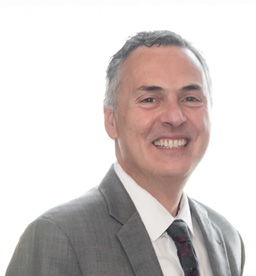
George Stavros

George Stavros

· Clinical Associate Professor of Pastoral PsychologyVerified

Boston University · School of Theology

Active 1970–2025

h-index6
Citations120
Papers2921 last 5y
Funding
See your match with George Stavros — sign in to PhdFit.Sign in

About

George Stavros is a Clinical Associate Professor of Pastoral Psychology and the Executive Director of the Danielsen Institute at Boston University. He holds a PhD in Pastoral Psychology from Boston University, an MDiv from Holy Cross Greek Orthodox School of Theology, an MS in Sports Administration from St. Thomas University, and a BS in Industrial Engineering from Purdue University. His clinical and research interests focus on the connection between mental health and spirituality in clinical practice, as well as clergy and clergy family wellness. He is a licensed psychologist and has been a licensed Health Service Provider in Massachusetts since 1999. Stavros has contributed extensively to the fields of pastoral and clinical psychology through teaching, research, and leadership. He has served as Director of Clinical Services and Clinic Director at the Danielsen Institute, and has been involved in developing and leading programs that integrate spirituality with psychotherapy. His scholarly work includes co-authoring 'Relational Spirituality in Psychotherapy' and co-editing 'The Skillful Soul of the Psychotherapist,' emphasizing the importance of relational and spiritual dimensions in mental health treatment. He has published numerous articles on relational spirituality, attachment, and the psychological benefits of religious practices, and has presented widely on topics such as resilience, clergy wellness, and the intersection of spirituality and mental health. His work consistently highlights the significance of relational and spiritual factors in promoting healing, growth, and well-being in diverse clinical and pastoral contexts.

Research topics

  • Psychotherapist
  • Psychology
  • Medicine
  • Political Science
  • Clinical psychology
  • Theology
  • Pedagogy
  • Psychiatry
  • Social psychology

Selected publications

  • Applying relational spirituality to develop spiritual and religious competencies in psychedelic-assisted psychotherapy training.

    Psychotherapy · 2025-08-04 · 2 citations

    article

    Psychedelic-assisted therapies (PAT) can provoke personally meaningful spiritual or existential experiences in patients; these experiences have been associated with improved outcomes across several treatment targets and populations. The need for spiritual and religious competence, though present across the spectrum of psychotherapeutic practice, is especially strong in psychedelic-assisted psychotherapies. The relational spirituality model (RSM), a systematically developed and empirically tested framework for spiritual and religious competency in psychotherapy, offers a theoretical and practical framework for spiritual competency training in psychedelic therapies (Sandage et al., 2020). The model's inclusive spiritual, existential, religious, and theological (SERT) framework provides a broad and pluralistic approach that can meaningfully engage a wide range of SERT experiences and traditions in psychedelic-assisted psychotherapy. Further, the RSM can readily be integrated with other models of clinical care (e.g., palliative care), with a range of psychotherapeutic modalities, and within existing psychedelic training frameworks. To illustrate the application of the RSM to the development of religious and spiritual competence in PAT training, this article first describes the RSM. It then introduces methods for pragmatic training based on the RSM, which can be integrated with standard licensure-focused mental health training programs that might someday include applications for psychedelics or with specialized psychedelic-assisted therapy facilitation training programs. These include deliberate practice and experiential training components, "SERT groups," content and clinical theory, and training in assessment and case conceptualization. Finally, we discuss how the RSM can inform future directions in PAT training and support interdisciplinary approaches to PAT including collaborations across disciplines and healing communities. (PsycInfo Database Record (c) 2026 APA, all rights reserved).

  • The Development and Feasibility of a Novel Group Intervention to Support Helping Professionals in Metabolizing Suffering and Engaging Strengths: The CHRYSALIS Program

    International Journal of Group Psychotherapy · 2024-04-02 · 8 citations

    articleSenior author

    This feasibility study reports on the development and initial evaluation of a novel online intervention for helping professionals (HPs; i.e. mental health professionals, chaplains, clergy) designed to (a) address occupational hazards, such as burnout and vicarious traumatization, and (b) promote well-being and flourishing at work. In contrast with competency and self-care focused models, the CHRYSALIS (Catalyzing Helping Professionals' Resilience, VitalitY, Spirituality, Authentic Living, and Inner Strength) intervention centers the self of the provider, explores cultural and spiritual contexts, and attends to systemic challenges. As part of a larger randomized controlled trial evaluating two program formats, the group format entails eight online sessions exploring strengths that can promote well-being, including processing, relational, vitalizing, orienting, and agentic capacities. To pilot test this framework and establish proof of concept, this study analyzed data from 41 HPs who had been randomly assigned to the group condition and completed surveys at four time points. Quantitative results indicated significant reductions in vicarious traumatization and burnout as well as increased well-being and meaning in work. Qualitative results suggest the intervention fostered relational support, cultivated new perspectives, and increased engagement with strengths, positively impacting participants' work and navigation of caregiving systems. Feedback about cohesion and group dynamic challenges in an online format informed further program development. This study provides initial support for the feasibility and efficacy of the group format of the CHRYSALIS intervention as a creative means to address HPs' risk for occupational hazards and promote holistic formation in a relational context.

  • Relational spirituality model in psychotherapy: Overview and case application.

    American Psychological Association eBooks · 2023-01-01 · 6 citations

    book-chapterSenior author
  • A constructive replication of client change during psychodynamic treatment in an outpatient setting

    Counselling and Psychotherapy Research · 2023-10-31 · 2 citations

    articleSenior author

    Abstract We responded to the need for replication in psychotherapy research by extending a prior naturalistic study documenting the effectiveness of long‐term psychodynamic treatment. We employed three novel analytic strategies and evaluated their influence on substantive interpretations offered in the prior study. The sample consisted of clients ( N = 387; M age = 31.61; SD = 11.13; 58.9% female; 79.1% Caucasian/White) receiving outpatient treatment at a psychodynamic training clinic. Results replicated the original two‐class solutions for social functioning, depression and life satisfaction. Novel to the replication analyses, each trajectory for social functioning and depression exhibited nonlinear change and results advanced research on a theorised mechanism of effective psychodynamic treatment. Results showed that change in experiential avoidance was a possible mechanism between early‐treatment change in social functioning and later‐treatment changes in depression symptoms and life satisfaction. Clinical implications focus on the influence that initial levels of symptoms and well‐being may have on early and later phases of treatment, monitoring progress throughout treatment, and how to promote symptom and well‐being improvement.

  • Attachment Neuroscience and Martin Luther King, Jr.’s Nonviolence Philosophy: Implications for the 21st Century and Beyond

    Journal of Black Psychology · 2022-05-01 · 2 citations

    article

    This article focuses on the psychology of principled nonviolent activism, specifically ideas associated with Martin Luther King, Jr.’s philosophy of nonviolence and how they are compatible with attachment theory and related areas of modern neuroscience (e.g., attachment/social neuroscience and interpersonal neurobiology). The proposed Kingian Neuro-Relational Theory (KNRT) recognizes King as having a relational development approach to social justice. KNRT offers a way of understanding King’s ideas to aid research and develop strategies for reducing many forms of societal violence, with eventual outcomes of improving mental and physical health via stress reduction, and subsequent creation of a more socially just world. KNRT is an integrative, multidisciplinary approach, incorporating the philosophy of nonviolence, attachment theory, social neuroscience, ecological systems theory, and personalistic philosophy. The theory highlights developmental and clinical implications of moving beyond tactical/pragmatic nonviolent activism (nonviolent direct action) to activism via embracing nonviolence as a principled way of life (nonviolent daily interactions). This theory is building on an earlier project that conveyed how King’s philosophy of nonviolence is related to modern–day diversity and inclusion efforts.

  • Supporting chaplains on the frontlines of the COVID-19 pandemic: A mixed-method practice-based pilot intervention study.

    Psychological Services · 2022 · 13 citations

    • Political Science
    • Psychology
    • Clinical psychology

    = 77) to evaluate a novel spiritually integrated support group intervention for chaplains across multiple industries, which consisted of five Zoom-based sessions cofacilitated by psychotherapists. Participants completed pre- and postintervention measures of traumatic stress, burnout, spiritual/moral struggles, flourishing, resilience, and overall experience in the group. Qualitative findings elucidated the salience of peer support, therapeutic group processes, and key intervention components that warrant further study. Quantitative results indicated significant (a) decreases in burnout and spiritual/moral struggles from pre- to postintervention as well as (b) increases in sense of resilience and flourishing. Findings of this pilot study offer preliminary evidence for the use of a spiritually integrated group model to decrease isolation, address moral and spiritual distress, and promote resilience among chaplains. (PsycInfo Database Record (c) 2023 APA, all rights reserved).

  • Developing spiritual fortitude among frontline chaplains: An online group support intervention

    PsycEXTRA Dataset · 2021-01-01

    dataset
  • Relational spirituality in couple therapy.

    American Psychological Association eBooks · 2020-01-01

    book-chapter
  • Relational spirituality in group therapy.

    American Psychological Association eBooks · 2020-01-01 · 1 citations

    book-chapter
  • Attachment and relational spirituality.

    American Psychological Association eBooks · 2020-01-01

    book-chapter

Frequent coauthors

  • Steven J. Sandage

    Boston University

    27 shared
  • David Rupert

    19 shared
  • Nancy G. Devor

    Boston University

    15 shared
  • Miriam Bronstein

    Boston University

    6 shared
  • Peter J. Jankowski

    Bethel University

    6 shared
  • Chance A. Bell

    University of Nebraska at Kearney

    4 shared
  • Sarah A. Crabtree

    Boston University

    3 shared
  • Laura E. Captari

    3 shared
  • Resume-aware match score
  • Save to shortlist
  • AI-drafted outreach

See your match with George Stavros

PhdFit ranks faculty by your research interests, methods, and publications — grounded in their actual work, not templates.

  • Free to start
  • No credit card
  • 30-second signup