Resume-aware faculty matching

Find professors who actually fit you

Upload your resume. Four AI agents analyze your background, rank the faculty who fit, inspect their recent research, and help you draft outreach — grounded in their actual work, not templates.

Free to startNo credit cardCancel anytime
Top matches Balanced preset
Dr. Sarah Chen
Stanford · Interpretability · NLP
91
Dr. Marcus Holloway
MIT · Robotics · RL
84
Dr. Aisha Okonkwo
CMU · Fairness · HCI
82
Nova · Professor Researcher · re-ranking top 20…
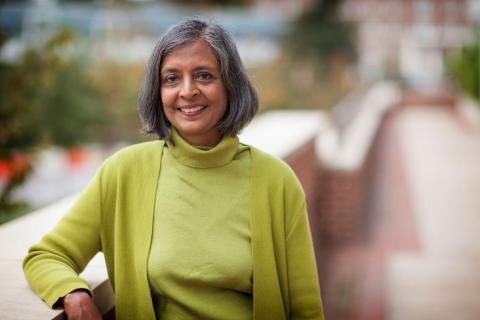
Geeta Patel

Geeta Patel

Verified

University of Virginia · Global Policy Studies

Active 1993–2024

h-index11
Citations609
Papers368 last 5y
Funding
See your match with Geeta Patel — sign in to PhdFit.Sign in

About

Geeta Patel is a Professor of Middle Eastern & South Asian Languages & Cultures; Women, Gender & Sexuality at the University of Virginia. She is affiliated with the Global Studies program, specifically within the Global Commerce in Culture & Society concentration. Her academic role involves teaching and research in these areas, contributing to the understanding of cultural, social, and gender dynamics within Middle Eastern and South Asian contexts. Further details about her specific research focus, background, or key contributions are not provided on the page.

Research topics

  • Sociology
  • Art
  • Medicine
  • Literature
  • History

Selected publications

  • Black Women’s Radical Religious Epistemologies in Mahogany and Steepled Towers

    African Journal of Gender and Religion · 2024-07-31 · 1 citations

    articleOpen accessSenior author

    The essays in this issue explore the diverse ways in which Black women’s religious epistemologies challenge conventional theological narratives. From the African spiritualities of Nigeria and Jamaica to the anti-colonial politics of Senegal, Sudan, and South Africa, the contributors offer a rich tapestry of perspectives highlighting the radical nature of Black women’s religious knowledge production. Weaving an eclectic spectrum of spiritual practices and beliefs, these essays offer the basis of radical religious epistemologies that enable Black women living under a range of circumstances, in several regions of the world, to find a pathway through the virulence they inhabit within their everyday lives.

  • Miraji’s Poetics for Queering History

    2023-10-06

    book-chapter1st authorCorresponding
  • Miraji's Poetics for Queering History

    2023-09-01

    book-chapter1st authorCorresponding

    Born in Pakistan, the Urdu modernist poet Miraji began his forays into translation and lyric by scrounging for literary exemplars in Lahore libraries. Among them was the poet Sappho. This chapter turns to Miraji's essay on Sappho, a lyricist whose life and lyric was always on the move to speak about Miraji as a queer Hindustani lyricist-theorist who died in Bombay longing for Pakistan. Over the course of his essay, Miraji began to fold Sappho's voice into his own, asking, in the process, for hamdardī, shared solicitude, rather than veracity as a mode of belonging-knowing. Following his process of aligning the fifth century poet Sappho with Urdu modernism, this chapter plaits migrating texts as translations, routed through Lahore, flowering into the grammar of surmise, the signature of prophecy, to offer another telos-sojourn through which we, through Miraji, can imaginatively theorize queer archives, and queer histories.

  • 6 Miraji’s Poetics for Queering History

    2023-10-13

    book-chapter1st authorCorresponding
  • Translation’s Dissidence: Miraji becomes Sappho

    2021-01-01

    book-chapter1st authorCorresponding
  • 15. Colonialism

    New York University Press eBooks · 2021-11-21

    book-chapter1st authorCorresponding
  • Literary Lineages: Place, Translation, Method

    2020-12-02

    articleSenior author
  • <i>Gender Trouble</i> in South Asia

    The Journal of Asian Studies · 2020-11-01 · 10 citations

    article1st authorCorresponding

    It is the thirtieth anniversary of the publication of Gender Trouble by the feminist philosopher of gender, sexuality, and governmentality, Judith Butler. When Gender Trouble came out in the United States, it hit the stands like a hit; it transformed and unraveled the modalities through which ontologies and epistemologies of gender came to be. This was especially the case with the trouble, the disturbances, the turbulence that Gender Trouble carried along with it. Gender Trouble 's thematics sometimes syncopated against familiar habits of belief that were and are carefully nursed and held to one's heart, upending them in sometimes unexpected ways. The concept of “performativity,” for instance, generated a buzz, partly because it unhinged and reoriented several fail-safe, deeply felt materialized beliefs, such as the ontological immutability of gender cohering resolutely and unremittingly in and through an inveterate notion of the biological (belief certainty in the sense that the philosopher Ludwig Wittgenstein might intend as the unnoticed grounding of one's sense of and use of language itself laid in so deeply that it disappeared from immediate purchase). Gender Trouble also asked us to address the seemingly intransigent separations between interiority and exteriority and the obdurate artifice of an “interior core” (psyche, soul, etc.), which, because it was constituted as a priori, meant that people believed it lay beyond being touched or constituted by any social, economic, or political exigencies, “regulations,” or “disciplinary practices” and thus “preclude[d] an analysis of the political constitution of the gendered subject.”

  • Routing techno intimacy, risk, anxiety, and the ambient political

    2019-07-02

    book-chapter1st authorCorresponding

    Intimacies, ostensibly forged through flesh, blood, bodies, and face to face contact between people, are usually posed as the antithesis of technology. In this commonplace conception, technologies that have become more and more ubiquitous in South Asia, such as mobiles, televisions etc. are imagined as disrupting, stalling, intervening in, or preventing these particular genres of intimacy. Orienting its engagements with intimacy through the recent surge of exchanges between people, groups and communities via technological means, this chapter confronts some of the presumptions that underlie these routine understandings of intimacy. In the chapter, following on the work of many scholars who have taken Michel Foucault’s analyses of governmentality as a science to heart, I challenge mechanistic portrayals of technology. The chapter expands technologies into an assemblage or rhizomatic form by encompassing in their ambit statistical collaboratives such as risk pools, identification cards, regulatory practices, scientific analyses (bringing the aesthetic, fiscal, scientific, and governmental into symbiosis). The chapter finally raises a series of questions that include: How are intimacies keyed? What sorts of intimacies are thus produced? How do they then go on to constitute the ambient political in various constituencies? What are the denouements of constituencies instituted in these ways?

  • Vernacular Missing: Miraji on Sappho, Gender, and Governance

    Comparative Literature · 2018-06-01 · 9 citations

    article1st authorCorresponding

    Abstract Vernacularization as a concept has gained circulation in our time within the ambit of South Asia: scholars use it to name what they designate as local—whether sexuality, language, architecture, religion, capital, or aesthetic practices. When claims are made for “vernacularization” as a process of opening spaces for “the local,” vernacular languages, ontologies, and epistemologies are paradoxically oriented towards English/the West. What happens if the word, term, concept, process “vernacular” loses this purchase? What might we notice if we refused to rehabilitate vernacularization in this fashion and mobilized instead an accounting of the brutalist colonial histories where it was deployed for colonial transformation? The Urdu modernist poet Miraji (1912–1949), eschewing the term “vernacular,” mined English and European languages, and other Asian and Indian literary lineages, to fill Urdu’s possible legacies through translation. Miraji established possible futures for Urdu through bygone chronicles, stories, and lyrical possibilities that were not subservient to the fluctuations of value that vernacularization carried with it.

Frequent coauthors

  • Diana Harcourt

    University of the West of England

    2 shared
  • Nichola Rumsey

    2 shared
  • Jun Zhang

    2 shared
  • Ruth Vanita

    University of Montana

    1 shared
  • Habib Naqvi

    1 shared
  • C. M. Naim

    University of Chicago

    1 shared
  • Nicola Walsh

    University of the West of England

    1 shared
  • Paul White

    1 shared
  • Resume-aware match score
  • Save to shortlist
  • AI-drafted outreach

See your match with Geeta Patel

PhdFit ranks faculty by your research interests, methods, and publications — grounded in their actual work, not templates.

  • Free to start
  • No credit card
  • 30-second signup