
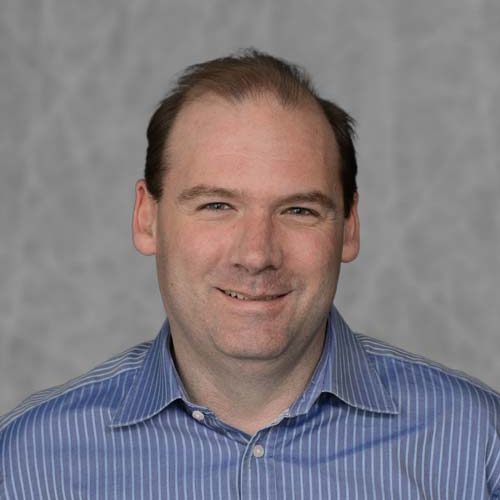
Gavin Conant
· Associate Professor of Biological SciencesNorth Carolina State University · Statistics
Active 2001–2026
Academic metrics are sourced from OpenAlex and public funding records; values may differ from Google Scholar.
Research topics
- Biology
- Genetics
- Evolutionary biology
- Computational biology
- Botany
- Zoology
- Ecology
Selected publications
Phylogeny and multiple independent whole‐genome duplication events in the Brassicales
American Journal of Botany · 2020 · 59 citations
Premise Whole‐genome duplications (WGDs) are prevalent throughout the evolutionary history of plants. For example, dozens of WGDs have been phylogenetically localized across the order Brassicales, specifically, within the family Brassicaceae. A WGD event has also been identified in the Cleomaceae, the sister family to Brassicaceae, yet its placement, as well as that of WGDs in other families in the order, remains unclear. Methods Phylo‐transcriptomic data were generated and used to infer a nucle…
New Phytologist · 2021 · 48 citations
Many crops are polyploid or have a polyploid ancestry. Recent phylogenetic analyses have found that polyploidy often preceded the domestication of crop plants. One explanation for this observation is that increased genetic diversity following polyploidy may have been important during the strong artificial selection that occurs during domestication. In order to test the connection between domestication and polyploidy, we identified and examined candidate genes associated with the domestication of…
The lasting after-effects of an ancient polyploidy on the genomes of teleosts
PLoS ONE · 2020 · 41 citations
1st authorCorrespondingThe ancestor of most teleost fishes underwent a whole-genome duplication event three hundred million years ago. Despite its antiquity, the effects of this event are evident both in the structure of teleost genomes and in how the surviving duplicated genes still operate to drive form and function. I inferred a set of shared syntenic regions that survive from the teleost genome duplication (TGD) using eight teleost genomes and the outgroup gar genome (which lacks the TGD). I then phylogenetically…
Communications Biology · 2024-09-12 · 21 citations
articleOpen accessThermophily is a trait scattered across the fungal tree of life, with its highest prevalence within three fungal families (Chaetomiaceae, Thermoascaceae, and Trichocomaceae), as well as some members of the phylum Mucoromycota. We examined 37 thermophilic and thermotolerant species and 42 mesophilic species for this study and identified thermophily as the ancestral state of all three prominent families of thermophilic fungi. Thermophilic fungal genomes were found to encode various thermostable en…
Convergent evolution of polyploid genomes from across the eukaryotic tree of life
G3 Genes Genomes Genetics · 2022 · 21 citations
Senior authorCorrespondingBy modeling the homoeologous gene losses that occurred in 50 genomes deriving from ten distinct polyploidy events, we show that the evolutionary forces acting on polyploids are remarkably similar, regardless of whether they occur in flowering plants, ciliates, fishes, or yeasts. We show that many of the events show a relative rate of duplicate gene loss before the first postpolyploidy speciation that is significantly higher than in later phases of their evolution. The relatively weak selective c…
Recent grants
NSF · $316k · 2014–2017
Inferring the gene coevolution network from deep comparative genomics
NSF · $500k · 2023–2026
Frequent coauthors
- 42 shared
J. Chris Pires
- 25 shared
Patrick P. Edger
Michigan State University
- 24 shared
Yue Hao
- 17 shared
Jeremy Schmutz
HudsonAlpha Institute for Biotechnology
- 17 shared
Jacob D. Washburn
Agricultural Research Service
- 13 shared
Makenzie E. Mabry
University of Florida
- 13 shared
Eric Lyons
University of Arizona
- 11 shared
W. R. Lamberson
University of Missouri
Similar researchers at North Carolina State University
- Resume-aware match score
- Save to shortlist
- AI-drafted outreach
See your match with Gavin Conant
PhdFit ranks faculty by your research interests, methods, and publications — grounded in their actual work, not templates.
- Free to start
- No credit card
- 30-second signup