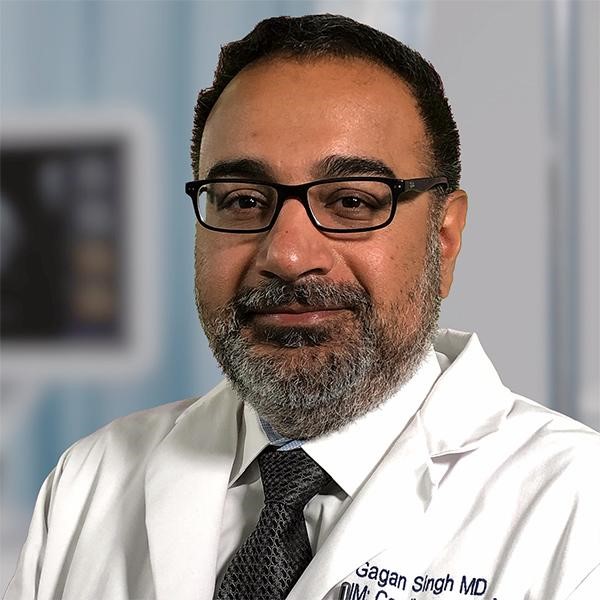
Gagan Singh
· M.D., F.A.C.C., F.S.C.A.I.University of California, Davis · Cardiology
Active 1983–2024
Research topics
- Cardiology
- Internal medicine
- Medicine
- Surgery
Selected publications
Transcatheter Repair for Patients with Tricuspid Regurgitation
New England Journal of Medicine · 2023 · 808 citations
- Medicine
- Cardiology
- Internal medicine
BACKGROUND: Severe tricuspid regurgitation is a debilitating condition that is associated with substantial morbidity and often with poor quality of life. Decreasing tricuspid regurgitation may reduce symptoms and improve clinical outcomes in patients with this disease. METHODS: We conducted a prospective randomized trial of percutaneous tricuspid transcatheter edge-to-edge repair (TEER) for severe tricuspid regurgitation. Patients with symptomatic severe tricuspid regurgitation were enrolled at 65 centers in the United States, Canada, and Europe and were randomly assigned in a 1:1 ratio to receive either TEER or medical therapy (control). The primary end point was a hierarchical composite that included death from any cause or tricuspid-valve surgery; hospitalization for heart failure; and an improvement in quality of life as measured with the Kansas City Cardiomyopathy Questionnaire (KCCQ), with an improvement defined as an increase of at least 15 points in the KCCQ score (range, 0 to 100, with higher scores indicating better quality of life) at the 1-year follow-up. The severity of tricuspid regurgitation and safety were also assessed. RESULTS: A total of 350 patients were enrolled; 175 were assigned to each group. The mean age of the patients was 78 years, and 54.9% were women. The results for the primary end point favored the TEER group (win ratio, 1.48; 95% confidence interval, 1.06 to 2.13; P = 0.02). The incidence of death or tricuspid-valve surgery and the rate of hospitalization for heart failure did not appear to differ between the groups. The KCCQ quality-of-life score changed by a mean (±SD) of 12.3±1.8 points in the TEER group, as compared with 0.6±1.8 points in the control group (P<0.001). At 30 days, 87.0% of the patients in the TEER group and 4.8% of those in the control group had tricuspid regurgitation of no greater than moderate severity (P<0.001). TEER was found to be safe; 98.3% of the patients who underwent the procedure were free from major adverse events at 30 days. CONCLUSIONS: Tricuspid TEER was safe for patients with severe tricuspid regurgitation, reduced the severity of tricuspid regurgitation, and was associated with an improvement in quality of life. (Funded by Abbott; TRILUMINATE Pivotal ClinicalTrials.gov number, NCT03904147.).
Frequent coauthors
- 74 shared
Ehrin J. Armstrong
University of Colorado Denver
- 73 shared
Jason H. Rogers
University of California, Davis
- 50 shared
Thomas W. Smith
- 42 shared
Stephen W. Waldo
University of Colorado Denver
- 41 shared
Damianos G. Kokkinidis
Yale University
- 35 shared
John R. Laird
St. Helena Hospital
- 28 shared
Khung Keong Yeo
National Heart Centre Singapore
- 25 shared
Omar Jawaid
Similar researchers at University of California, Davis
- Resume-aware match score
- Save to shortlist
- AI-drafted outreach
See your match with Gagan Singh
PhdFit ranks faculty by your research interests, methods, and publications — grounded in their actual work, not templates.
- Free to start
- No credit card
- 30-second signup