Resume-aware faculty matching

Find professors who actually fit you

Upload your resume. Four AI agents analyze your background, rank the faculty who fit, inspect their recent research, and help you draft outreach — grounded in their actual work, not templates.

Free to startNo credit cardCancel anytime
Top matches Balanced preset
Dr. Sarah Chen
Stanford · Interpretability · NLP
91
Dr. Marcus Holloway
MIT · Robotics · RL
84
Dr. Aisha Okonkwo
CMU · Fairness · HCI
82
Nova · Professor Researcher · re-ranking top 20…
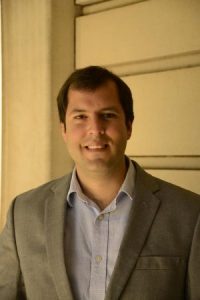
Gabriel Prieto

Gabriel Prieto

· Associate Professor, AnthropologyVerified

University of Florida · Toxicology and Pharmacology

Active 2010–2026

h-index10
Citations272
Papers7227 last 5y
Funding
See your match with Gabriel Prieto — sign in to PhdFit.Sign in

About

Gabriel Prieto is a faculty member in the Department of Anthropology at the University of Florida. He holds a Ph.D. from the Department of Anthropology at Yale University, where he was supervised by Dr. Richard L. Burger. His research focuses on the archaeology and anthropology of the northern coast of Peru, with particular attention to early ceremonial architecture, fishing communities, and prehispanic maritime societies. Prieto's work includes excavations and analyses of residential settlements and ceremonial sites from the Late Preceramic and Initial Periods, such as the Gramalote fishing settlement, where he has explored the role of community-level ceremonies and their relationship to larger religious centers. He has also conducted detailed studies on the social dynamics, material culture, and subsistence practices of prehispanic fishermen, including the use of reed boats and the cultural trajectory of fishing communities in the Rímac valley and surrounding coastal areas. His interdisciplinary approach combines archaeological excavation, spatial analysis, ethnographic data, and technical studies such as petrographic and pigment analyses to deepen understanding of ancient Andean societies.

Research topics

  • Geography
  • Archaeology
  • Biology
  • Computer Science
  • Fishery
  • Agronomy
  • Geology
  • Ancient history
  • Ecology
  • Art
  • Animal science
  • History
  • Agroforestry
  • Food science

Selected publications

  • The Purpose Death Serves: Trauma Analysis of Human Sacrifices at El Pollo, Moche Valley, Peru

    Latin American Antiquity · 2026-04-14

    articleOpen access

    Abstract Human sacrifice is one of the most dramatic and enduring rituals known to ancient societies. Death of the victim represents the climax of the event because lethal violence produces vivid images that articulate power relations between the organizers, audience, and those sacrificed. This study reconstructs burial treatments, biological profiles, and trauma patterns on 49 human sacrifices excavated from the site El Pollo located 13 km from Chan Chan, the capital city of the Chimú Empire (AD 1050/1100–1450), in the Moche Valley, Peru. Children and adolescents ( n = 31/37) exhibit cutmarks to the anterior chest, which mirror the victim profiles and patterning of skeletal trauma documented at other Chimú sacrificial sites. Sacrifice at El Pollo also involved opening the chest cavities of adult males, dispatching bound male captives, and administering incisions to victim torsos to release blood. Given the administrative capacity and imperial enterprises of the Chimú Empire, these data indicate that sacrifice at El Pollo was part of a highly systematic ritual program staged throughout the Moche Valley and overseen by ruling elites at Chan Chan. This study provides evidence that sacrifice was modified to suit the civic-ceremonial needs of the empire and supported imperial efforts of militaristic expansion.

  • Mass spectrometry measurements of mercury isotope ratios support geochemical sourcing of archaeological cinnabar in the Andean region

    PLoS ONE · 2025-07-07 · 2 citations

    articleOpen access

    Geochemical methods can identify the long-distance exchange of resources in the archaeological record. Cinnabar is a mineral with a limited number of geological sources; however, methods for determining the geological origin of cinnabar are constricted by the limited availability of comparative geological source materials. This study applies a multi-method approach to compare isotopic ratios of mercury and sulfur in archaeological specimens of cinnabar from museum collections and scientifically excavated materials from the Andes region of South America. We demonstrate that the δ202Hg to Δ199Hg relationship, assessed through Multicollector Inductively Coupled Plasma Mass Spectrometry (MC-ICP-MS), falls along a predictive slope, while Isotope Ratio Mass Spectrometry (IR-MS) for sulfur (S) was not a reliable proxy for determining ore source. Furthermore, Hg isotope ratios from similar sites and contexts tended to cluster, suggesting that most sites exploited cinnabar from the same ore source. Statistical analyses support the idea that the Huancavelica deposit served as the primary source of cinnabar pigment for pre-Hispanic societies, while also revealing some intriguing divergences that suggest alternate sources were exploited during certain periods on the North and South Coasts of Peru. These results demonstrate that MC-ICP-MS analyses of mercury can be used to geochemically trace cinnabar ore in the Andes and beyond.

  • Two cases of smallpox from 1540 CE circum-contact (early colonial) Northern Coastal Peru

    International Journal of Paleopathology · 2024-04-22 · 1 citations

    articleOpen accessSenior author

    OBJECTIVE: This project seeks to create a differential diagnosis for lesions found on the skeletal remains of two children as a means to explore the presence of viral disease in 16th- century Peru. MATERIALS: Extremely well-preserved human remains of two children who died between the ages of 1-2 years old, recovered from the circum-contact (∼1540 CE) cemetery in Huanchaco, Peru. METHODS: Macroscopic and radiographic analysis. RESULTS: Both individuals present with cortical thickening, symmetrical destructive lesions, metaphyseal expansion, perforations, exposure of the medullary cavity, resorption of metaphyseal ends and necrosis of the long bones, and deposited reactive new bone. These features are consistent with osteomyelitis variolosa and bacterial osteomyelitis. CONCLUSIONS: Three features of Individuals IG-124 and IG-493 suggest a highly consistent diagnosis of osteomyelitis variolosa: multiple skeletal lesions, the historical context of the area, and the high mortality rate of non-adults in the circum-contact cemetery. SIGNIFICANCE: Although viral infections are ubiquitous and well documented historically, their etiologies are often difficult to determine in archaeological populations. Orthopoxvirus variola (smallpox) is one of the many viruses whose archaeological impact is still under explored in skeletal remains. LIMITATIONS: The absence of smallpox in other children from the Huanchaco cemetery creates difficulty in ascertaining true prevalence rates or information on potential outbreaks. SUGGESTIONS FOR FURTHER RESEARCH: Further research analyzing aDNA from calculus and/or residues using a DIP-GC-MS method might create a better understanding of how smallpox spread through the region.

  • Seki, Yuji (ed.): New Perspectives on the Early Formation of the Andean Civilization. Chronology, Interaction, and Social Organization

    Anthropos · 2024-01-01

    article1st authorCorresponding
  • Caracterización de muestras policristalinas para fines arqueológicos por cinemática de difracción de rayos X y refinamiento Rietveld

    Revista de Investigación de Física · 2024-04-24

    articleOpen access

    Muestras geológicas de arcilla del valle de Moche fueron investigadas con el objetivo de continuar elaborando una base de datos de arcillas que se pueda contrastar con la composición mineralógica de muestras arqueológicas. Un estudio de pigmentos blancos de mural, con fines de preservación y puesta en valor, forma parte de esta investigación. En ambos casos, el objetivo fue determinar cualitativa y cuantitativamente la composición mineralógica de los materiales, aplicando difracción de rayos X. Las medidas de difracción fueron analizadas por refinamiento Rietveld para determinar el porcentaje en peso de las fases previamente identificadas. De la identificación, las muestras geológicas de arcilla presentaron fases de cuarzo y diversas arcillas, particularmente la anortita como fase mayoritaria; también se identificó albita. La presencia de estas dos últimas fases podría ser un indicador para determinar la procedencia de materiales utilizados en la elaboración y preparación de los cerámicos arqueológicos. Por otro lado, en todas las muestras de pigmento fueron identificadas fases de cuarzo, arcillas, calcita, yeso y halita; la calcita y el yeso serían los responsables del color en los pigmentos, en tanto que la halita sería un contaminante externo proveniente de la brisa marina.

  • :<i>Foodways of the Ancient Andes: Transforming Diet, Cuisine, and Society</i>

    Journal of Anthropological Research · 2024-08-14

    article1st authorCorresponding
  • Family relations of Moche elite burials on the North Coast of Peru (~500 CE): Analyses of the Señora de Cao and relatives

    Proceedings of the National Academy of Sciences · 2024-12-23 · 5 citations

    articleOpen access

    The Moche archaeological culture flourished along Peru’s North Coast between the 4th and 10th centuries CE and was characterized by a complex social hierarchy dominated by political and religious elites. Previous archaeological evidence suggests kinship was a key factor in maintaining political authority within Moche society. To test this hypothesis, we applied archaeological, genetic, and isotopic methods to examine familial relationships between six individuals, including the prominent Señora de Cao ( ~500 CE ), buried together in a pyramid-like, painted temple, Huaca Cao Viejo, in the Chicama Valley, Peru. Our findings reveal that all six individuals were biologically related, with varying degrees of kinship. The Señora de Cao was interred with a sacrificed juvenile, identified as a possible niece, and at least one, and potentially two siblings and a grandparent in separate tombs nearby. One of the male siblings was accompanied in death by his sacrificed son. Isotopic analysis indicates that while most individuals had diets rich in maize and animal protein and spent their childhoods in or near the Chicama Valley, the sacrificed juvenile accompanying the Señora had a distinct diet and geographic origin. These results demonstrate that Moche elites were interred with family members, including some raised far from their parental homes. This supports the hypothesis that kinship was central to transmitting status and authority. Moreover, sacrificing family members to accompany deceased elites underscores the significance of ritual sacrifice in reinforcing familial ties and linking the deceased to both ancestors and the divine.

  • Moche chronology of ancient Peru: Bayesian assessment of radiocarbon dates and ceramic styles from north to south

    Quaternary International · 2024 · 5 citations

    • Computer Science
    • Archaeology
    • Geology

    In the last decade Bayesian analysis of radiocarbon dates has become commonplace for archaeologists grappling with regional chronologies. Here we present Bayesian analysis for radiocarbon dates from Moche cultural contexts from the north coast of Peru with the aim to understand the duration of the phenomenon and to compile all known dates in a single location for future analysis and use. The analysis demonstrates that the long-standing Moche ceramic sequence does not provide a perfect proxy for tracking the timing of all social interactions. However, our results show general agreement with traditional relative Moche chronologies. Finally, our study shows that Moche was a shorter cultural phenomenon than has been previously argued, with the current data indicating that it began between the late 4th and early 6th centuries CE and lasted until the 9th century CE.

  • ESTUDIO ESTRUCTURAL Y MICROESTRUCTURAL DE PIGMENTOS BLANCOS ARQUEOLÓGICOS DE LA SOCIEDAD MOCHE (200-750/800 D.C.) POR DIFRACCIÓN DE RAYOS X Y REFINAMIENTO RIETVELD

    Revista Boliviana de Física · 2024-11-30

    articleOpen accessSenior author

    Pampa La Cruz is one of the most important archaeological complexes on the Peruvian north coast. One of the main challenges is the study of its wall paintings and pigments, for the purpose of preservation and enhancement. With this perspective, the present study was oriented to qualitatively and quantitatively determine the mineralogical composition of the wall pigments of this site and to identify the presence of deterioration agents. The X-ray diffraction technique was applied and the diffraction intensities were analyzed by the refinement of the crystal structure of the theoretical model applying the Rietveld method. The refinement results provided information on the parameters associated with the structure and microstructure of each identified phase, as well as, its weight percentage. Quartz, clays and halite salt were identified in all pigment samples. These results differ from those obtained in previous research regarding the white pigment from the Huaca de La Luna site.

  • CREANDO EL VALLE DE CHIMOR: RECONSIDERACIONES Y ESTUDIOS PRELIMINARES DE LA MEGAINFRAESTRUCTURA CHIMÚ EN LOS ALREDEDORES DE CHAN CHAN (SIGLOS XI Y XV DC)

    Chungara · 2023-01-01

    articleOpen access1st authorCorresponding

    En este artculo presentamos los resultados de una investigacin preliminar en varios sitios Chim ubicados en los alrededores de Chan Chan, una ciudad prehispnica que fue habitada entre los siglos XI y XV de nuestra era. Esta investigacin se centra en enfatizar la concepcin de un megaproyecto arquitectnico emprendido por el Estado chim para crear un valle artificial donde se construy la ciudad de Chan Chan, pero al mismo tiempo, planificar el espacio geogrfico para la ubicacin de caminos, centros poblados, campos de cultivo y canales de irrigacin alrededor de la urbe. Parte de esa planificacin implic la realizacin de sacrificios masivos de nios y camlidos, sobre todo cerca de la costa. Adicionalmente, el autor evala la hiptesis sobre la funcin de una muralla de 12 km de largo construida en la zona norte de la ciudad de Chan Chan, la que al parecer sirvi para proteger la infraestructura construida de avalanchas o aluviones que espordicamente afectaban la zona como consecuencia de eventos tipo ENSO (El Nio

Frequent coauthors

  • Nicolás Goepfert

    Archéologie des Amériques

    17 shared
  • John W. Verano

    Tulane University

    14 shared
  • Élise Dufour

    Archéozoologie et Archéobotanique

    12 shared
  • Isabelle Druc

    University of Wisconsin–Madison

    6 shared
  • Alicia Espinosa

    Université Paris 1 Panthéon-Sorbonne

    6 shared
  • Jeffrey Quilter

    Harvard University Press

    5 shared
  • Richard C Sutter

    Indiana University – Purdue University Fort Wayne

    5 shared
  • Celeste Marie Gagnon

    Wagner College

    5 shared

Labs

Education

  • Ph.D., Anthropology

    Yale University

    2015
  • Other

    Universidad Nacional de Trujillo

    2015

Awards & honors

  • 2019 Shanghai Forum Field Award for the research done at the…
  • Resume-aware match score
  • Save to shortlist
  • AI-drafted outreach

See your match with Gabriel Prieto

PhdFit ranks faculty by your research interests, methods, and publications — grounded in their actual work, not templates.

  • Free to start
  • No credit card
  • 30-second signup