Resume-aware faculty matching

Find professors who actually fit you

Upload your resume. Four AI agents analyze your background, rank the faculty who fit, inspect their recent research, and help you draft outreach — grounded in their actual work, not templates.

Free to startNo credit cardCancel anytime
Top matches Balanced preset
Dr. Sarah Chen
Stanford · Interpretability · NLP
91
Dr. Marcus Holloway
MIT · Robotics · RL
84
Dr. Aisha Okonkwo
CMU · Fairness · HCI
82
Nova · Professor Researcher · re-ranking top 20…
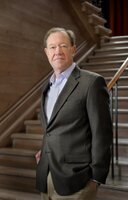
Frederick E Hoxie

Frederick E Hoxie

· Swanlund Professor

University of Illinois Urbana-Champaign · American Indian Studies

Active 1978–2024

h-index18
Citations1.4k
Papers1203 last 5y
Funding
See your match with Frederick E Hoxie — sign in to PhdFit.Sign in

About

Frederick E Hoxie is a Swanlund Professor trained as a social and political historian, with a focus on the history of indigenous peoples in North America and their relations with European settlers and governments. He has extensive experience in developing programs for scholars, students, and teachers that promote the study of the Native American past, and has administered an internationally-acclaimed fellowship program supported by major foundations and agencies. Prior to his tenure at Illinois, he served for fifteen years at the Newberry Library, where he was Director of the D'Acry McNickle Center for American Indian History and later Vice President for Research and Education. At Illinois, he teaches courses in Native American history for both graduate and undergraduate students, and has also taught at Antioch College and Northwestern University. Hoxie has been recognized with honorary degrees from Amherst College and Long Island University, and was elected to the American Academy of Arts and Sciences in 2013. His career includes roles as a public historian, consultant, and expert witness for various government agencies and organizations, and he has served as President of the American Society for Ethnohistory and on the governing boards of institutions such as Amherst College, the Illinois Humanities Council, and the Smithsonian Institution's National Museum of the American Indian.

Research topics

  • Sociology
  • Political Science
  • History
  • Ethnology
  • Geography
  • Genealogy
  • Anthropology
  • Economic history
  • Archaeology
  • Law
  • Economic geography

Selected publications

  • Without Destroying Ourselves: A Century of Native Intellectual Activism for Higher Education

    Journal of American History · 2024

    1st authorCorresponding
    • Political Science
    • Sociology
    • Political Science

    Journal Article Without Destroying Ourselves: A Century of Native Intellectual Activism for Higher Education Get access Without Destroying Ourselves: A Century of Native Intellectual Activism for Higher Education. By John A Goodwin. (Lincoln: University of Nebraska Press, 2022. xvi, 247 pp. $60.00.) Frederick E Hoxie Frederick E Hoxie University of Illinois, Urbana-Champaign, Illinois Search for other works by this author on: Oxford Academic Google Scholar Journal of American History, Volume 110, Issue 4, March 2024, Page 788, https://doi.org/10.1093/jahist/jaad392 Published: 01 March 2024

  • Murder and Memory in Territorial Hawai‘i: A Moloka‘i Microhistory

    Western Historical Quarterly · 2023

    1st authorCorresponding
    • Sociology
    • Political Science
    • History

    Abstract The murder of Elmer Conant on the tiny island of Moloka‘i in June, 1923, was an act of local resistance to a wave of social and economic change. The hunt for Conant’s murderer, and the subsequent prosecution of a Native Hawaiian man local authorities believed was responsible for it, reveal the power territorial elites could exercise over life in rural Hawai‘i, the ambiguous nature of indigenous response to that rule, and the way colonial power could shape memories of the era. This microhistory reverses the conventional lens used to examine Hawaiian history by concentrating on rural events and ordinary people far removed from the capital city who confronted the forces of colonialism and whose struggles helped shape island history.

  • Exploring a Cultural Borderland: Native American Journeys of Discovery in the Early Twentieth Century

    Routledge eBooks · 2020 · 1 citations

    1st authorCorresponding
    • Sociology
    • History
    • Geography

    Exploring the professional art world and using their paintings to display the richness and beauty of tribal life, the Indian painters of the 1920s and 1930s asserted that their art embodied the survival of Native American traditions. The journeys of discovery launched by Native Americans in the first decades of this century were similar adventures in the cultural borderlands separating racial communities in the United States. The United States Court of Claims was the most popular legal forum for tribal leaders in the early twentieth century. For Mourning Dove’s generation, the future depended on their ability to define and protect areas in American cultural and political life where the “ancient way” might somehow survive. Their efforts in the years between 1900 and 1930, which engaged them in fields as various as literature, anthropology, art, religion, and politics, were Native American journeys of discovery, journeys devoted to the search for a new home in a captured land.

  • American Society of Ethnohistory Lifetime Achievement Award 2018 Recipients

    Ethnohistory · 2019-07-01

    article

    Susan M. Deeds, Professor Emeritus of History, Northern Arizona University. It is a great honor and personally a deeply felt pleasure to present this dedication to Susan M. Deeds, for her richly deserved ASE Lifetime Achievement Award. Susan has contributed immeasurably to the development of the ASE through her direct involvement in the Society and in her career of creative research and inspired teaching and mentorship of students, postgraduate fellows, and colleagues. Susan has shaped the field of ethnohistory in important ways from her professional base at Northern Arizona University and through her internationally famous hospitality in Mexico City.Susan has published extensively in both English and Spanish, and her work has appeared in a host of collective publications in the US and in Mexico. Her book, Defiance and Deference in Mexico’s Colonial North, published by the University of Texas Press in 2003, is widely cited by scholars working across languages and national borders. In addition, Susan contributed to benchmark publications like Nómadas y sedentarios en el norte de México, an ambitious collective work published by the Universidad Nacional Autónoma de México in 2000, and Choice, Persuasion, and Coercion: Social Control on Spain’s North American Frontiers, published by the University of New Mexico Press in 2005. Susan’s work appeared in the important three-volume publication Vías del noroeste, an international project that brought together path-breaking research in archaeology, ethnography, and history for the broadly defined regions of northwestern Mexico and southwestern US in three symposia that led to the publication of this important work by the Universidad Nacional Autónoma de México, the Universidad Autónoma Metropolitana, and Northern Arizona University.In all these endeavors Susan has helped to shape the contours of interdisciplinary borderlands studies and to open innovative pathways for ethnohistory. Susan’s scholarship serves as a model for the best creative practices to reach across the boundaries of language and national research traditions in order to build truly collaborative bases of knowledge production and knowledge sharing.Susan Deeds’s rigorous archival work and her attentiveness to ethnographic nuances have set a standard for interpreting the intersectionality of gender, ethnicity, class, and region, as exhibited in her articles on Antonia, a runaway mulatto slave who transgressed gender boundaries (in Choice, Persuasion Coercion, 2005) and on witchcraft in the frontier presidio of Monclova, published in the Mexican journal Desacatos 2002, a project that she is developing into a book. Her pioneering work in the mountainous borderlands of Nueva Vizcaya and in the thematic borderlands of gender and indigenous studies draws on bold conceptual frameworks from history and anthropology to bring new actors into the historical theater and to inspire all of us to reach for new questions.—Cynthia Radding, University of North Carolina, Chapel HillRayna Green, Curator Emerita, Smithsonian Institution, The National Museum of American History. Whether in the fields of ethnohistory, American studies, or indigenous studies, in museum galleries across the country, or through appearances and production work on scores of films, musical recordings, and nationally broadcast television and radio appearances, Rayna Green’s career is quite unusual in its broad scope and impact. While completing her BA and then, in 1966, an MA in American Studies at SMU, she fired her first shots across the bow in Texas, through marches, protests, and that exquisite political weaponry of the time known as folk music hootenannies. After completing her PhD in folklore and American studies at the University of Indiana, for years she taught and/or directed research initiatives at institutions such as UMass, Dartmouth, and the American Association for the Advancement of Science, before serving as curator and director of the American Indian Program at the Smithsonian’s National Museum of American History.Rayna’s work has yielded tremendous insight into the social and political workings of contemporary expressive culture—she has provided critical methods and lasting intellectual frameworks for demonstrating how and why art, music, photography, and foodways matter, particularly as these modes are wielded by contemporary indigenous peoples. Her early and oft-reprinted essays such as “The Pocahontas Perplex” and “A Tribe Called Wannabe: Playing Indian in Europe and America,” inspired a legion of scholars to study the long history and enduring legacy of Native representations. Likewise, another substantial body of her work that features equally wonderful and evocative titles, such as “The Beaded Adidas,” “The Mickey Mouse Kachina,” and “Rosebuds of the Plateau: Frank Matsura and the Fainting Couch Aesthetic,” was foundational in exploding the binaries of “traditional” vs. “modern,” that is, “Native” vs. “modern,” that had relentlessly suffocated multiple disciplinary fields.As curator, her scholarship has impacted tens of millions of people who have experienced her landmark exhibitions, including American Encounters and FOOD: Transforming the American Table. Her role at the Smithsonian enabled her to work directly with dozens of interns and fellows from universities that spanned the country. She inspired her mentees to discover and reveal the profound universe of meaning to be found in every photograph, handmade belt buckle, or bottle of wine. And as her museum colleagues often recount, she led by example, and never hesitated to stand up and say something when no one else would, when it was needed most. As for the rest of her colleagues’ stories, though, I think we’ll need to hunt down that bottle of wine.—John W. Troutman, Smithsonian InstitutionFrederick E. Hoxie, Professor Emeritus of History and Swanlund Professor Emeritus of American Indian Studies, University of Illinois, Urbana-Champaign. For forty years, Fred E. Hoxie has been one of the most influential figures in our field. His impact has been felt not just through his vast corpus of scholarly works but also from his leadership. He has promoted ethnohistory to other historians, helped build ethnohistory as a scholarly community, and pushed beyond the academy to establish connections and encourage dialogue between ethnohistorians, tribal communities, and the general public.In his fifteen years at the Newberry Library, first as director of the D’Arcy McNickle Center for the History of the American Indian and later as its vice president for research and education, Hoxie greatly expanded the library’s fellowship program and sponsored numerous, field-defining symposia. He made the Newberry a hive of ethnohistory production and a home for its practitioners. As Hoxie reached out to Native communities—sometimes sending scholars to them, sometimes inviting members of tribal communities to the Newberry—ethnohistory flourished as an area of academic inquiry prioritizing awareness of and sensitivity to Native American perspectives on the past. Hoxie’s commitment to public engagement continued after he left the Newberry and joined the University of Illinois as Swanlund professor of history. He has served as a consultant and expert witness for various federal agencies and the National Congress of American Indians and was a founding trustee of the National Museum of the American Indian.Among his many monographs, syntheses, edited collections, textbooks, encyclopedias, and articles, I will mention only two. His first book, A Final Promise: The Campaign to Assimilate the Indians, 1880–1920, published in 1984, remains an essential text. Situating US Indian policy within the larger debates over race, immigration, and assimilation preoccupying gilded-age America, A Final Promise retrieved Indian policy from the esoteric margins of US historiography and put it at the center of the US history master narrative. In 2012, This Indian Country: American Indian Activists and the Place They Made highlighted the political activism of Indian intellectuals over two centuries as they articulated fundamental principles and strategies in defense of Indian rights. These two works exemplify Hoxie’s scholarly achievement. He has made Native history integral to our understanding of modern US history, and he has done so by bringing Indian voices to the forefront.—Nancy Shoemaker, University of ConnecticutFrank Salomon, John V. Murra Professor Emeritus, University of Wisconsin–Madison. “Throw away the light, the definitions, and say what you see in the dark.” This injunction by the great American poet, Wallace Stevens, serves as an apt description of Frank Salomon’s career. For over three decades, Frank has illuminated previously hidden dimensions of Andean life, bringing us to new understandings of history, writing, religion, and ritual from Ecuador to Bolivia. All the while he has promoted an anthropology that seamlessly combines history, ethnography, and philology. Throughout his research he has forged enduring friendships in the field—if you go to any of the Andean communities where Frank has worked and you mention his name, peoples’ faces light up with pleasure and they inundate you with messages to bring home to him.His earliest work, Native Lords of Quito in the Age of the Incas, based on a fine-grained analysis of archival sources, rewrote the political economy of the Northern Andes and permanently transformed scholarship in the region. His elegant analysis and annotation of the Huarochirí manuscript—a colonial Quechua cycle of myths and legends from Central Peru—has guided generations of scholars and students into the nuances of Andean belief, ontology, and language. His editorship, with Stuart Schwartz, of the Cambridge History of the Native Peoples of the Americas, memorializes the efforts of a generation not only to find “Indian” voices, but also to capture the subtleties of how indigenous peoples actively appropriate and transform the cultural and physical world around them.While living in Huarochirí, Frank uncovered the existence of a Central Andean tradition of using khipus—texts made of knotted cords—for village-level record keeping. It had been thought that khipu use had been destroyed, for the most part, in the Spanish invasion of Peru. However, Frank’s work with the khipus of Tupicocha and Rapaz exploded all of our previous assumptions about Andean textual traditions, revealing to us the shape of a secretive philological heritage whose ramifications we are still striving to understand. As someone who has tried to follow, however imperfectly, in Frank’s footsteps in the Central Andes, I have found him to be unfailingly generous and kind, and he has supported me more times than I can count.His most recent book, At the Mountain’s Altar: Anthropology of Religion in an Andean Community, about the people of San Cristóbal de Rapaz, highlights the degree to which his research is always collaborative with the local communities and village authorities. In Rapaz today he is spoken of with reverence for the positive changes he has helped to bring about in the community, preserving the sacred khipu guarded in the village’s ritual enclosure.Frank Salomon’s life’s work has literally rewritten the history of the Native peoples of the Andes, from Quito to La Paz. By recounting to us what he “sees in the dark,” he illumines all who know him.—Sabine Hyland, University of St. Andrews

  • Nevada street: A center for the study of race and ethnicity

    2017-01-01

    article1st authorCorresponding
  • The University of Illinois

    2017-01-01

    article1st authorCorresponding
  • The University of Illinois: Engine of Innovation

    2017-01-01

    article1st authorCorresponding
  • Preface: Changing the world from a very small place

    2017-01-01

    article1st authorCorresponding
  • Introduction: A university for learning and labor

    2017-01-01

    article1st authorCorresponding
  • Anthropologists and Late Nineteenth Century American Indian Policy

    History of Anthropology Newsletter · 2016-01-01

    article1st authorCorresponding

Frequent coauthors

  • John Solomos

    Health Affairs

    5 shared
  • Peter J. Albert

    3 shared
  • Tamara Dragadze

    3 shared
  • Henry Friedlander

    2 shared
  • E. Jane Gay

    2 shared
  • Joan Mark

    2 shared
  • Peter J. Ling

    2 shared
  • Philip Weeks

    Swinburne University of Technology

    2 shared

Awards & honors

  • Fellow of the American Academy of Arts and Sciences (2013)
  • Resume-aware match score
  • Save to shortlist
  • AI-drafted outreach

See your match with Frederick E Hoxie

PhdFit ranks faculty by your research interests, methods, and publications — grounded in their actual work, not templates.

  • Free to start
  • No credit card
  • 30-second signup