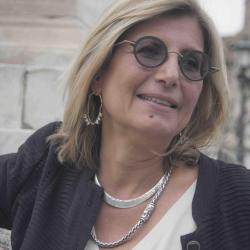
Francesca Fiorani
· Commonwealth Professor of Art HistoryVerifiedUniversity of Virginia · Art History
Active 1996–2025
About
Francesca Fiorani is the Commonwealth Professor of Art History at the University of Virginia, where she teaches and conducts research related to Renaissance art. She holds a Ph.D. from the University of Rome 'La Sapienza' and specializes in the intersections of art, science, and technology in the early modern period. Her work explores Renaissance practices that bridge artists' training and university education, the visualization of knowledge, and the relations between science and religion, with particular focus on themes such as observation, experience, optics, and Leonardo da Vinci. Fiorani is the author of 'The Marvel of Maps. Art, Cartography and Politics in Renaissance Italy' (2005) and has developed innovative research tools for visual and textual analysis through her digital publication 'Leonardo da Vinci and His Treatise on Painting' (2012). Her research emphasizes Leonardo da Vinci's lifelong project of transferring observations of the natural world from geometrical diagrams to paintings and drawings, and she has integrated modern technology into her art historical work. Fiorani's scholarly contributions have been recognized through honors and awards from numerous prestigious institutions, including the John Simon Guggenheim Memorial Foundation, the Harvard University Center for Italian Renaissance Studies, the American Council for the Learned Societies, the Getty Center, and others.
Research topics
- Art
- Computer Science
- Humanities
- Political Science
- Sociology
- Philosophy
- Art history
- Law
- Epistemology
- Visual arts
- Aesthetics
Selected publications
Renaissance Quarterly · 2025-09-01
article1st authorCorrespondingFicino and Fantasy: Imagination in Renaissance Art and Theory from Botticelli to Michelangelo. Marieke J. E. van den Doel. Aries Book Series 29. Leiden: Brill, 2021. xxii + 368 pp. + col. pls. $209. - Volume 78 Issue 3
The Invention of the Vitruvian Man: Vitruvius, Leonardo da Vinci, and Beyond
2024-03-11
book-chapter1st authorCorrespondingCelebrating the 500th anniversary of Leonardo Da Vinci’s death in his birthplace
Metascience · 2024-06-28
article1st authorCorresponding: <i>Renaissance Metapainting</i>
Renaissance Quarterly · 2023-12-01
article1st authorCorrespondingAn abstract is not available for this content so a preview has been provided. Please use the Get access link above for information on how to access this content.
Renaissance and Reformation · 2023
1st authorCorresponding- Humanities
- Art
- Humanities
This book is a study of sixteenth-century maps that places them within the broader debate on the power of images in Reformation and Counter-Reformation religious writings.The authors selected the Farnese Palace at Caprarola as their case study because its main audience hall, the Sala della Cosmografia, is decorated with marvellous mural maps representing the four continents, the world, and the sky.For the authors, the room, the decoration of which was commissioned by Cardinal Alessandro Farnese, is "the apotheosis not only of geography as a response to the Reformation from the point of view of sublime aesthetic, but also a place that condenses the [patron's] aspirations to the papal throne" (89).(
Leonardo da Vinci Studies: The State of the Field at the 500th Anniversary of the Artist's Death
Renaissance Quarterly · 2022 · 1 citations
1st authorCorresponding- Sociology
- Political Science
- Computer Science
A V I N C I studies are in effect two different-almost antagonistic-domains: a narrowly defined field that is so specialized that it scares scholars away (it takes years of dedicated work to learn how to deal with Leonardo's legacy), and a phenomenon of popular culture that is so massive that news about the artist's works makes headlines worldwide. Both aspects of Leonardo studies-the specialized scholarship and the vast public interestgrew exponentially in the past few decades and exploded in 2019, the year that marked the 500th anniversary of the artist's death. Although they only rarely come together, their convergence may offer the best hope for the future of Leonardo studies. Indeed, the recent anniversary provided a reminder that Leonardo da Vinci still touches the imagination of scholars and the general public in ways that force us to ask what is it that connects to our current age. Why is the study of this master of visualization, who made visible what could not be seen-vessels, muscles, water vortexes, wind, the intentions of people's minds-in diagrams, maps, sketches, figurative images, and paintings, significant for the current historical moment? Can we learn something from Leonardo studies-and, more broadly, from Renaissance studies, of which Leonardo studies are a part-as we struggle to find new frameworks to teach, research, innovate, and communicate with one another, or, to quote the mission statement of the Andrew W. Mellon Foundation, "to build just communities enriched by meaning and empowered by critical thinking, where ideas and imagination can thrive"? 1 Myriad events that stretched well beyond the twelve months of the anniversary year were planned worldwide, from major exhibitions at the Louvre, the Uffizi, the Queen's Gallery at Buckingham Palace, the Sforza Castle in Milan, and the National Gallery in Washington, DC, to smaller exhibitions in the artist's native town of Vinci, at the country house in the Loire Valley
Renaissance and Reformation · 2021-10-05
article1st authorCorrespondingFerretti, Emanuela, Cecilia Frosinini, Roberta Barsanti, and Gianluca Belli, eds. La Sala Grande e la Battaglia di Anghiari. Dalla configurazione architettonica all’apparato decorativo. An article from journal Renaissance and Reformation / Renaissance et Réforme (Experiencing the Environment in the Early Modern Period: Seasons, Senses, and Health), on Érudit.
Free voices beyond the borders The experience of the Italian exiles in Radio Londra (1940-1945)
2021-11-02
book-chapter1st authorCorrespondingIf it is true that the strength of words is not enough to win a war by itself, it is not improper to state that between 1939 and 1945 a real ‘war of words’ burst out all over Europe, in which propaganda became a weapon to weaken enemies. The BBC played a vital role in this context, becoming the reference broadcasting label for both the Allies and those tuning into its frequencies in the occupied countries, thus eluding censure and reticence by the government radios. This chapter examines the ways in which the broadcaster managed the foreign staff. It focuses on the Italian Service, among the different Regional Services. The broadcasts of Radio Londra became very popular in Italy and were able to win over a wide audience from different social and political classes. The Italian emigrants started working as translators or writers and finally, once they proved that their voice sounded pleasant on the microphone, could become speakers.
Geddes, Leslie A. Watermarks: Leonardo da Vinci and the Mastery of Nature.
Renaissance and Reformation · 2021-04-16
articleOpen access1st authorCorrespondingGeddes, Leslie A. Watermarks: Leonardo da Vinci and the Mastery of Nature.. An article from journal Renaissance and Reformation / Renaissance et Réforme (Spaces of Power of the Spanish Nobility (1480–1715)), on Érudit.
: <i>Florence and Its Painters: From Giotto to Leonardo da Vinci</i>
Renaissance Quarterly · 2020-09-01
article1st authorCorrespondingAn abstract is not available for this content so a preview has been provided. Please use the Get access link above for information on how to access this content.
Frequent coauthors
- 2 shared
Alessandro Nova
- 1 shared
A. Nova
Awards & honors
- John Simon Guggenheim Memorial Foundation
- Resume-aware match score
- Save to shortlist
- AI-drafted outreach
See your match with Francesca Fiorani
PhdFit ranks faculty by your research interests, methods, and publications — grounded in their actual work, not templates.
- Free to start
- No credit card
- 30-second signup