Upload your resume. PhdFit's six research agents compare your background with faculty profiles, recent publications, lab focus, and outreach opportunities, then rank professors with evidence you can review.
Ask how her lab is extending interpretability methods into fairness audits for real-world AI systems.
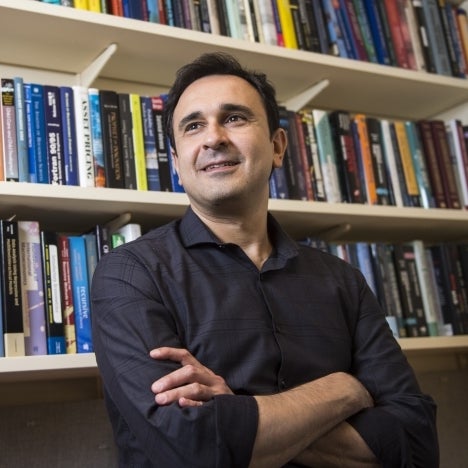
Rice University · Economics
Active 2003–2025
Flávio Cunha is the Ervin K. Zingler Chair of Economics at Rice University and Director of the Center for Economic Mobility at the Kinder Institute for Urban Research. He also serves as the Wiess College Magister. His research specializes in labor economics, focusing on human capital formation over the lifecycle. His contributions have been recognized with the Frisch Medal from the Econometric Society and the Aigner Award from the Journal of Econometrics.
National Bureau of Economic Research · 2025-03-01
This paper evaluates the Jumpstart Program (JSP), a parenting intervention implemented by a school district in the Houston area to enhance school readiness among economically disadvantaged three-year-old children. Unlike many early childhood programs typically tested in controlled research settings, JSP leverages existing school district resources for scalability and practical application. We conducted a three-year randomized controlled trial to measure the program’s impact on child cognitive outcomes, parental engagement, and mechanisms of change. The results indicate improvements in children’s performance on curriculum-aligned assessments and modest gains in general cognitive readiness as measured by the Bracken School Readiness Assessment. Furthermore, treatment group parents demonstrated increased reading frequency with their children, underscoring enhanced parental involvement as a crucial mechanism behind the program’s success. We employed a structural model to analyze both the direct effects of JSP and its indirect effects through changes in the marginal productivity of investments or preferences via habit formation. Our analysis concludes that 75% of the program’s impact is attributed to direct effects, while 25% is mediated through changes in habit formation in parental investments. Our research underscores the potential of scalable, real-world interventions to bridge socio-economic gaps in early childhood development and inform the design of effective educational policies.
Eliciting Maternal Knowledge about the Technology of Skill Formation
NIH · $3.1M · 2013–2019
Eliciting Maternal Knowledge about the Technology of Skill Formation
NIH · $674k · 2013–2018
James J. Heckman
Jennifer F. Culhane
Yale University
Irma T. Elo
University of Pennsylvania
Susanne M. Schennach
Brown University
Salvador Navarro
Ph.D., Economics
Rice University
PhdFit ranks faculty by your research interests, methods, and publications — grounded in their actual work, not templates.
Language Environment and Maternal Expectations: An Evaluation of the LENA Start Program
National Bureau of Economic Research · 2023-01-01 · 12 citations
Research documents that parental beliefs influence early investments in children, which, in turn, determine early human capital and, eventually, other skills children acquire in later stages of the lifecycle, such as literacy. Our paper reports the results of an experimental evaluation of the LENA Start Program, a group- and center-based parenting program that teaches the science of early language development, models verbal interaction behaviors with children, and provides objective feedback to improve the early language environment. The intervention changes parental beliefs and impacts the quantity and quality of parental linguistic input.
Reducing Bullying: Evidence from a Parental Involvement Program on Empathy Education
National Bureau of Economic Research · 2023-01-01 · 13 citations
According to UNESCO, one-third of the world’s youths are victims of bullying, which deteriorates academic performance and mental health, and increases suicide ideation and the risk of committing suicide. This paper analyzes a four-month parent-directed intervention designed to foster empathy in middle schoolers in China. Our implementation and evaluation study enrolled 2, 246 seventh and eighth graders and their parents, whom we assigned, at the classroom level, to the control or intervention condition randomly. We measured, before and after the intervention, parental investments, children’s empathy, and self-reported bullying perpetration and victimization incidents. Our analyses show that the intervention increased investments and empathy and reduced bullying incidents. In addition, we measured costs and found that it costs $12.50 for our intervention to reduce one bullying incident. Our study offers a scalable and low-cost strategy that can inform public policy on bullying prevention in other similar settings.
Language Environment and Maternal Expectations: An Evaluation of the LENA Start Program
Journal of Human Capital · 2023-12-21 · 14 citations
Research documents that parental beliefs influence early investments in children, which, in turn, determine early human capital and, eventually, other skills children acquire in later stages of the life cycle, such as literacy. Our paper reports the results of an experimental evaluation of the LENA Start Program, a group- and center-based parenting program that teaches the science of early language development, models verbal interaction behaviors with children, and provides objective feedback to improve the early language environment. The intervention changes parental beliefs and affects the quantity and quality of parental linguistic input.
Child Development · 2023-11-08 · 10 citations
In low- and middle-income countries, urbanization has spurred the expansion of peri-urban communities, or urban communities of formerly rural residents with low socioeconomic status. The growth of these communities offers researchers an opportunity to measure the associations between the level of urbanization and the home language environment (HLE) among otherwise similar populations. Data were collected in 2019 using Language Environment Analysis observational assessment technology from 158 peri-urban and rural households with Han Chinese children (92 males, 66 females) aged 18-24 months in China. Peri-urban children scored lower than rural children in measures of the HLE and language development. In both samples, child age, gender, maternal employment, and sibling number were positively correlated with the HLE, which was in turn correlated with language development.
You are what your parents expect: Height and local reference points
Journal of Econometrics · 2022-04-01 · 2 citations
2022-01-01
Parental information and human capital formation
Edward Elgar Publishing eBooks · 2021-02-16 · 4 citations
This study reviews the literature on socio-economic inequality in investments in children. The evidence is consistent with a model in which parents are subjectively rational, but although parents act to maximize a well-defined objective function, they may not have up-to-date information on how to invest in their children. The informational constraints have implications for the types of policies that can be adopted in order to reduce the investment gap in children. Preliminary evidence from small randomized controlled trials is suggestive of promising programs that can substantially improve parental investments and child welfare. The findings provide useful guidance for the design of new policies that can close the human capital gap that opens up long before children reach school.
The Econometrics of Early Childhood Human Capital and Investments
Annual Review of Economics · 2021 · 22 citations
This article reviews recent developments in the econometrics of early childhood human capital and investments. We start with a discussion about the lack of cardinality in test scores, the reasons it matters for empirical research on human capital, and the approaches researchers have used to address this problem. Next, we discuss how the literature has accounted for the errors in human capital measurements and investments. Then, we focus on the estimation of production functions of human capital. We present two different specifications of the production function and discuss when to use one versus the other. We describe how researchers have addressed cardinality, measurement errors, and endogeneity of inputs to estimate the technology of skill formation. Finally, we take stock of the work to date, and we identify opportunities for new research directions in this field.
Human Capital and Long-Run Economic Growth
Cambridge University Press eBooks · 2021-10-21
In recent decades, the US economy has experienced a decline in the growth rate of labor productivity and an increase in economic inequality. This chapter reviews the empirical literature that suggests that these two facts are partially determined by the decline in the growth rate of the supply of skilled labor. It provides evidence that this downward trend in the growth rate of the stock of human capital has occurred in spite of significant progress in access to post-secondary education. The literature summarized here suggests that achieving higher growth rates in skills supply requires improving the post-secondary enrollment and graduation rates of children born in disadvantaged families. This is a challenge because disadvantaged children tend to lag very early in life in developing the skills that would make them college-ready. Therefore, public policy needs to invest more in the human capital of disadvantaged children, during early childhood as well as their school-age years. The chapter summarizes the impact of promising interventions that could shape public policy along these lines, fostering a diverse set of dimensions of human capital.
Lance Lochner
Western University
James J. Heckman
Esteban Puentes