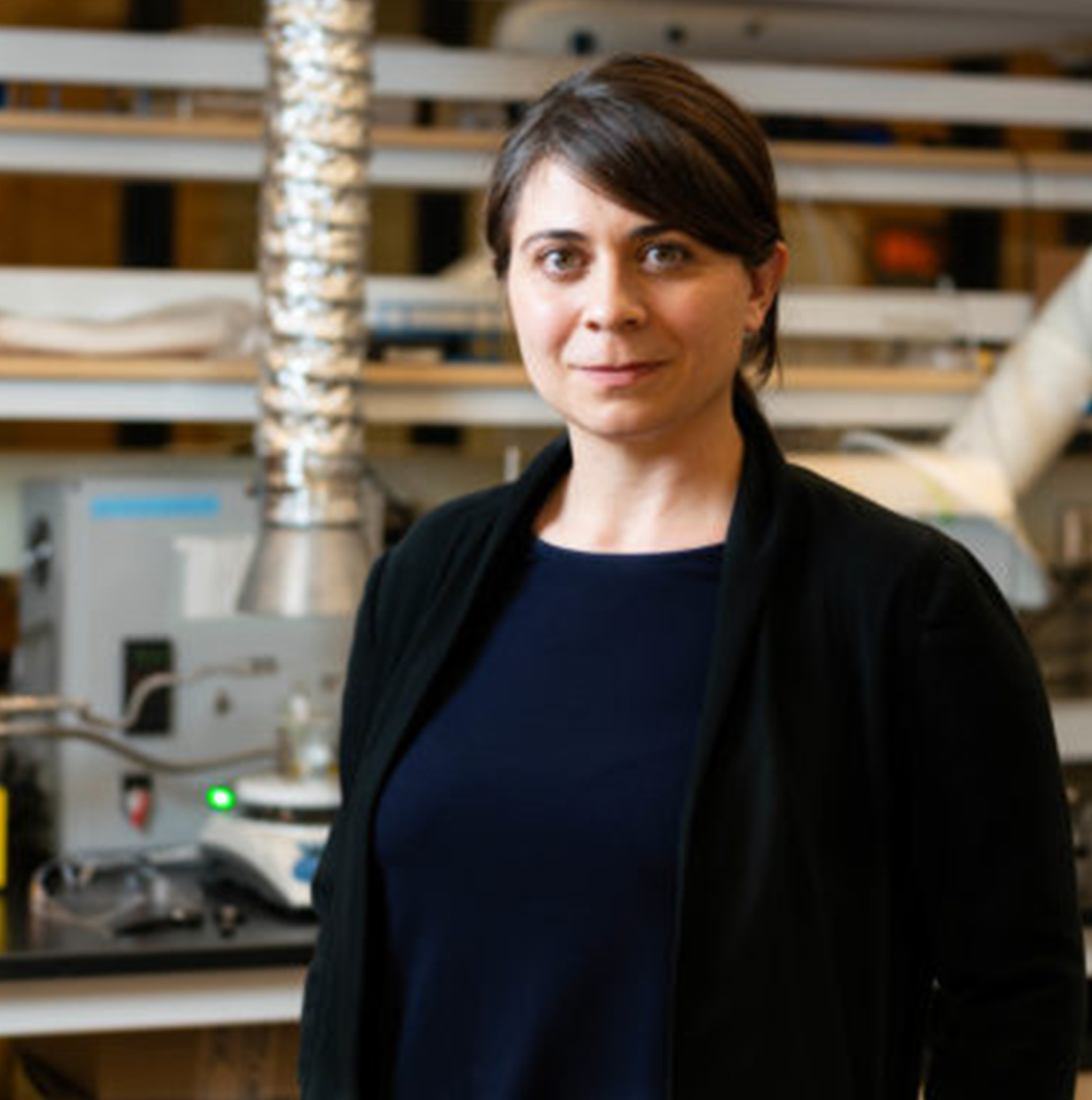
Desirée Plata
· School of Engineering Distinguished Climate and Energy Professor, Director of Parsons LaboratoryVerifiedMassachusetts Institute of Technology · Civil & Environmental Engineering
Active 2001–2026
About
Desirée Plata is a School of Engineering Distinguished Climate and Energy Professor and the Director of Parsons Laboratory at MIT. Her research focuses on climate and energy issues, with an emphasis on environmental and civil engineering challenges. As a leader in her field, she contributes to advancing understanding and solutions related to climate change, energy, and environmental sustainability.
Research topics
- Chemistry
- Chemical engineering
- Composite material
- Chemical physics
- Materials science
- Organic chemistry
- Polymer science
Selected publications
Nature Communications · 2026-04-14
articleOpen accessN-Nitrosodimethylamine (NDMA) is a probable human carcinogen found in contaminated pharmaceuticals and drinking water, yet the impact of age on NDMA susceptibility remains poorly understood. Using DNA repair-deficient (Aag-/-;Mgmt-/-) and wild-type mice, we systematically compare the effects of NDMA exposure in juveniles and adults. Juvenile Aag-/-;Mgmt-/- mice are profoundly more vulnerable, exhibiting persistent DNA damage, inflammation, and mutations that lead to liver pathology and tumorigenesis, particularly in males. Adults, by comparison, are resistant to NDMA. Wild-type mice show similar, attenuated trends. NDMA-induced DNA adduct levels are comparable across age groups, implicating proliferation-dependent responses to adducts, rather than adduct formation, as the primary driver of age-related risk. Supporting this mechanism, triiodothyronine-stimulated cell proliferation in adults partially recapitulates juvenile sensitivity, linking cell division to NDMA genotoxicity. Our findings identify developmental stage, sex, and DNA repair capacity as key modifiers of NDMA-induced carcinogenesis, with potential implications for environmental risk assessment and regulatory policy. N-Nitrosamine cancer risk may be vastly underestimated due to adult-focused safety testing. Here, the authors reveal that younger mice are profoundly susceptible to NDMA-induced genotoxicity and tumorigenesis, and demonstrate that this risk is suppressed by DNA repair.
Catalysis Science & Technology · 2026-01-01
articleOpen accessSenior authorCorrespondingA high-throughput reactor was designed, validated, and applied to the problem of materials screening and characterization in dilute methane oxidation catalysis.
Environmental Science & Technology · 2026-02-28 · 1 citations
articleSenior authorPlastics are a major environmental concern due to their persistence in natural systems. Biodegradable plastics can mitigate this impact by reducing their residence time in the environment. To constrain the environmental lifetime of these materials, understanding the fundamental principles dictating their biodegradation is crucial. The work presented here probes this complexity by using a 30-member bacterial community enriched from the marine ecosystem to investigate how bacterial consortia mineralize polybutylene sebacate-co-terephthalate (PBSeT), a biodegradable aromatic aliphatic copolyester. Carbon dioxide quantification and isotopic tracing provided evidence of polymer mineralization, while monoculture phenotyping demonstrated no one bacterium could consume all polymer components. Further, coculture incubations revealed complementary functions between community members enhanced mineralization. To explain this enhanced mineralization, dissolved organic carbon and chemical product tracking were performed. Notably, depolymerization of the bulk polymer was dictated by a bacterium unable to consume all polymer components (Pseudomonas pachastrellae), requiring complementary bacteria to achieve enhanced mineralization (Pseudooceanicola nitratireducens or Peribacillus frigoritolerans). This yielded direct experimental evidence of the complementary bacterial transformations that may control polymer mineralization in the environment.
Environmental Science & Technology · 2026-02-03 · 1 citations
articleSenior authorCorrespondingThe extensive global use of synthetic polymers has raised concern about their environmental fate, particularly regarding the generation and ecological impact of polymer degradation products. Effective environmental risk assessment requires an understanding of degradation product identity and environmental behavior, yet polymer metabolomics libraries are not well-populated. In this work, mass remainder analysis was used to systematically characterize oligomeric degradation products of polyamide-6 (PA6), polycaprolactone (PCL), and polylactic acid (PLA) using nontarget liquid chromatography–high-resolution mass spectrometry. Distinct homologous series were identified, revealing oligomers of up to seven repeating units for PA6, four for PCL, and 12 for PLA. Among the features detected, up to 70% formed remainder-based clusters (i.e., related by Kendrick mass defects of whole integers and a constant remainder) indicative of plastic-derived oligomerization patterns. To overcome limitations in molecular formula annotations for larger oligomers generated by SIRIUS, this work leveraged retention time variations, MS2 fragmentation, and spectral matching for reliable characterization and structural elucidation. Retention time changes across varying mobile-phase pHs (2.7, 5.0, and 9.0) revealed substantial shifts for oligomers with ionizable functional groups, allowing quantitative insights into their acid–base properties (pKa). These experimentally determined hydrophobicity values (i.e., log Kow) deviated from computational estimations from a suite of available tools across polymer chemistries, highlighting inadequacies in existing estimation models and the opportunity for the rapid measurement of these important physicochemical properties using liquid chromatography–mass spectrometry workflows. This work demonstrates the necessity of experimentally derived oligomer-specific data to improve computational modeling for assessing the environmental fate of polymer degradation products.
Environmental Science & Technology · 2026-04-21
articleOpen accessUnderstanding how plastics degrade and fragment, releasing microplastics, nanoplastics, and dissolved organic carbon (DOC), is crucial for their risk assessment. This study assesses abiotic hydrolytic aging of polymer powders (40-700 μm) under OECD guideline conditions and in simulated seawater from 4 to 65 °C (accelerated aging) over 10, 100, and up to 365 days. Chain scission, recrystallization, fragmentation, and dissolution of microplastics were examined for polyamide-6 (PA-6), thermoplastic polyurethane (TPU), polypropylene (PP), low-density polyethylene (LDPE), and polylactic acid (PLA). Microplastics (1-190 μm) mainly formed through surface cracking, whereas nanoplastics (0.01-1 μm) arose from particle shrinkage and erosion. Polymer chemistry strongly influenced the release patterns, with total degradation and release ranking LDPE < TPU < PA-6 < PLA; stabilized PP ranked lowest, as expected. TPU and LDPE underwent limited hydrolysis but measurable thermo-oxidative modification. PA-6 and PLA were both prone to degradation under high temperatures and specific pH, but with distinct behaviors: PLA showed substantial bulk dissolution, producing diverse DOC species over time, whereas PA-6 released a smaller and temporally stable DOC pool; both polymers fragmented. Overall, abiotic hydrolysis drives interconnected fragmentation and dissolution processes, with release dynamics depending on polymer type and environmental conditions. The resulting data support mechanistic modeling of microplastic fragmentation.
Hydrolysis Reaction Rate Prediction Using Machine Learning: WaterDRoP
Environmental Science & Technology · 2026-04-21
articleSenior authorTo enable sustainable chemical design, there is a need for the capability to predict the degradation potential of proposed structures not yet produced and for which experimental data are unavailable. Hydrolysis is a key process impacting contaminant fate, especially in aqueous and biological systems. This work develops WaterDRoP (Water Degradation Rate of Pollutants), a machine learning model to predict the rate of hydrolysis from chemical structure in environmentally relevant settings (pH 7 and 25°C). The two-stage model classifies a compound as stable (half-life > 1 year) or unstable (half-life ≤ 1 year) and estimates the numeric half-life of unstable compounds. Each stage is a pretrained neural network fine-tuned using 808 experimental hydrolysis rates collected from reports and databases. WaterDRoP compares favorably to existing models for hydrolysis rate prediction (EPI Suite, Hydrolysis QSAR, QSAR Toolbox) in terms of applicability, stability classification (F1 score), and rate prediction of unstable compounds (RMSE, MAE, R2). Atom-level attribution scores obtained through Shapley Additive Explanations (SHAP) analysis, illustrating the substructures identified by the model as most relevant for anticipating hydrolysis, were compared against proposed hydrolysis mechanisms from the literature. This in silico hydrolysis rate estimation tool and curated training data set are made openly available.
Zenodo (CERN European Organization for Nuclear Research) · 2026-03-19
datasetOpen accessSupporting data for: Volk et al. (2026) "Early life exposure to N-nitrosamine drives genotoxicity, mutagenesis, and tumorigenesis in DNA repair-deficient mice," Nature Communications. N-Nitrosodimethylamine (NDMA) is a probable human carcinogen found in contaminated pharmaceuticals and drinking water. Using DNA repair-deficient (Aag-/-;Mgmt-/-) and wild-type mice, we systematically compared the effects of NDMA exposure in juveniles and adults. This dataset includes raw mass spectrometry data (DNA adduct quantification by LC/ESI-MS/MS), NDMA dose quantification and drinking water consumption data, GPT delta assay results, western blot scans and quantification, immunofluorescence analysis results, RaDR foci and clonal expansion analysis results, and source data for all figures. Full experimental metadata, sample lineage, and study documentation are available at FairdomHub (https://fairdomhub.org/studies/1367). Sequencing data (FASTQ) are available at NCBI SRA (BioProject PRJNA1422080). Duplex sequencing variant calls and RNAseq analysis code/data are available on Code Ocean (DOI: 10.24433/CO.3406581.v1). Please see the included README.txt for a description of each file in this deposit.
Chemical interference effects with copper-doped mordenite for dilute methane emissions mitigation
RSC Advances · 2026-01-01
articleOpen accessSenior authorCatalytic approaches have shown promise for methane conversion, but tolerance to poisoning by anticipated interferents in target applications must be demonstrated.
Biodegradability of Acrylate-Lipoic Acid Copolymers
Journal of the American Chemical Society · 2026-05-08
articleLipoic acid has attracted a great deal of attention for its ability to impart chemical degradability into vinyl polymer chains. This work investigates the biodegradability of acrylate-lipoic acid copolymers to understand how sulfide bonds along the backbone of these copolymers impact biodegradation. To achieve this objective, several acrylate monomers (methyl, ethyl, and n-butyl acrylates) were polymerized with lipoic acid (1, 3, 5, 10, and 15 mol %) via reversible addition–fragmentation chain transfer (RAFT) polymerization, and biodegradation was assessed via a high-throughput clear-zone polymer biodegradation method using Paucimonas lemoignei (P. lemoignei) and three other bacterial species. Mass loss and hydrolysis tests were also conducted in liquid culture with liquid chromatography-mass spectrometry for degradation product analysis. The acrylate homopolymers did not show any biodegradation, whereas poly(methyl acrylate-co-lipoic acid) and poly(ethyl acrylate-co-lipoic acid) copolymers showed biodegradation by P. lemoignei above a critical lipoic acid mole fraction that increased with increasing hydrophobicity of the acrylate monomer. While degradation is clearly accelerated by the formation of labile linkages in the polymer backbone resulting from the incorporation of sulfur atoms from lipoic acid, experiments with methyl acrylate oligomers show that small acrylate fragments are also degraded by P. lemoignei and that small molecule products are produced below the molar mass of the acrylate fragments. Therefore, this work illustrates that the incorporation of lipoic acid provides a route toward fully biodegradable polyacrylates.
Partitioning Parameters of <i>N-</i> Nitrosamines: An Intercomparison of Determination Methods
The Journal of Physical Chemistry B · 2026-03-25
articleOpen accessSenior authorCorrespondingN-Nitrosamines make up a class of carcinogenic industrial pollutants that lack well-characterized physicochemical properties. Classical approaches to determine octanol–water partition coefficient (Kow) values are laborious, slow, and challenged by experimental error. Alternative methods include quantum chemical estimation (e.g., COSMO-RS), quantitative structure–property relationship (QSPR) models, and high-performance liquid chromatographic (HPLC) measurements; however, systematic compound-by-compound comparisons of these methods for chemical classes remain lacking. This study evaluates the performance of four methods (shake-flask, HPLC retention time, QSPR, and COSMO-RS estimation) for the log Kow determination. Shake-flask measurements for N-nitrosodiemthylamine (−0.54), N-nitrosomorpholine (−0.54), N-nitrosopiperidine (0.64), and N-nitrosodibutylamine (2.54) were compared to previously reported values, where the omission of quality control procedures (i.e., mutual solvent saturation and sufficient equilibration time) led to variations in measurements up to 0.64 log units. Among alternative methods, the COSMO-RS calculation in this study performed the best, relative to direct experimental measurement, with a root mean absolute error (RMSE) of 0.12 and improved accuracy compared to previous estimations. QSPR determination was comparable to that of COSMO-RS (RMSE of 0.14). Two methods of HPLC determination demonstrated the worst performance (RMSEs of 0.27 and 0.45). This study highlights the weaknesses in using the presented HPLC methods for compound classes that include polar molecules, demonstrates improved performance of theoretical calculations, and reports partitioning data for known (n = 8) and recently characterized (n = 7) N-nitrosamines found in the environment.
Recent grants
NSF · $305k · 2013–2016
NSF · $500k · 2016–2019
NSF · $99k · 2015–2016
NSF · $160k · 2014–2015
NSF · $226k · 2018–2021
Frequent coauthors
- 43 shared
Wenbo Shi
- 33 shared
Boya Xiong
University of Minnesota
- 31 shared
Christopher M. Reddy
Woods Hole Oceanographic Institution
- 28 shared
Nicole C. Deziel
Yale University
- 26 shared
Philip M. Gschwend
Woods Hole Oceanographic Institution
- 25 shared
James E. Saiers
Yale University
- 24 shared
Nina Z. Janković
Yale University
- 23 shared
Andrew J. Sumner
Massachusetts Institute of Technology
Labs
Education
- 2008
Ph.D., Environmental Engineering
Massachusetts Institute of Technology
- 2003
M.S., Environmental Engineering
Massachusetts Institute of Technology
- 2001
B.S., Environmental Studies
University of California, Santa Barbara
Awards & honors
- Department of Energy Innovation Crossroads (to Nth Cycle LLC…
- Young Investigator Sustainability Fellow, Resnick Institute,…
- NSF CAREER Award, 2016
- Odebrecht Award for Sustainable Development, 2015
- National Academy of Sciences US-Korea Kavli Frontiers of Sci…
- Resume-aware match score
- Save to shortlist
- AI-drafted outreach
See your match with Desirée Plata
PhdFit ranks faculty by your research interests, methods, and publications — grounded in their actual work, not templates.
- Free to start
- No credit card
- 30-second signup