
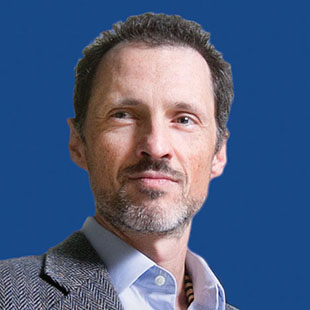
Ernesto Dal Bó
· ProfessorUniversity of California, Berkeley · Business & Public Policy
Active 1997–2025
Academic metrics are sourced from OpenAlex and public funding records; values may differ from Google Scholar.
About
Ernesto Dal Bó is the Phillips Girgich Professor of Business and a Distinguished Teaching Fellow at UC Berkeley Haas School of Business. His research interests encompass political economy, democratic institutions, influence and corruption, morality, coercion, conflict, state formation, and the development of state capabilities. He teaches courses on political economy primarily within the Berkeley MBA program and at the doctoral level. Dal Bó's work focuses on understanding governance broadly, including the qualities and behavior of politicians and public servants, social conflict, and the development of state institutions. He has held various academic positions since 2003, including roles at UC Berkeley, Stanford University, and Oxford, and is actively involved in external research and policy organizations.
Research topics
- Political Science
- Economics
- Sociology
- Computer Science
- Computer Security
- Microeconomics
- Law
- Engineering
- Political economy
- Operations research
Selected publications
London School of Economics and Political Science Research Online (London School of Economics and Political Science) · 2017-06-01 · 322 citations
articleOpen access1st authorCorrespondingCan a democracy attract competent leaders, while attaining broad representation? Economic models suggest that free-riding incentives and lower opportunity costs give the less competent a comparative advantage at entering political life. Moreover, if elites have more human capital, selecting on competence may lead to uneven representation. This article examines patterns of political selection among the universe of municipal politicians and national legislators in Sweden, using extraordinarily ric…
The Demand for Bad Policy when Voters Underappreciate Equilibrium Effects
The Review of Economic Studies · 2017-05-08 · 131 citations
articleOpen access1st authorCorrespondingMost of the political economy literature blames inefficient policies on institutions or politicians’ motives to supply bad policy, but voters may themselves be partially responsible by demanding bad policy. In this article, we posit that voters may systematically err when assessing potential changes in policy by underappreciating how new policies lead to new equilibrium behaviour. This biases voters towards policy changes that create direct benefits—welfare would rise if behaviour were held cons…
Economic and Social Outsiders but Political Insiders: Sweden’s Populist Radical Right
The Review of Economic Studies · 2022 · 89 citations
Abstract We study the politicians and voters of the Sweden Democrats, a major populist radical-right party. Based on detailed administrative data, we present the first comprehensive account of which politicians are selected into such a party. Surveys show that politicians and voters of the Sweden Democrats share strong anti-establishment and anti-immigration attitudes that drastically set them apart from Sweden’s other parties. Searching for individual traits that link naturally to these attitud…
Information Technology and Government Decentralization: Experimental Evidence From Paraguay
Econometrica · 2021 · 51 citations
Standard models of hierarchy assume that agents and middle managers are better informed than principals. We estimate the value of the informational advantage held by supervisors—middle managers—when ministerial leadership—the principal—introduced a new monitoring technology aimed at improving the performance of agricultural extension agents (AEAs) in rural Paraguay. Our approach employs a novel experimental design that elicited treatment‐priority rankings from supervisors before randomization of…
The Paradox of Civilization: Preinstitutional Sources of Security and Prosperity
American Political Science Review · 2021 · 34 citations
The production of economic surplus, or “prosperity,” was fundamental to financing the rise of pristine civilizations. Yet, prosperity attracts predation, which discourages the investments required for civilization. To the extent that the economic footing of civilization creates existential security threats, civilization is paradoxical. We claim that, in addition to surplus production, civilizations require surplus protection, or “security.” Drawing from archaeology and history, we model the trad…
Frequent coauthors
- 48 shared
Frederico Finan
- 46 shared
Pedro Dal Bó
John Brown University
- 32 shared
Erik Eyster
University of California, Santa Barbara
- 20 shared
Jesse M. Cunha
Naval Postgraduate School
- 19 shared
Sebastián Mazzuca
- 19 shared
Ned Augenblick
University of California, Berkeley
- 19 shared
Justin M. Rao
- 18 shared
Pablo Fuentes Hernández
University of Bío-Bío
Education
- 1998
Ph.D., Economics
University of California, Berkeley
- 1994
M.A., Economics
University of California, Berkeley
- 1990
B.A., Economics
University of California, Los Angeles
Awards & honors
- Cheit Award for Excellence in Teaching PhD Program (2020)
- Hellman Family Faculty Fund Award (2006)
- Schwabacher Fellowship Award (2005-2006)
- Earl F. Cheit Award for Excellence in Teaching, Full-Time MB…
- Special Mention, Earl Cheit Outstanding Teaching Award, PhD…
Similar researchers at University of California, Berkeley
- Resume-aware match score
- Save to shortlist
- AI-drafted outreach
See your match with Ernesto Dal Bó
PhdFit ranks faculty by your research interests, methods, and publications — grounded in their actual work, not templates.
- Free to start
- No credit card
- 30-second signup