
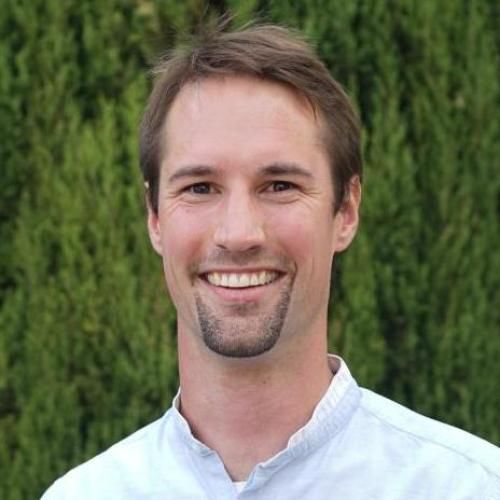
Eric Brubaker
· Adjunct Associate Professor in the Engineering Graduate and Professional ProgramsUniversity of Chicago · Civil & Environmental Engineering
Active 2001–2025
Academic metrics are sourced from OpenAlex and public funding records; values may differ from Google Scholar.
About
Eric Brubaker is an Adjunct Associate Professor in the Engineering Graduate and Professional Programs at Duke University. He holds a B.S. from Ohio State University (2009), an M.S. from Stanford University (2018), and both an M.A. and a Ph.D. from Stanford University (2022). His research focuses on engineering design, social innovation, and the integration of human-centered approaches within engineering contexts. Brubaker has contributed to advancing design theory and practice through his publications, which include studies on large language model agents in design, open innovation dynamics, and the role of objects in spanning knowledge boundaries in design. His work emphasizes the importance of collaborative, ethical, and socially impactful engineering practices, and he teaches courses related to design ethics and social innovation.
Research topics
- Nuclear physics
- Physics
- Optics
- Chemistry
- Particle physics
- Organic chemistry
- Geology
- Composite material
- Materials science
Selected publications
The ATLAS Experiment at the CERN Large Hadron Collider
2008 · 2387 citations
The Large Hadron Collider (LHC) at CERN will extend the frontiers of particle physics with its \nunprecedented high energy and luminosity. Inside the LHC, bunches of up to 1011 protons (p) \nwill collide 40 million times per second to provide 14 TeV proton-proton collisions at a design \nluminosity of 1034 cm2s1. The LHC will also collide heavy ions (A), in particular lead nuclei, at \n5.5 TeV per nucleon pair, at a design luminosity of 1027 cm2s1. \nThe high interact…
2023-11-20 · 1 citations
preprintOpen accessSenior authorStandard signal processing approaches for scintillation detectors in positron emission tomography (PET) derive accurate estimates for 511 keV photon time of interaction and energy imparted to the detection media from aggregate characteristics of electronic pulse shapes. The ultimate realization of a scintillation detector for PET is one that provides a unique timestamp and position for each detected scintillation photon. Detectors with these capabilities enable advanced concepts for three-dimens…
2023-11-20 · 1 citations
preprintOpen accessSenior author<p>Standard signal processing approaches for scintillation detectors in positron emission tomography (PET) derive accurate estimates for 511 keV photon time of interaction and energy imparted to the detection media from aggregate characteristics of electronic pulse shapes. The ultimate realization of a scintillation detector for PET is one that provides a unique timestamp and position for each detected scintillation photon. Detectors with these capabilities enable advanced concepts for thr…
Single-Volume Scatter Camera & FPGA-Based SiPM Array Readout.
OSTI OAI (U.S. Department of Energy Office of Scientific and Technical Information) · 2023-11-06
paratextOpen access1st authorCorrespondingModeling ionization quenching in organic scintillators.
2022-10-01
articleOpen accessSenior author5 semi-empirical models were considered in this work Birks (canonical model -1951) and Chou (additional bi-molecular quenching) dL/dx: specific light yield dE/dx
Frequent coauthors
- 1400 shared
S. Y. Jun
Fermi National Accelerator Laboratory
- 1343 shared
E. J. Jeon
Institute for Basic Science
- 1193 shared
A. Warburton
McGill University
- 1190 shared
K. K. Joo
- 1169 shared
S. De Cecco
Radboud University Nijmegen
- 1159 shared
A. Cerri
- 1081 shared
F. Šforza
University of Genoa
- 1064 shared
M. Martı́nez
Institució Catalana de Recerca i Estudis Avançats
Similar researchers at University of Chicago
- Resume-aware match score
- Save to shortlist
- AI-drafted outreach
See your match with Eric Brubaker
PhdFit ranks faculty by your research interests, methods, and publications — grounded in their actual work, not templates.
- Free to start
- No credit card
- 30-second signup