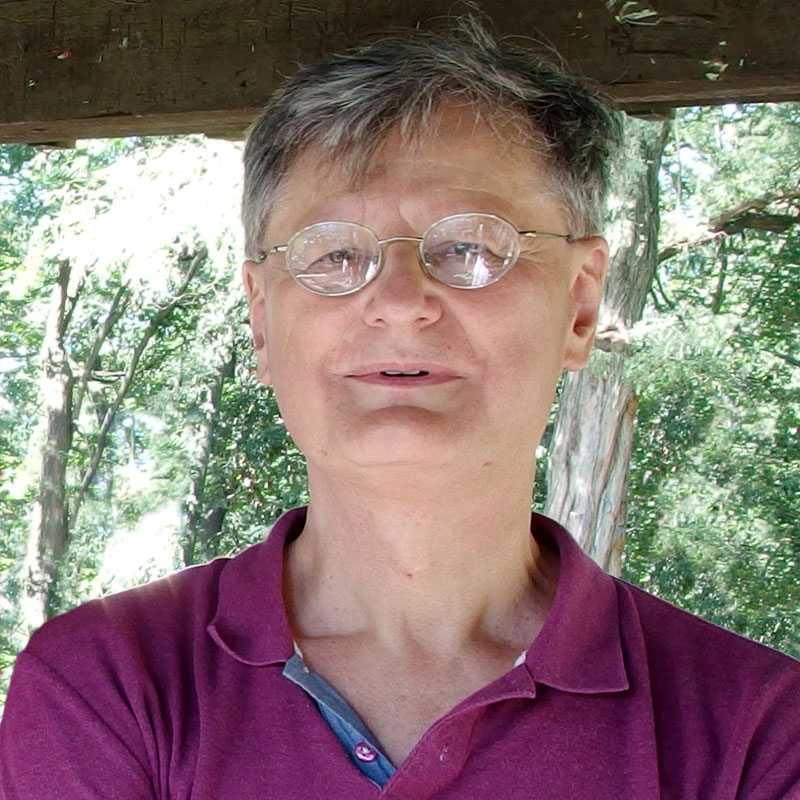
Emile L. Bominaar
· Associate Research ProfessorVerifiedCarnegie Mellon University · Chemistry
Active 1983–2025
About
Professor Emile L. Bominaar is associated with the field of optics, specifically focusing on optical activity and related phenomena. His work involves the study of natural circular birefringence, magnetic circular birefringence, and magnetic linear birefringence, as well as the mechanisms underlying these effects. His research includes the development and analysis of models such as E, k models and E, H models, and the examination of the effects of magnetic fields on harmonic oscillators. Additionally, he has contributed to understanding the Zeeman effect, the Faraday effect, and magnetic dichroism, exploring their vector analysis and interactions with radiation. His expertise encompasses the discovery and analysis of magnetic dichroism by Zeeman and Lorentz, indicating a deep engagement with the fundamental interactions between light and magnetic fields in optical materials.
Research topics
- Chemistry
- Organic chemistry
- Biochemistry
- Nanotechnology
- Stereochemistry
- Computational chemistry
- Thermodynamics
- Crystallography
Selected publications
Journal of the American Chemical Society · 2025-01-15 · 6 citations
articleOpen accessThe development of molecular species with switchable magnetic properties has been a long-standing challenge in chemistry. One approach involves binding an analyte, such as protons, to a compound to trigger a change in magnetism. Transition metal complexes have been targeted for this type of magnetic modulation because they can undergo changes in their spin states. However, heterobimetallic complexes have had limited utility because of a lack of ligands that create differentiated structures around each metal center that are often necessary to regulate the electronic and magnetic properties. To circumvent this problem, we have used a tripodal ligand with phosphinic amido groups to prepare a complex with a discrete [CoIII(μ-OH)FeIII] core and an overall system spin of ST = 5/2. Deprotonation readily produces a species with a unique [CoIII(μ-O)FeIII] core and an ST = 1/2 system spin. X-ray diffraction studies, electron paramagnetic resonance spectroscopy, and Mössbauer spectroscopy pinpoint the hexacoordinate CoIII center as the cause of this spin change: the typical SCo = 0 spin state of the CoIII center in the [CoIII(μ-OH)FeIII] complex switches to a rare SCo = 2 spin state in the [CoIII(μ-O)FeIII] analogue; this change turns on antiferromagnetic coupling between the two metal centers. Computational studies link an increase in π bonding within the Co–oxido unit to the change in the CoIII spin state. The conversion is reversible and provides a blueprint for using oxido/hydroxido ligands within a heterobimetallic core to regulate the spin state of a metal site and thus modulate the paramagnetism of a system.
Mimicking the Reactivity of LPMOs with a Mononuclear Cu Complex
European Journal of Inorganic Chemistry · 2024-01-08 · 8 citations
articleOpen accessAbstract Lytic polysaccharide monooxygenases (LPMOs) are Cu‐dependent metalloenzymes that catalyze the hydroxylation of strong C−H bonds in polysaccharides using O 2 or H 2 O 2 as oxidants (monooxygenase/peroxygenase). In the absence of C−H substrate, LPMOs reduce O 2 to H 2 O 2 (oxidase) and H 2 O 2 to H 2 O (peroxidase) using proton/electron donors. This rich oxidative reactivity is promoted by a mononuclear Cu center in which some of the amino acid residues surrounding the metal might accept and donate protons and/or electrons during O 2 and H 2 O 2 reduction. Herein, we utilize a podal ligand containing H‐bond/proton donors (LH 2 ) to analyze the reactivity of mononuclear Cu species towards O 2 and H 2 O 2 . [(LH 2 )Cu I ] 1+ ( 1 ), [(LH 2 )Cu II ] 2+ ( 2 ), [(LH − )Cu II ] 1+ ( 3 ), [(LH 2 )Cu II (OH)] 1+ ( 4 ), and [(LH 2 )Cu II (OOH)] 1+ ( 5 ) were synthesized and characterized by structural and spectroscopic means. Complex 1 reacts with O 2 to produce 5 , which releases H 2 O 2 to generate 3 , suggesting that O 2 is used by LPMOs to generate H 2 O 2 . The reaction of 1 with H 2 O 2 produces 4 and hydroxyl radical, which reacts with C−H substrates in a Fenton‐like fashion. Complex 3 , which can generate 1 via a reversible protonation/reduction, binds H 2 O and H 2 O 2 to produce 4 and 5 , respectively, a mechanism that could be used by LPMOs to control oxidative reactivity.
Chemical Science · 2023-12-27 · 7 citations
articleOpen accessCharacterization of a synthetic mimic for an enzymatic Fe III Mn IV intermediate and its reactivity with phenolic substrates.
CCDC 2291041: Experimental Crystal Structure Determination
The Cambridge Structural Database · 2023-12-28
datasetOpen accessAn entry from the Cambridge Structural Database, the world’s repository for small molecule crystal structures. The entry contains experimental data from a crystal diffraction study. The deposited dataset for this entry is freely available from the CCDC and typically includes 3D coordinates, cell parameters, space group, experimental conditions and quality measures.
CCDC 2291043: Experimental Crystal Structure Determination
The Cambridge Structural Database · 2023-12-28
datasetOpen accessAn entry from the Cambridge Structural Database, the world’s repository for small molecule crystal structures. The entry contains experimental data from a crystal diffraction study. The deposited dataset for this entry is freely available from the CCDC and typically includes 3D coordinates, cell parameters, space group, experimental conditions and quality measures.
CCDC 2291042: Experimental Crystal Structure Determination
The Cambridge Structural Database · 2023-12-28
datasetOpen accessAn entry from the Cambridge Structural Database, the world’s repository for small molecule crystal structures. The entry contains experimental data from a crystal diffraction study. The deposited dataset for this entry is freely available from the CCDC and typically includes 3D coordinates, cell parameters, space group, experimental conditions and quality measures.
Journal of the American Chemical Society · 2023-12-27 · 13 citations
articleOpen accessCorrespondingThe exchange coupling of electron spins can strongly influence the properties of chemical species. The regulation of this type of electronic coupling has been explored within complexes that have multiple metal ions but to a lesser extent in complexes that pair a redox-active ligand with a single metal ion. To bridge this gap, we investigated the interplay among the structural and magnetic properties of mononuclear Cu complexes and exchange coupling between a Cu center and a redox-active ligand over three oxidation states. The computational analysis of the structural properties established a relationship between the complexes’ magnetic properties and a bonding interaction involving a dx2–y2 orbital of the Cu ion and π orbital of the redox-active ligand that are close in energy. The additional bonding interaction affects the geometry around the Cu center and was found to be influenced by intramolecular H-bonds introduced by the external ligands. The ability to synthetically tune the d−π interactions using H-bonds illustrates a new type of control over the structural and magnetic properties of metal complexes.
Artificial Metalloproteins with Dinuclear Iron–Hydroxido Centers
Journal of the American Chemical Society · 2021 · 17 citations
- Chemistry
- Crystallography
- Nanotechnology
] cores. The assembly process is promoted by the site-specific localization of the Fe complexes within a subunit through the designed mutation of a tyrosinate side chain to coordinate the Fe centers. An important outcome is that the Sav host can regulate the Fe···Fe separation, which is known to be important for function in natural metalloproteins. Spectroscopic and structural studies from X-ray diffraction methods revealed uncommonly long Fe···Fe separations that change by less than 0.3 Å upon the binding of additional bridging ligands. The structural constraints imposed by the protein host on the di-Fe cores are unique and create examples of active sites having entatic states within engineered artificial metalloproteins.
Electronic State of the His/Tyr-Ligated Heme of BthA by Mössbauer and DFT Analysis
Inorganic Chemistry · 2020-06-30 · 14 citations
articleOpen accessThe BthA protein from the microorganism Burkholderia thailandensis contains two hemes with axial His/OH2 and His/Tyr coordinations separated by the closest interheme distance of 14 Å. BthA has a similar structure and belongs to the same family of multiheme cytochrome c peroxidases as MauG, which performs long-range oxidation of the partner protein methylamine dehydrogenase. Magnetic Mössbauer spectroscopy of the diferric state of BthA corroborates previous structural work identifying a high-spin (His/OH2) peroxidatic heme and a low-spin (His/Tyr) electron transfer heme. Unlike MauG, addition of H2O2 fully converts the diferric form of BthA to a stable 2e– oxidized state, allowing a new assessment of this state. The peroxidatic heme is found to be oxidized to a canonical compound II, S = 1 oxoiron(IV) heme. In contrast, the electronic properties of the oxidized His/Tyr heme are puzzling. The isomer shift of the His/Tyr heme (0.17 mm/s) is close to that of the precursor S = 1/2 Fe3+ heme (0.21 mm/s) which suggests oxidation of the Tyr. However, the spin-dipolar hyperfine coupling constants are found here to be the same as those for the ferryl peroxidatic heme, indicating that the His/Tyr heme is also a compound II, S = 1 Fe4+ heme and ruling out oxidation of the Tyr. DFT calculations indicate that the unusually high isomer shift is not attributable to the rare axial His/Tyr heme coordination. The calculations are only compatible with spectroscopy for an unusually long Fe4+–OTyr distance, which is presumably under the influence of the protein environment of the His/Tyr heme moiety in the H2O2 oxidized state of the protein. The results offer new insights into how high valence intermediates can be tuned by the protein environment for performing long-range oxidation.
The Catalytic Role of a Conserved Tyrosine in Nitric Oxide-Reducing Non-heme Diiron Enzymes
ACS Catalysis · 2020 · 18 citations
Senior authorCorresponding- Chemistry
- Stereochemistry
- Biochemistry
Recent studies have identified several key intermediates of the nitric oxide reductase (NOR) cycle of flavodiiron proteins (FDPs). These intermediates include, sequentially, a μ-hydroxo diferrous species, a mono-NO intermediate, a di-NO intermediate (FDPdiNO), and a bis-μ-hydroxo diferric species. This paper focuses on the reaction path connecting the last two intermediates on which the nitrous oxide product is released. On the basis of density functional theory calculations, a reaction sequence is proposed in which the enzyme passes through an intermediate with a bridging hyponitrite ligand, which accepts a proton, initiating a rate-determining ligand rotation from an N/N- to an N/O-coordinated conformation. This rotation is facilitated by a second-sphere tyrosine residue, which provides a transient hydrogen bond to one of the nitrogen atoms of the substrate near the transition state. The role of the tyrosine residue in the NOR activity has been tested by steady-state kinetics and rapid freeze-quench (RFQ) studies of the Y197F variant of the FDP from T. maritima in which the hydrogen bonding interaction is absent. The Y197F variant displayed little or no steady-state NOR activity in support of the importance of Y197. The RFQ samples, monitored by Mössbauer spectroscopy, showed that Y197F follows the same reaction path as a wild-type FDP up to and including the formation of FDPdiNO but diverges subsequently with the variant forming an inactive mono-NO species. The RFQ results demonstrate that Y197 enables the postFDPdiNO section of the reaction cycle in the wild-type FDP to proceed to N2O. The proposed refinement of the reaction mechanism provides an explanation for the lack of NOR activity of the variant Y197F of T. maritima and of other di-NO binding diiron enzymes and model compounds with active site structures like those of FDPs. The reported reductions of NO to N2O catalyzed by synthetic diiron complexes proceed only with the support of radiation, additional electrons, or an electron-rich ligand environment. However, higher potential diiron sites like those of FDPs require hydrogen bonding to second-sphere residues to turn over NO to N2O.
Frequent coauthors
- 187 shared
Eckard Münck
Carnegie Mellon University
- 71 shared
Lawrence Que
- 50 shared
Sebastian A. Stoian
- 48 shared
Catalina Achim
Carnegie Mellon University
- 31 shared
Terrence J. Collins
Carnegie Mellon University
- 31 shared
Audria Stubna
Carnegie Mellon University
- 31 shared
Michael P. Hendrich
- 27 shared
Jacques Meyer
Hôpital Albert Calmette
- Resume-aware match score
- Save to shortlist
- AI-drafted outreach
See your match with Emile L. Bominaar
PhdFit ranks faculty by your research interests, methods, and publications — grounded in their actual work, not templates.
- Free to start
- No credit card
- 30-second signup