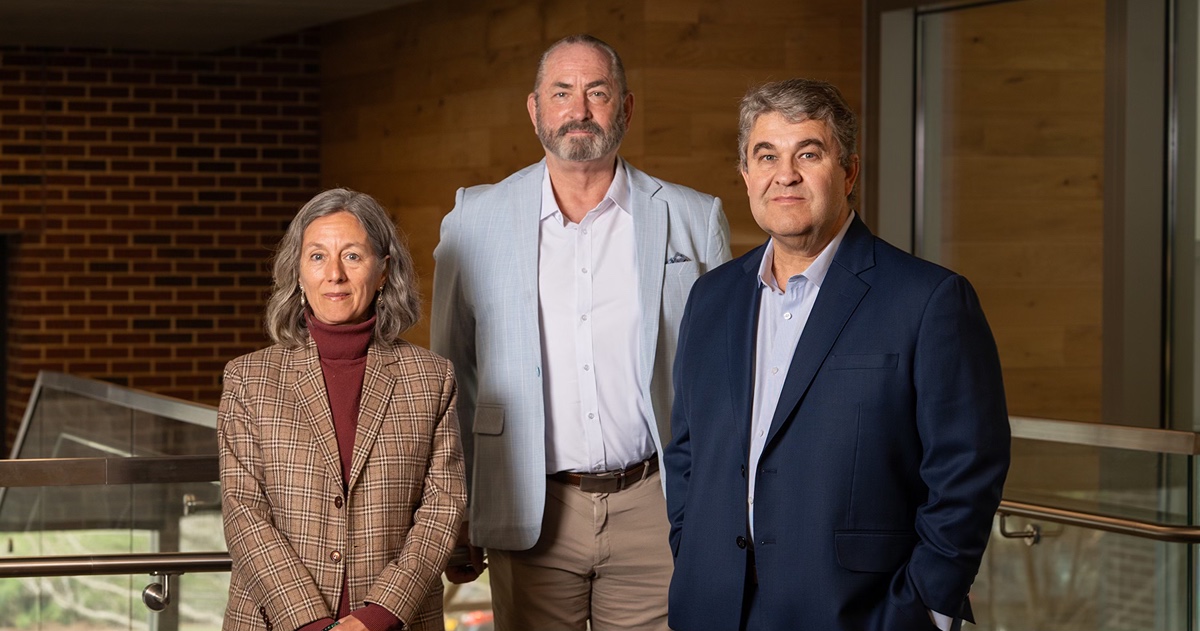
Barry Pittendrigh
· John V. Osmun Endowed Chair in Urban Entomology and Director of the Urban CenterVerifiedPurdue University · Agricultural Sciences Education and Communication
Active 1992–2026
About
Barry Pittendrigh is Purdue's John V. Osmun Endowed Chair in Urban Entomology and Director of the Urban Center. His research focuses on developing digital tools to share extension knowledge globally, exemplified by his work on the SAWBO (Scientific Animations Without Borders) app, which disseminates research and innovation through animated videos in multiple languages. Pittendrigh has been involved with SAWBO since 2011, working to make research for development (R4D) knowledge accessible to communities worldwide, especially in the Global South. He has contributed to creating a system that transforms research into simple, actionable advice in video form, making it accessible via Android devices and soon iPhones. The videos cover diverse topics such as using solar grain dryers, preventing dengue fever, and processing cheese, with over 200 videos available in approximately 300 languages. His approach emphasizes the use of animation for cross-cultural reach and cultural adaptability. Pittendrigh's work is supported by Purdue's global engagement and collaborations with faculty like Julia Bello-Bravo, aiming to make knowledge accessible to those at the bottom of the socio-economic pyramid and to promote the right to knowledge as a fundamental aspect of sustainable development.
Research topics
- Agronomy
- Sociology
- Food science
- Computer Science
- Biology
- Multimedia
- Biochemistry
- Horticulture
- Botany
- Psychology
- Genetics
- Economic growth
- Pedagogy
- Economics
Selected publications
Investment modeling for scalable agricultural learning
PLoS ONE · 2026-03-10
articleOpen accessSenior authorWith the rise of information and communication technologies, localized farmer training can be transformed into scalable strategies applicable across diverse communities, cultures, and languages. However, the economic value of these approaches and the factors shaping their returns remain underexplored. This study presents a general framework for evaluating the economic impact of scalable agricultural learning initiatives, using multilingual instructional animations and YouTube dissemination as a case study. Systems modeling was used to simulate potential returns, assess key drivers of impact, and estimate the number of farmers required for economic viability. Sensitivity analysis shows that returns are most influenced by the cost to inform an individual, adoption rates, and income gains, and to a lesser degree, technique-sharing rates and adoption costs. When existing educational content is adapted and its lifespan extended, learning initiatives can be economically viable with few targeted farmers, making the linguistic adaption into minority or rarer languages an economically viable option. The wide variation in returns across scenarios highlights the importance of tailoring models to specific contexts to obtain more precise estimates of economic impact. These findings underscore the value of adaptable and durable learning materials and suggest that future research-for-development (R4D) investments could benefit from systems modeling to identify and prioritize high-impact agricultural solutions.
The Catalogue of Life · 2026-02-16
datasetOpen accessSSRN Electronic Journal · 2026-01-01
preprintOpen accessThe Electronic Journal of Information Systems in Developing Countries · 2026-01-27
articleOpen accessSenior authorABSTRACT Efficiently educating farmers in effective agricultural practices is critical in resource‐limited developing countries. YouTube, with its broad accessibility and built‐in viewership tracking, presents a potential scalable platform for agricultural education. This study assesses how language inclusion policies affect engagement with agricultural YouTube content. We conducted a case study using a video campaign to address post‐harvest loss in Africa, featuring an educational animation translated into 14 Ghanaian, 35 Kenyan, and 16 Nigerian languages. The campaign was distributed through paid YouTube ads. Two inclusion policies were evaluated through computational simulations using real‐world data: equal opportunity (i.e., equal spending across languages) and equal outcome (i.e., adjusted spending to equalize viewership across languages). We also estimated viewership under two additional scenarios: using only the official language and using the most cost‐effective language for each country. The most cost‐effective campaigns coincided with the official language of English in Ghana (8.9 viewers per USD) and Nigeria (3.1 viewers per USD), but not in Kenya, where the most effective language campaign was Kikuyu (16.2 viewers/USD). Overall, the equal spending policy reduced viewership by 43%, while the equal outcome policy reduced viewership by 66% compared to campaigns in official languages. However, results show country‐specific trends. Differences in viewership between inclusion policies were minimal in Ghana and Nigeria. Conversely, in Kenya, the discrepancy in inclusion policy impact was more pronounced, suggesting that in certain regions, more inclusive policies are likely to significantly influence viewership levels. These findings highlight the importance of localized evaluations of inclusion policies in digital agricultural education.
The Right to Traditional Knowledge and Language
2025-01-01
book-chapterSenior authorImpacts of short-term ivermectin exposures on fruit flies
Pesticide Biochemistry and Physiology · 2025-03-24
articleDecember 2025 Announcement - Book Release
2025-01-01
articleOpen access1st authorCorresponding2025-01-01 · 1 citations
bookOpen accessSenior authorInterdisciplinary Journal of Partnership Studies · 2025-07-29 · 1 citations
articleOpen accessThis paper presents a descriptive analysis of an agricultural e-extension partnership between the Rwanda Agriculture and Animal Resources Development Board (RAB) and Scientific Animations Without Borders (SAWBO), examining the potential of digital tools for the future of agricultural extension efforts. The collaboration integrates SAWBO’s animated videos into Rwanda’s agricultural systems, enhancing access to knowledge and extending outreach to rural communities. Drawing from the traditional Rwandan practice of Umuganda (community service), Riane Eisler’s cultural transformation theory, and co-production perspectives, the RAB / SAWBO partnership utilizes culturally relevant methods for community engagement, demonstrating the value of traditional practices for modernizing enhanced digital outreach. This analysis foregrounds the concept of "informationalization," in which digital information and communication technologies (ICTs) become central to sustainable development, as a means of bridging infrastructural and socioeconomic gaps in agricultural extension. The authors argue that the future of effective partnerships in agricultural development must prioritize participatory, non-domination frameworks and adaptive learning, especially in complex cross-sectoral collaborations that address evolving challenges like climate change impacts on food security and pest management. Per co-production and cultural transformation theory, the paper advocates for partnerships that are prepared to respond to emergent information, while being embedded in culturally legible structures. By envisioning a future where partnerships are institutionalized across sectors, the paper underscores the potential for sustainable long-term transformations of culture through collaborative digital platforms that accommodate evolving technologies and local needs.
Conclusion: Preservation, Sustainability, the Right to Knowledge, and the SDGs
2025-01-01
book-chapterSenior author
Recent grants
NIH · $788k · 2006
Frequent coauthors
- 63 shared
Julia Bello‐Bravo
- 45 shared
Weilin Sun
Chinese Academy of Geological Sciences
- 42 shared
Brad S. Coates
United States Department of Agriculture
- 42 shared
Manuele Tamò
- 37 shared
J. Marshall Clark
University of Massachusetts Amherst
- 35 shared
Larry L. Murdock
Purdue University West Lafayette
- 34 shared
Anne Namatsi Lutomia
- 32 shared
Malick N. Ba
International Institute of Tropical Agriculture
Labs
- Resume-aware match score
- Save to shortlist
- AI-drafted outreach
See your match with Barry Pittendrigh
PhdFit ranks faculty by your research interests, methods, and publications — grounded in their actual work, not templates.
- Free to start
- No credit card
- 30-second signup