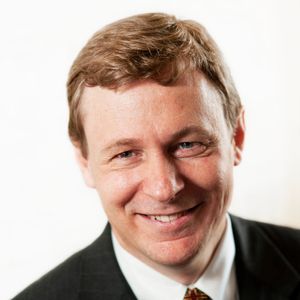
Wesley J. Wildman
· Professor of Philosophy, Theology, and Ethics, and of Computing and Data SciencesVerifiedBoston University · School of Theology
Active 1995–2026
About
Wesley J. Wildman is a Professor of Philosophy, Theology, and Ethics, and of Computing and Data Sciences at Boston University. His primary research and teaching interests encompass philosophical theology, philosophy of religion, philosophical ethics, religious and spiritual leadership, nonprofit entrepreneurship, religion and science, and the scientific study of religion. His PhD is in philosophy of religion, and he considers complex human systems, including their existential, moral, and spiritual dimensions, as his fundamental object of study. In addition to his role at the School of Theology, he is a Professor of Computing and Data Sciences and Duan Family Faculty Fellow, where he trains graduate students in computational social science and computational humanities, and teaches AI ethics to undergraduates and masters students. Dr. Wildman's scholarly work spans a wide range of topics, from multidisciplinary approaches in philosophy of religion to computational policy analysis addressing social problems. He is the author of a six-volume systematic series on religious philosophy, which addresses methods in philosophy of religion, models of ultimacy, implications of physics and biology for theology, theological anthropology, religious and spiritual experiences, and religious language. Wildman is a founding member of the International Society for Science and Religion, served as president of the American Theological Society, and is involved in various scholarly organizations. He is also the founding co-editor of the journal Religion, Brain & Behavior and serves as President and Chief Scientist of Just Horizons Alliance, a nonprofit dedicated to fostering a more just and hopeful future through research on social issues and religious and nonreligious worldviews. His research projects include understanding religious change, mapping research fields, analyzing values in the study of religion, and developing new methods for measuring spiritual diversity. Wildman maintains numerous resource websites for the study of philosophy, theology, ethics, and religion, which feature the work of Boston University graduate students.
Research topics
- Computer Science
- Political Science
- Sociology
- Engineering
- Management science
- Medicine
- Artificial Intelligence
- Public relations
- Engineering ethics
- Philosophy
- Medical education
- Telecommunications
- Nursing
- Psychology
- Ecology
- Virology
- Economics
- Law
- Operations research
- Pathology
- Environmental ethics
- Epistemology
Selected publications
Woke/anti-woke dynamics in Norway, 2014–2023
Acta Sociologica · 2026-03-31
articleSenior authorWe present a system dynamics model (SDM) of woke/anti-woke (WAW) dynamics in Norway, calibrated against Norwegian Citizen Panel data from 2014 to 2023. The SDM synthesizes theories related to WAW dynamics, including Moral Foundations Theory and two contrasting types of sensitivity to injustice (focusing on injustice to self and injustice to others). The simulation's two dependent variables measure the total amount of radicalism (left-wing and right-wing combined) relative to the population, and the amount of left-wing radicalism versus right-wing radicalism. Minimizing ideological polarization calls for minimizing the first output measure, while winning ideological culture wars draws attention to the second output measure. Results exhibit the vital role that homophily—the extent to which people socialize and communicate with those ideologically similar to themselves—plays in exacerbating or ameliorating ideological polarization in a society. High homophily increases radicalism in a relatively balanced way. Unbalanced radicalism can occur, but only at low levels of homophily. This suggests practical interventions: intensify culture wars by increasing homophily through media bubbles and decreasing encounters with unfamiliar others; or reduce polarization by decreasing homophily, encouraging positive encounters with unfamiliar others, and resisting one-sided radicalism when it arises by emphasizing civil virtues.
Religion Brain & Behavior · 2026-01-02
article1st authorCorrespondingMFQ data for MFQ psychometric analysis
Zenodo (CERN European Organization for Nuclear Research) · 2026-01-01
datasetOpen accessResearch Square · 2025-06-29
preprintOpen accessSenior authorDream content influences daily spirituality
Frontiers in Psychology · 2025-07-28
articleOpen accessIntroduction: The daily effects of supernatural-agent (SA) concepts on spirituality remain poorly understood. In this study, we focused on dreaming as an avenue to study the effect of SA concepts on spirituality. This work contributes to a long history of research linking together dreaming and spirituality by utilizing quantitative and longitudinal methods. Methods: = 61 wearing the Dreem 3 EEG headband to measure sleep architecture We collected dream reports and assessed supernatural content, dream affect, and dreamer agency. Linear mixed effects modeling examined relationships between dream variables and daily spirituality measures To evaluate our time-series data, we constructed a temporal neural network (TSANN) to test causal lagged relationships between our dream predictors and daily spirituality measures. Results: Dreams containing supernatural content were associated with reduced dreamer agency and more negative affect, and were rated as more bizarre, strange, and scary. Mixed effects models demonstrated that dream affect and REM sleep percentage significantly predicted next-day closeness-to-God ratings and authoritarian God concepts when controlled for participant variance in trait spirituality, as well as effects at a 4-day lag for dream agency and dream affect. The neural network analysis established causal support for the lagged closeness-to-God mixed effects models, with saliency maps showing that 3-4 day lagged predictors influenced model outputs more than 1-2 day lags, demonstrating the importance of multi-day effects in measuring the impact of dream variables on daily closeness-to-God ratings. Discussion: These findings indicate that SA concepts in dreams contribute to daily levels of spirituality both the following day and with a multi-day lag. We conclude that dreams thus represent a key pathway for the influence of SA concepts on spirituality, and provide a valuable area of study for future research in the psychology of religion.
Archive for the Psychology of Religion · 2025-06-26
article1st authorCorrespondingThe prevalence of axiologically intense experiences among non-religious people raises a question about the developmental importance and phylogenetic primacy of intensity versus religiosity in the evolutionary development of the capacity for cognitively and emotionally rich experiences. If intensity is the more primitive characteristic of experience, then religion arises later and coopts intensity, perhaps to enhance social bonding and confer upon religious groups competitive advantage. If religiosity is the phylogenetically older element of human experience, then the capacity for intensity represents a deepening and generalization of an experiential capacity that is fundamentally religious (in some sense). This article addresses this puzzle using a new psychometric instrument to determine whether intensity or religiosity explains the lion’s share of variance in phenomenological characteristics of experiences. The tool is the Phenomenology of Consciousness Inventory for Religious and Spiritual Experiences (PCI-RSE), a 62-item questionnaire designed to generate quantitative phenomenological profiles of experiences. The PCI-RSE’s psychometric strategy is to measure numerous subdimensions that are as neuropsychologically basic as possible while remaining accessible to introspection. Piloting from four nations (Germany, Mexico, South Africa, and United States; N = 978) showed that the PCI-RSE has excellent psychometric properties: good item performance, good scale reliability, strong external validation of key constructs, and an intelligible factor structure with a good match between extracted factors and posited dimensions. This measurement strategy shows that intensity explains far more variance than religiosity in the phenomenological features of experience, thereby suggesting that the capacity for axiological intensity is phylogenetically and developmentally more fundamental than religiosity.
Religion’s Hilbert problems, ten years later: progress, pitfalls, and new horizons
Religion Brain & Behavior · 2025-01-02
articleA Systems Approach to Religion in the Mind-Culture Nexus
2025-01-01
other1st authorCorrespondingCambridge University Press eBooks · 2024-11-21 · 1 citations
book-chapterSenior authorReligion Brain & Behavior · 2024-04-02
articleSenior authorInternational audience
Frequent coauthors
- 65 shared
F. LeRon Shults
University of Agder
- 43 shared
Richard Sosis
- 26 shared
Joseph Bulbulia
Victoria University of Wellington
- 19 shared
Patrick McNamara
VA Boston Healthcare System
- 16 shared
Saikou Y. Diallo
Old Dominion University
- 13 shared
David Voas
University College London
- 12 shared
Justin E. Lane
- 12 shared
Ivan Puga‐Gonzalez
Education
- 1990
Ph.D., Philosophy
Boston University
- 1985
M.A., Religious Studies
Harvard University
- 1982
B.A., Philosophy
University of California, Santa Barbara
Awards & honors
- A festschrift on Wildman's work was published by SUNY Press…
- A special journal issue dedicated to his work was published…
- Wildman is President and Chief Scientist of Just Horizons Al…
- Resume-aware match score
- Save to shortlist
- AI-drafted outreach
See your match with Wesley J. Wildman
PhdFit ranks faculty by your research interests, methods, and publications — grounded in their actual work, not templates.
- Free to start
- No credit card
- 30-second signup