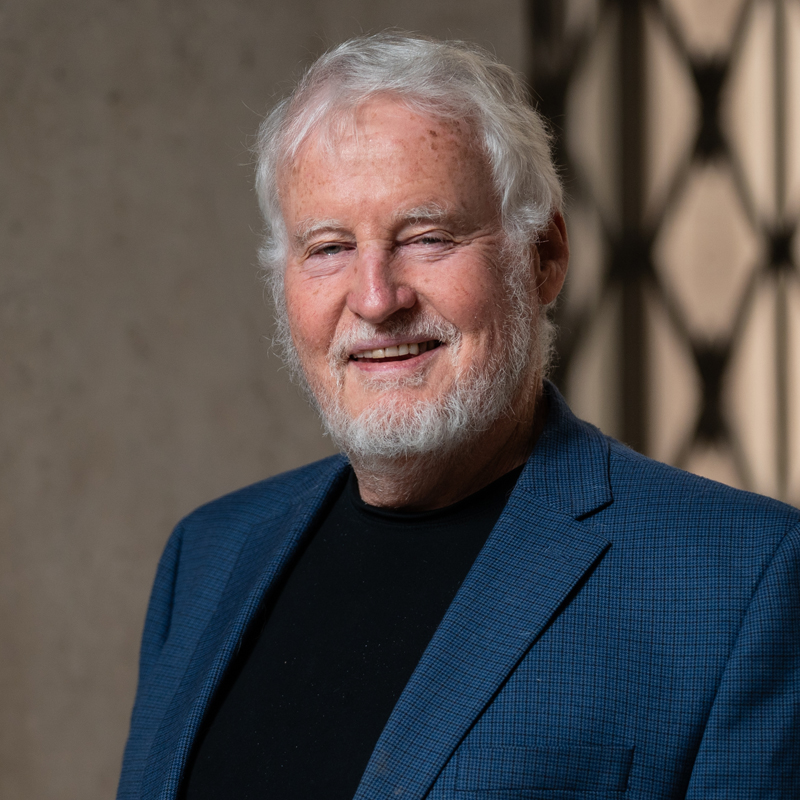
Terrence J. Collins
· Teresa Heinz Professor in Green Chemistry Director, Institute for Green ScienceVerifiedCarnegie Mellon University · Chemistry
Active 1973–2025
About
Terrence J. Collins is the Director of the Institute for Green Science and holds the Teresa Heinz Professorship in Green Chemistry at Carnegie Mellon University. He leads the Collins research group, which is associated with the Department of Chemistry and the Institute for Green Science at Carnegie Mellon University. His professional role emphasizes leadership in green chemistry, focusing on sustainable and environmentally friendly scientific approaches. The page lists him prominently among other faculty and experts affiliated with the Institute for Green Science, highlighting his directorial position and professorship, but does not provide further detailed information about his specific research focus, background, or key contributions.
Research topics
- Organic chemistry
- Chemistry
- Computer Security
- Computer Science
- Medicinal chemistry
- Inorganic chemistry
- Biotechnology
- Engineering
- Waste management
- Biology
- Business
- Risk analysis (engineering)
- Medicine
- Chemical engineering
- Environmental health
- Food science
- Nuclear chemistry
- Polymer chemistry
Selected publications
Non-oestrogenic bisphenols based on lignocellulosics
Nature Sustainability · 2025-12-04
article1st authorCorrespondingJournal of Coordination Chemistry · 2025-01-03
articleSenior authorChemistry - A European Journal · 2025-06-27 · 1 citations
articleOpen accessSenior authorThe electron transfer from naphthalene at an oxidized iron TAML species (TAML = tetraamido macrocyclic ligand) is a key step of its environmentally relevant deep degradation by hydrogen peroxide in water leading first to naphthoquinones which are further converted to smaller fragments. Other polycyclic arenes are also oxidized, often faster than naphthalene consistent with their lower ionization potentials than that of naphthalene.
Journal of Coordination Chemistry · 2025-11-17
articleSenior authorCorrespondingBis-amido bis-sulfonamido version of TAML activators of peroxides [Fe{4-NO<sub>2</sub>C<sub>6</sub>H<sub>3</sub>-1,2-(<i>N</i>COCMe<sub>2</sub><i>N</i>SO<sub>2</sub>)<sub>2</sub>CHMe}(OH<sub>2</sub>)]<sup>−</sup> (<b>1</b>, TAML stands for <i>t</i>etra<i>a</i>mido<i>m</i>acrocyclic <i>l</i>igand) catalyzes the oxidative bleaching of cyanidin 3-glucoside (cyanidin 3-<i>O</i>-β-glucopyranoside, Cy3G) by H<sub>2</sub>O<sub>2</sub> so rapidly at neutral pH that the rate of disappearance of Cy3G does not depend on its concentration under all conditions studies. The rate law is free from the Cy3G term, viz. -<i>d</i>[Cy3G]/<i>dt</i> = <i>k</i><sub>I</sub>[H<sub>2</sub>O<sub>2</sub>][<b>1</b>]. The estimated second-order rate constant for the oxidation of Cy3G by the oxidized form of <b>1</b> is not lower than 2 × 10<sup>6</sup> M<sup>−1</sup> s<sup>−1</sup>. Anthocyanin Cy3G contributes to dark red colors of red wines and therefore it serves as a model compound in a search for efficient methods for removing wine spills and stains from light fabrics. As a hydrophobic polyphenol, Cy3G interacts with iron(III) of a resting state of <b>1</b>, forming a non-covalent associate {LFe<sup>III</sup>,Cy3G} which causes the substrate inhibition. Both species LFe<sup>III</sup> and {LFe<sup>III</sup>,Cy3G} react with H<sub>2</sub>O<sub>2</sub>, the rate constants being 1100 and 360 M<sup>−1</sup> s<sup>−1</sup>, respectively.
Inorganic Chemistry · 2025-11-25
articleThe neutral macrocyclic iron(III) complex Fe(H2O)(LPYA) (3) is a homogeneous catalyst for the oxidation of organic micropollutants with hydrogen peroxide. The macrocyclic ligand incorporates two hybrid pyridinium amidate/amidate (hybrid PYA/A) N-donors and two sulfonamidate N-donors with an −N(CH3)– group bridging the two sulfonamidate functions. Anionic analogues of 3 in which the pyridinium group is replaced by o-phenylene (K[Fe(H2O)(Lo-P)] (1)) or by nitro-substituted o-phenylene (K[Fe(H2O)(Lo-P*)] (2)) were also synthesized. Complexes 1–3 were investigated as potential catalysts for the oxidative destruction by hydrogen peroxide of persistent micropollutants that remain in wastewater after conventional treatment regimens. Complexes 1–3 catalyzed the oxidation of the surrogate micropollutants Orange II and Safranine O, and kinetic parameters for these reactions were obtained. 3 also catalyzed the oxidation of carbamazepine (CBZ), which is an actual persistent micropollutant under conditions that are relevant for practical applications ([3] 50 nM, [CBZ] 50 μM, [H2O2] 250 μM, i.e., 8.5 ppm, 25 °C, pH 7.0). Complex 3 catalyzed the oxidation of each of the above substrates at rates three to four times greater than those of the benchmark homogeneous catalyst for reactions of this type.
Open MIND · 2024-09-01
articleIn 2022, the UNEA assembly requested UNEP to initiate the development of a global plastic treaty to "end plastic pollution". For such a tremendous task to be realized, it is essential to reshape the plastic economy away from its current predominant linear material flow of "take-make-waste", towards a regenerative, restorative, and just circular economy. In such efforts, material consumption needs to be significantly reduced. The current plastic economy has grown in material consumption to more than 400 million tons/year today, primarily relying on fossil-based feedstock. This increase has resulted in widespread plastic pollution, to the extent that plastic is today ubiquitous on the planet and recent research has documented a direct relationship between plastic production and pollution. Consumption is furthermore expected to reach 1,200 million tons/year in 2060, assuming a business-as-usual scenario, illustrating the necessity for fundamental changes. The main effort to change this trend so far has focused on increasing waste handling and recycling of plastic, with limited success. According to the OECD, only 9 Also see: https://micro2024.sciencesconf.org/559335/document
ACS ES&T Water · 2024-05-29 · 2 citations
articleOpen accessSenior authorCorrespondingOxidative catalysis is becoming a leading trend in fighting environmental pollution created, inter alia, by numerous pesticides. Among them are carbendazim (Cbz), a benzimidazole fungicide and the metabolite of other fungicides, including thiophanate methyl (Tpm). We investigated the oxidative degradation of Cbz and Tpm by H2O2 catalyzed by TAML activators including a bis-amide bis-sulfonamide variant [Fe{4-NO2C6H3-1,2-(NCOCMe2NSO2)2CHMe}(OH2)]− (1). Studies were performed in water at pH 7.0 and 25 °C, i.e., under the conditions that correspond best to environmental demands. Two major parallel catalytic pathways were identified for Cbz, viz. typical of TAMLs' deep oxidative destruction and rare catalytic nitration of Cbz by nitrite liberated on the oxidation of Cbz. Catalyst 1 is 4.6 times more reactive than its tetra-amide rival [Fe{4-NO2C6H3-1,2-(NCOCMe2NCO)2CF2}(OH2)]− (2b). Kinetic, fluorescence, DFT methods all were used to understand the advantages of 1, which are discussed in detail. Several degradation products of Cbz were identified. Tpm is rapidly transformed into Cbz by 1/H2O2, mimicking metabolic processes. Mechanisms of Cbz oxidation and nitration, as well as of Tpm to Cbz conversion, are discussed.
Recommendation: Primary plastic polymers: Urgently needed upstream reduction — R0/PR2
2024-04-12
peer-reviewOpen accessPrimary Plastic Polymers: Urgently needed upstream reduction
Research at the University of Copenhagen (University of Copenhagen) · 2024-03-23 · 2 citations
reportOpen accessThe UN international legally binding instrument on plastic pollution (UNEA resolution 5/14) aims to reduce plastics pollution. However, midstream and downstream assessments show that optimizing waste management, removal technologies, and improved circularity is not sufficient to curb plastics pollution in the short-, mid- or long-term. Therefore, we have to look Upstream to the root of the problem and define binding national phase-down schedules and Global Aggregate Targets in order to reduce Primary Plastic Polymers production
Primary plastic polymers: Urgently needed upstream reduction
Cambridge Prisms Plastics · 2024-01-01 · 39 citations
articleOpen accessInternational audience
Recent grants
NIH · $1.3M · 1999
Frequent coauthors
- 117 shared
Alexander D. Ryabov
Carnegie Mellon University
- 104 shared
Colin P. Horwitz
Carnegie Mellon University
- 80 shared
Stephen P. Cramer
University of California, Davis
- 78 shared
Charles G. Riordan
Hofstra University
- 62 shared
Pinghua Ge
University of Illinois Urbana-Champaign
- 62 shared
Sally Brooker
University of Otago
- 60 shared
Scott W. Gordon‐Wylie
Dartmouth College
- 53 shared
Hongxin Wang
Search for Extraterrestrial Intelligence
Labs
The Collins research group focuses on green chemistry and sustainable science.
Education
- 1978
Ph.D.
University of Auckland
Awards & honors
- Fast Company's World Changing Ideas Awards 2021 Start-ups to…
- The Environment Award, Carnegie Science Center (2018)
- Fellow, American Chemical Society (2013)
- Heinz Award for the Environment (2010)
- Honorary Fellow of the Royal Society of New Zealand (2008)
- Resume-aware match score
- Save to shortlist
- AI-drafted outreach
See your match with Terrence J. Collins
PhdFit ranks faculty by your research interests, methods, and publications — grounded in their actual work, not templates.
- Free to start
- No credit card
- 30-second signup