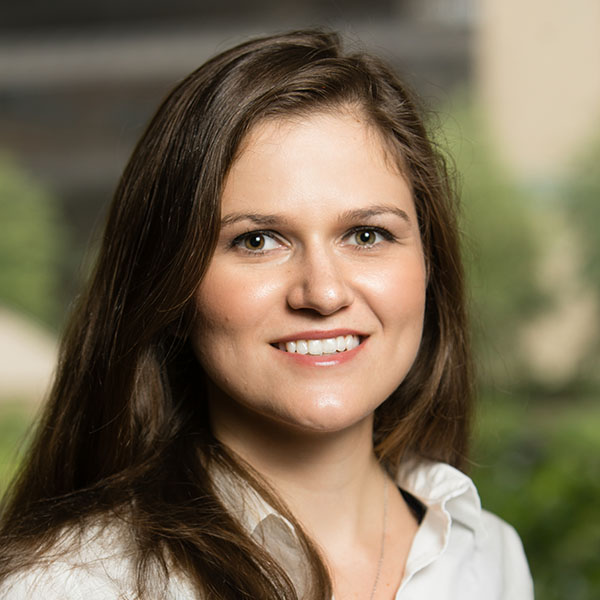
Erika Helgeson
· Associate ProfessorVerifiedUniversity of Minnesota · Biostatistics & Health Data Science
Active 2011–2026
About
Erika Helgeson, PhD, is an Associate Professor in the Division of Biostatistics & Health Data Science at the University of Minnesota School of Public Health. Her research primarily focuses on the design, management, and analysis of clinical trials and epidemiological studies, with specific interests in oral health, lung health, and transplantation. Her methodological research includes clinical trials, risk prediction, and the development of statistical machine learning methods for complex, high-dimensional data. Dr. Helgeson holds a PhD in Biostatistics from the University of North Carolina-Chapel Hill, obtained in 2017, and a BS in Mathematics and Biology from Gonzaga University, earned in 2012. She also serves as the Associate Director of the Coordinating Centers for Biometric Research and teaches courses such as Statistical Methods for Correlated Data.
Research topics
- Medicine
- Sociology
- Internal medicine
- Anthropology
- Genetics
- Demography
- Biology
- Virology
- Psychiatry
- Psychology
- Immunology
- Pharmacology
Selected publications
Pediatric Obesity · 2026-03-01
articleOpen accessBACKGROUND: Time-limited eating (TLE) shows promise as an adult obesity treatment; little is known in paediatrics or families. OBJECTIVE: To assess the feasibility and acceptability of family-based TLE. METHODS: This was a 12 week pilot randomized trial comparing family-based TLE to dietary standard of care (SOC). Families included a child aged 3-9 years and caretaker, both with obesity. TLE received instruction to end eating after the evening meal and otherwise eat ad libitum. SOC received dietary instruction. Primary outcomes, feasibility and acceptability, were measured through retention, intervention burden (i.e., treatment time) and satisfaction surveys. Anthropometrics were measured at baseline and 12 weeks. Between-arm comparisons of BMI percentile above the median (%BMIp50) used mixed effects models to account for family clustering; comparisons of adult BMI and child BMI percentage of the 95th percentile (%BMIp95) used two-sample t-tests. RESULTS: Eighteen families enrolled (10 TLE; 8 SOC). Retention was 94% (100% TLE, 88% SOC). TLE required significantly less total treatment time than SOC [84.3 vs. 140.9 min; p < 0.001]. Satisfaction was high; 89% TLE and 100% SOC would recommend their treatment. Overall, SOC reduced mean %BMIp50 more than TLE (mean difference: -3.9; p = 0.001), with no difference in change in child %BMIp95 between arms (-0.2, p = 0.92), but with SOC reducing parental BMI more than TLE (-1.6, p = 0.002). CONCLUSIONS: Family-based TLE was feasible and acceptable and required less time to implement than SOC, suggesting TLE could be an accessible dietary intervention for families. Fully powered studies are needed to determine BMI efficacy. TRIAL REGISTRATION: ClinicalTrials.gov: NCT05107726.
Journal of the Academy of Nutrition and Dietetics · 2026-03-01
articleOpen accessDietetics · 2026-04-23
articleOpen accessBackground: Assessing food and nutrient intake is an important yet challenging component of nutrition research, particularly in populations at higher risk for dietary underreporting. Objective: To evaluate the feasibility, acceptability, and preliminary measurement characteristics of augmenting interviewer-administered 24 h dietary recalls with a photo-based mobile food record application (mCC: my Circadian Clock). Design: This was a randomized cross-over feasibility study in which each participant completed two sets of three 24 h dietary recalls. One set consisted of standard interviewer-administered recalls, while the other incorporated dietary intake captured via the mCC app during the 24 h preceding the recall to guide the interview. Participants: Participants (n = 10) were adults aged 18–65 years with obesity (BMI > 30 kg/m2) and less than a college-level education, recruited from a general community setting. Main Outcome Measures: Primary feasibility outcomes included recall adherence, protocol completion, participant burden, and usability of the mobile application. Secondary and exploratory outcomes included average energy intake (kcal/day), number of food items and eating occasions reported, Healthy Eating Index (HEI)-2015 scores, and recall duration. Statistical Analyses: Descriptive statistics and paired t-tests were used to explore differences between methods; analyses were considered exploratory and hypothesis-generating. Results: All enrolled participants completed every scheduled recall, resulting in 100% adherence and protocol completion. Most participants (70%) rated the mCC app as easy or very easy to use, although 60% reported greater burden with the Augmented Recalls. Average energy intake was 274 kcal/day lower with the augmented method compared with Standard Recalls (95% CI: −597, 50; p = 0.09), with no clear differences observed in reported food items, eating occasions, HEI-2015 scores, or recall duration. Conclusions: Augmenting interviewer-administered 24 h dietary recalls with a photo-based mobile food record is feasible and acceptable in adults with obesity, though it did not demonstrate clear improvements in dietary intake capture in this small feasibility sample. These findings provide practical guidance for refining technology-assisted recall protocols and informing the design of future, adequately powered studies.
American Journal of Transplantation · 2025-08-01
articleDiabetes · 2025-06-13
articleIntroduction and Objective: Diabetic ketoacidosis (DKA) remains a challenge for people living with type 1 diabetes (T1D), with recurrent events associated with substantially increased mortality. We aimed to develop an electronic health record (EHR)-based model to predict DKA in adults with T1D. Methods: We identified adults with T1D treated in our health system between 1/1/2017-4/30/2023 by adapting the SUPREME-DM and Klompas algorithms to our EHR. For each person in the dataset, we extracted all available EHR data (e.g., sociodemographics, medication data, laboratory values, ambulatory and inpatient care records), from their first encounter within the health system to 4/30/2023. We identified DKA events using the ADA 2024 Consensus criteria. We split the dataset into discovery (≈80% of DKA events) and validation cohorts (≈20% of DKA events). Using domain knowledge, we selected predictors: prior DKA (categorical), number of prior DKA events, time between DKA events, time since last DKA, most recent HbA1c, absence of a HbA1c value in the past two years, and insurance type (public vs. private). Using these features, we developed a logistic regression model that predicts each person’s DKA risk over 180 days. Results: Our dataset includes 8,008 adults with T1D, of which 668 (8.3%) had ≥1 post-T1D diagnosis DKA event between 1/1/2017-4/30/2023, totaling 1,103 DKA events. Of these 668 adults (age 43 ± 17 years, mean ± SD), 48% were women, 23% were non-white, HbA1c was 9.9% ± 2.1, 44% used a CGM, and 32% used an insulin pump. In our validation cohort, our model’s AUROC was 0.84, and for the top 5% highest risk individuals its precision was 16% and recall was 42%. Conclusion: We developed an EHR-based logistic regression model that predicts DKA-related hospitalizations over 180 days in adults with T1D. To maximize its clinical value, next steps include testing new features, enhancing model performance, and studying clinical implementation. Disclosure J.D. Kohlenberg: Research Support; Dexcom, Inc. Speaker's Bureau; Med Learning Group. M. Xu: None. R. Coopergard: None. E. Helgeson: None. N.N. Mathioudakis: None. M.A. Clements: Consultant; Glooko, Inc. Research Support; Dexcom, Inc., Abbott. L.S. Chow: Research Support; Dexcom, Inc. S. Ma: None. Funding National NIH K12 Diabetes-Docs: Physician-Scientist Career Development Program (DiabDocs), K12DK133995
International Journal of Obesity · 2025-11-28
articleOpen accessRising obesity rates necessitate sustainable weight management strategies. Current lifestyle guidelines focus on reducing caloric intake through personalized interventions to promote compliance. This secondary analysis evaluated post-intervention sustainability of time-restricted eating (TRE) versus caloric restriction (CR), hypothesizing that TRE's "watching the clock" approach may be more sustainable than CR's "watching calories." Following a 12-week supervised intervention (TRE: 8-h eating window, n = 29; CR: 15% caloric reduction, n = 26), 41 participants (75%; 24 F/17 M; 23 TRE/18 CR; age 43.1 ± 11.6 years; BMI 34.7 ± 5.4 kg/m²) completed follow-up surveys at 1, 3, and 6 months. TRE participants maintained weight across all follow-ups compared to final intervention weight. CR participants showed significant loss at 1 month (-1.6 ± 2.5 kg, p = 0.02), returning to baseline by 3 months. Both interventions had similar continuation rates (1,3,6 months: TRE: 52%, 36%, 47%; CR: 63%, 57%, 50%; p = 0.60) and recommendation rates (TRE: 81%, 85%, 86%; CR: 88%, 86%, 80%; p = 0.72). TRE participants reported improved sleep, energy, and digestion but experienced morning hunger and scheduling challenges. CR participants noted increased food mindfulness but reported tracking anxiety, cravings, and potential binge eating. Despite limitations including small sample size and self-reported weight, both self-sustained TRE and CR showed similar acceptability and weight maintenance at 3-6 months post-intervention. Clinical Trial Registration: Clinicaltrials.gov NCT04259632.
Clinical Transplantation · 2025-07-01
articleOpen access1st authorCorrespondingABSTRACT Background Traditionally, glomerular filtration rate (GFR) ≥80 mL/min/1.73 m 2 has been the threshold for living kidney donor (LKDs) acceptance. Recently, the threshold has been lowered for older donors. There is consideration of raising it for younger donors. Methods We compared long‐term outcomes for LKDs age 18–29 with predonation eGFR < 90 to those with eGFR ≥ 90. LKDs with eGFR <90 were matched 1:3 to LKDs with eGFR ≥ 90 using nearest neighbor propensity score matching. Propensity scores were estimated using logistic regression with covariates for age; systolic blood pressure; glucose; BMI; sex; donation year; relationship to recipient, smoking status; and family history of diabetes, hypertension, and cardiovascular disease (CVD). Incidence of death, eGFR < 45, hypertension, diabetes, and CVD were compared between groups using Cox proportional hazards (for death) and Fine‐Gray regression models treating death as a competing risk. Results Of 965 LKDs age 18–29 with follow‐up information, median [quartiles] age at donation was 25.4 [22.5, 27.6]; 54.0% were female, 91.6% White, 87% non‐Hispanic; 158 (16.4%) had predonation eGFR < 90. LKDs with eGFR < 90 tended to donate during an earlier era (median year: 1982 vs. 1990, p < 0.001) to a first degree relative (86.7% vs. 75.3%, p = 0.008) and have a family history of diabetes (53.8% vs. 40.6%, p = 0.009). During a median follow‐up of 25 [12, 37] years no associations were detected between low predonation eGFR and death, eGFR < 45, hypertension, diabetes, or CVD. Results among LKDs age < 25 were similar. Conclusions Our data do not support increasing the eGFR threshold among young White non‐Hispanic donor candidates, reducing one barrier to living donation.
Oral Surgery Oral Medicine Oral Pathology and Oral Radiology · 2025-01-07
articleKidney transplantation after bariatric surgery—Outcomes from a 30-year experience
Surgery for Obesity and Related Diseases · 2025-09-27 · 1 citations
articlePostdonation Outcomes for Living Kidney Donors by Relationship to Recipient
American Journal of Transplantation · 2025-08-01
article
Frequent coauthors
- 120 shared
Sunita Singh
Health First
- 113 shared
Arthur J. Matas
University of Minnesota
- 110 shared
Osama Gaber
- 110 shared
Katherine R. Tuttle
Providence Health & Services
- 110 shared
Prabir Roy‐Chaudhury
W. G. (Bill) Hefner VA Medical Center
- 110 shared
Vikas S. Sridhar
- 110 shared
Vivekanand Jha
Imperial College London
- 110 shared
David Z.I. Cherney
University of Toronto
Education
- 2010
Ph.D., Public Health
University of Minnesota
- 2006
M.S., Public Health
University of Minnesota
- 2004
B.A., Environmental Studies
University of Minnesota
- Resume-aware match score
- Save to shortlist
- AI-drafted outreach
See your match with Erika Helgeson
PhdFit ranks faculty by your research interests, methods, and publications — grounded in their actual work, not templates.
- Free to start
- No credit card
- 30-second signup