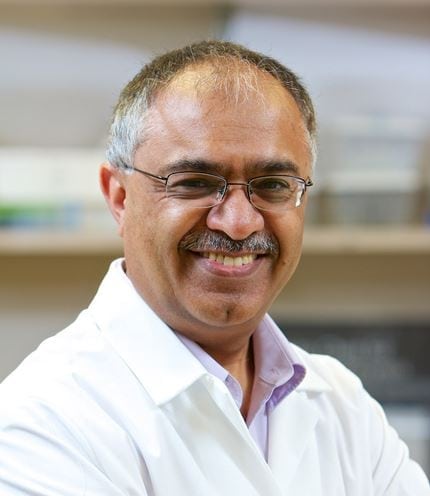
Jashvant Unadkat
· ProfessorVerifiedUniversity of Washington · Pharmacology
Active 1982–2026
About
Jashvant (Jash) Unadkat, Ph.D., is a Professor of Pharmaceutics at the School of Pharmacy, University of Washington, Seattle. He received his Bachelor of Pharmacy from the University of London in 1977, his Ph.D. from the University of Manchester in 1982, and completed postdoctoral training at the University of California at San Francisco from 1982 to 1985. Dr. Unadkat studies the mechanisms of transport and metabolism of drugs, including during pregnancy, with a focus on blood-brain and blood-CSF barriers, central nervous system, drug transporters, pharmacokinetics-pharmacodynamics, and maternal-fetal pharmacology. He has published more than 270 peer-reviewed research papers and is a fellow of AAAS, AAPS, and JSSX. He is the founding co-chair of the focus group of AAPS on Drug Transport and Uptake and has received notable awards such as the AAPS Research Achievement Award in 2012 and the ISSX Research Achievement Award in 2023. Dr. Unadkat created and led the UW Research Affiliates Program on Transporters (UWRAPT) for ten years and currently co-leads the UW Transporter Elucidation Center, funded by NICHD, to identify and characterize novel transporters in the placenta and developing intestine. His research emphasizes mechanisms of drug transport and metabolism, including maternal-fetal pharmacology.
Research topics
- Pharmacology
- Chemistry
- Biology
- Stereochemistry
- Intensive care medicine
- Medicine
- Biochemistry
Selected publications
Clinical Pharmacology & Therapeutics · 2026-05-11
articleOpen accessCorrespondingPregnant individuals take drugs throughout pregnancy and many of these drugs (e.g., antivirals, antibiotics) are eliminated by renal organic anion transporters (OAT) 1 and OAT3. In vivo studies with OAT1/3 substrate drugs suggest that pregnancy increases renal OAT1/3 activities by 1.5‐ to 1.8‐fold. However, data from these in vivo studies are only available for some trimesters. Various endogenous metabolites (e.g., pyridoxic acid, glycochenodeoxycholate‐3‐sulfate (GCDCA‐S)) have been identified as substrates of renal OAT1/3 and can potentially be utilized as phenotypic markers to study modulation of OAT1/3 activities across all trimesters of pregnancy. In this proof‐of‐concept study, we quantified the effect of late second to early third trimester (T2–T3) of pregnancy on the plasma concentration and renal clearance (CL R ) of OAT1/3 biomarkers. Targeted metabolomic analysis of paired plasma and urine samples ( n = 46 pregnant women), collected during T2–T3 (25–29 weeks of gestation) and > 3 months postpartum (PP), was conducted. Average plasma concentrations of most OAT1/3 biomarkers were 27–43% lower in T2–T3 vs. PP. The CL R ratios (T2–T3/PP) of biomarkers were 1.3–1.6, except for GCDCA‐S and kynurenine where the ratios were ~5. The net renal secretory clearance and net unbound secretory clearance ratios of pyridoxic acid, p‐cresol sulfate, p‐cresol glucuronide, 3‐indoxyl sulfate, and GCDCA‐S were similar to the values listed above. Overall, OAT1/3 activity (as measured by endogenous biomarkers) is increased in T2–T3, consistent with available in vivo OAT1/3 substrate drug data. The studied biomarkers can be utilized in the future to quantify pregnancy‐related changes in OAT1/3 transport activities across all trimesters.
Open Science Framework · 2026-01-01
otherOpen access1st authorCorrespondingThis project contains underlying data for "Effect of late second to early third trimester of pregnancy on the activity of renal organic anion transporters (OAT1 and OAT3): A biomarker study" manuscript and includes Excel file with all the individual data generated in this project.
Metabolites · 2026-04-24
articleOpen accessSenior authorCorrespondingBackground/Objectives: Pregnancy is associated with increased renal secretory clearance of drugs mediated by organic anion transporters (OATs) and organic cation transporter 2 (OCT2). Circulating concentrations of pregnancy-related hormones (PRHs) increase with gestational age, providing a plausible mechanism for renal OAT and OCT2 regulation. Methods: Using primary human proximal tubular epithelial cells (PTECs), we quantified the effects of PRHs, at trimester-specific concentrations, on the mRNA expression of renal drug transporters (apical and basal) and metabolizing enzymes (DMETs), as well as endocytic receptors. PTECs from three female, premenopausal donors were cultured in an optimized Transwell system that maintains measurable OAT activity. PTECs were then exposed for 72 h to trimester-matched PRH cocktails at physiologic (1×) or supraphysiologic (10×) concentrations, with medium replaced every 24 h. DMET and endocytic receptor mRNA were quantified by RT-qPCR, and uptake activities of OAT1/2/3, OCT2, OAT4, and OCTN1 were measured with selective substrates or substrate–inhibitor pairs. Results: At 1× PRHs, renal DMET and endocytic receptor mRNA expression was unchanged across trimester-related PRH concentration except for consistent downregulation of PEPT2. Uptake activity for all measured transporters was unchanged. At 10× PRHs, selective changes in mRNA expression of transporters were observed (e.g., induction of OAT1), but these changes did not translate into changes in activity. Conclusions: Our data argue against PRHs as the main driver of the increase in OAT-mediated drug secretion during pregnancy. Alternative mechanisms (e.g., flow-dependent mechanotransduction and untested hormones [e.g., prolactin, hCG]) should be evaluated to explain gestation-dependent changes in renal secretory clearance of drugs.
OSF Preprints (OSF Preprints) · 2026-01-01
articleOpen accessSenior authorThis project contains extended data for "Effect of late second to early third trimester of pregnancy on the activity of renal organic anion transporters (OAT1 and OAT3): A biomarker study" manuscript which includes: 1. Supplementary methods 2. Supplementary tables 3. Supplementary figures
Open MIND · 2026-01-01
articleOpen access1st authorCorrespondingThis project contains underlying data for "Effect of late second to early third trimester of pregnancy on the activity of renal organic anion transporters (OAT1 and OAT3): A biomarker study" manuscript and includes Excel file with all the individual data generated in this project.
Open MIND · 2026-01-01
otherOpen accessSenior authorThis project contains extended data for "Effect of late second to early third trimester of pregnancy on the activity of renal organic anion transporters (OAT1 and OAT3): A biomarker study" manuscript which includes: 1. Supplementary methods 2. Supplementary tables 3. Supplementary figures
Identification of selective substrates and inhibitors of the major human renal uptake transporters
Drug Metabolism and Disposition · 2025-02-03 · 7 citations
articleSenior authorDrug Metabolism and Disposition · 2025-06-02 · 1 citations
articleDrug Metabolism and Pharmacokinetics · 2025-06-01
articleSenior authorDrug Metabolism and Disposition · 2025-01-08 · 5 citations
articleSenior author
Recent grants
NIH · $2.1M · 2021–2027
NIH · $1000k · 2012
NIH · $950k · 2013
NIH · $768k · 1996
Mechanisms of Regulation of Cannabinoid Disposition
NIH · $24.9M · 2013–2026
Frequent coauthors
- 345 shared
Cornelis E. C. A. Hop
- 330 shared
Laurent Salphati
- 311 shared
Yurong Lai
Gilead Sciences (United States)
- 287 shared
Xiaoyan Chu
Merck & Co., Inc., Rahway, NJ, USA (United States)
- 277 shared
Bhagwat Prasad
Washington State University Spokane
- 230 shared
Guangqing Xiao
Traditional Chinese Medicine Hospital of Kunshan
- 228 shared
Anita Mathias
- 227 shared
Mingxiang Liao
Jazz Pharmaceuticals (United States)
Labs
Education
Ph.D.
University of Manchester
Other
University of London
Awards & honors
- AAPS Research Achievement Award (2012)
- ISSX Research Achievement Award (2023)
- Resume-aware match score
- Save to shortlist
- AI-drafted outreach
See your match with Jashvant Unadkat
PhdFit ranks faculty by your research interests, methods, and publications — grounded in their actual work, not templates.
- Free to start
- No credit card
- 30-second signup