Resume-aware faculty matching

Find professors who actually fit you

Upload your resume. Four AI agents analyze your background, rank the faculty who fit, inspect their recent research, and help you draft outreach — grounded in their actual work, not templates.

Free to startNo credit cardCancel anytime
Top matches Balanced preset
Dr. Sarah Chen
Stanford · Interpretability · NLP
91
Dr. Marcus Holloway
MIT · Robotics · RL
84
Dr. Aisha Okonkwo
CMU · Fairness · HCI
82
Nova · Professor Researcher · re-ranking top 20…
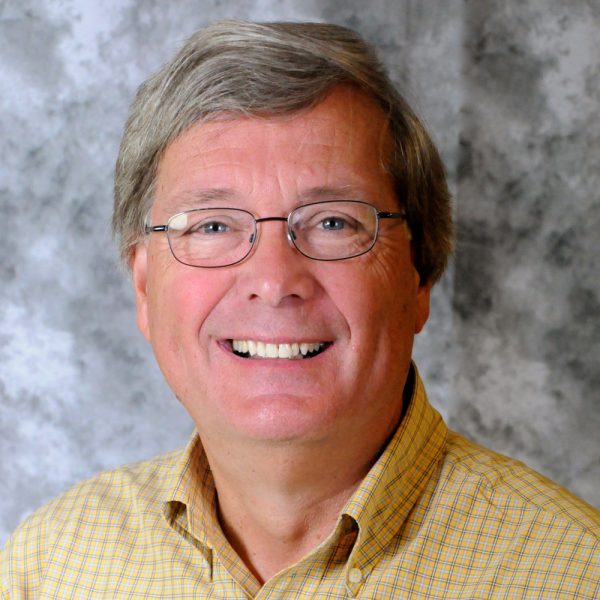
Duane Akroyd

Duane Akroyd

· Professor

North Carolina State University · Health, Physical Education, and Recreation

Active 1989–2024

h-index14
Citations696
Papers482 last 5y
Funding
See your match with Duane Akroyd — sign in to PhdFit.Sign in

About

Dr. Duane Akroyd holds a Master of Science in Health Sciences Education from the State University of New York at Buffalo and a Ph.D. in Occupational Education with a concentration in Higher Education from Southern Illinois University. He began his academic career as a community college faculty member and has served in various administrative and faculty roles at several universities prior to his current position. He is a Professor in the Adult Workplace and Continuing Professional Education program area at NC State University. His research focuses on workplace and behavioral variables that influence employee satisfaction, organizational commitment, and burnout. He has concentrated his scholarly work on community college faculty, both full-time and part-time, as well as health professionals including practitioners and faculty. His work also examines supply, distribution, and policy issues in health professions education, along with the use of technology in educational settings. Dr. Akroyd serves as a Contributing Editor of the Journal of Allied Health and is the Executive Editor for the Community College Review, contributing to the dissemination of research in his fields of expertise.

Research topics

  • Medical education
  • Psychology
  • Medicine
  • Political Science
  • Computer Science
  • Clinical psychology
  • Social psychology
  • World Wide Web
  • Demography
  • Mathematics education

Selected publications

  • Predictors of Physician Assistant Student Mistreatment Reporting

    The Journal of Physician Assistant Education · 2024 · 1 citations

    Senior authorCorresponding
    • Psychology
    • Medical education
    • Medicine

    INTRODUCTION: Many physician assistant (PA) students experience mistreatment by preceptors in clinical settings though most do not report it to their institution. Nonreporting limits an institution's ability to address mistreatment and provide student support. Several reasons for nonreporting have been described in national surveys. The purpose of this study was to identify factors predictive of student reporting behavior. METHODS: This study used a nonexperimental, cross-sectional, predictive research design with quantitative analytic methods. Data were from 2 national surveys administered to PA students and programs in 2019. The sample was PA students who experienced mistreatment performed by preceptors. Logistic regression was used to identify which independent variables were predictors of student mistreatment reporting to their institution. RESULTS: Students were twice as likely to report mistreatment involving physical or sexual behavior compared with other types. Older students were more likely to report mistreatment than younger students. Policy factors were not significant predictors of student reporting behavior. DISCUSSION: Student likelihood to reporting severe forms of mistreatment indicate they recognize those behaviors as mistreatment and believe they are important enough to report. Greater likelihood of reporting by older students indicates the influence of student demographics and life experience. Policy factors and institution characteristics were not significant predictors of student reporting behavior, which suggest the limits of policy as a facilitator of mistreatment reporting. These findings have implications for educational program policy design, implementation, and evaluation, as well as underscore the need for further research to understand factors influencing students' decision to report mistreatment.

  • Community College Teacher Professional Development

    2020

    Senior authorCorresponding
    • Computer Science
    • Political Science
    • Medical education

    Abstract NOTE: The first page of text has been automatically extracted and included below in lieu of an abstract Community College Teacher Professional Development: Year Three Data from an Online Graduate Certificate Program in Community College Teaching Introduction and Project Overview The departments of Adult and Higher Education (AHE) and Mathematics, Science and Technology Education (MSTE) within the College of Education at North Carolina State University developed an NSF supported graduate certificate program in Community College Teaching. The program has focused on developing the knowledge and skills necessary to design and deliver course-related content through technology-enhanced learning environments for faculty who teach in Science, Technology, Engineering, & Mathematics (STEM) related areas. The courses developed for the graduate certificate enhance faculty abilities in both online and classroom environments. Current community college teachers from North Carolina and South Carolina have been recruited into the program. The project meets the broader goals of the NSF- Advanced Technological Education (ATE) program by institutionalizing the means by which working professionals can be recruited to fill shortages in community college faculty teaching positions in STEM fields. It also provides a means whereby current community college faculty can upgrade their instructional skills. Project Goals The key goal for the online Community College Teaching certificate program is to provide high quality content and instruction for the systematic development of instructional expertise for regional community college instructors. Questions addressed during the first three years are: 1. Does the program meet the educational needs of adult and distance learners from diverse backgrounds and cultures? 2. Does the Program develop and enhance knowledge and skills for understanding the diverse ways and settings in which adults learn? 3. Does the Program prepare individuals and enhance instructors’ abilities to research, design, implement, and evaluate distance learning and classroom instruction? Core Courses The first three courses provide an introduction to instructional techniques and technologies as well as lay a foundation for further program options. These courses represent conceptual and technological content that provide learners with knowledge and skills necessary for conducting a variety of approaches to teaching while emphasizing the use of technology in instruction. In

  • Occupational burnout among radiation therapists in Australia: Findings from a mixed methods study

    Radiography · 2017-04-20 · 24 citations

    article
  • Occupational burnout among radiographers, sonographers and radiologists in Australia and New Zealand: Findings from a national survey

    Journal of Medical Imaging and Radiation Oncology · 2016-10-18 · 87 citations

    article

    INTRODUCTION: Evidence demonstrates that health care professionals are more prone to burnout than other professionals due to the emotionally taxing interactions they have with their patients on a daily basis. The aims of this study were to measure occupational burnout levels among sonographers, radiographers and radiologists and to examine predictors of burnout according to demographic characteristics. METHODS: A cross-sectional online survey was administered in 2010 to radiographers, sonographers and radiologists who were members of the following professional bodies: Australian Institute of Radiography, Australian Sonographers Association and The Royal Australian and New Zealand College of Radiologists. The Maslach Burnout Inventory was used to measure burnout levels for each profession. Data were analysed using SPSS Ver 20 (IBM, Chicago, IL, USA) statistical software. RESULTS: A total of 613 radiographers, 121 sonographers and 35 radiologists participated in the survey. Radiographers, sonographers and radiologists had a high mean (±SD) burnout score for emotional exhaustion (39.9 ± 8.5, 42.2 ± 8.5 and 44.9 ± 7.1 respectively) and depersonalization (18.9 ± 5.5, 20.3 ± 5.8 and 20.6 ± 5.6) compared to MBI norms. Radiographers also had low personal achievement (30.8 ± 5.5) compared to MBI norms. Radiographers and sonographers who were male, worked >10 hours overtime and spent <10% of their time training students per week had significantly higher depersonalization scores (p < 0.05). CONCLUSION: Burnout levels among radiographers, sonographers and radiologists are high and likely to vary according to some demographic and work-related factors. Further research is needed to examine ways to alleviate burnout in these professions so that loss of experienced staff due to burnout can be minimized and quality of patient care can be maintained.

  • Adult Learner perceptions and experiences in a Community College engaged in intensive student success reforms

    New Prairie Press (Kansas State University) · 2016-01-01 · 1 citations

    articleOpen access

    This qualitative study is based upon 200 hours of observation and 30 participant interviews aiming to deeply describe and analyze adult learner perceptions of community college intensive student success reform initiatives.

  • Factors Predicting Physician Assistant Faculty Intent to Leave

    The Journal of Physician Assistant Education · 2015-08-26 · 21 citations

    articleSenior author

    PURPOSE: To examine demographic, human capital, organizational, and environmental factors and their ability to predict physician assistant (PA) faculty intent to leave their current position. METHODS: The study was a nonexperimental, cross-sectional predictive design. A random sample of 994 PA faculty drawn from the Physician Assistant Education Association (PAEA) database was invited to participate. Descriptive statistics were used to describe the respondents. Exploratory factor analysis was used to determine construct validity of the variables. Multiple regression analysis was used to examine the predictive ability of the independent variables on PA faculty intent to leave. RESULTS: The survey response rate was 34.5% (343/994). Data from 271 respondents were available for analysis (27.1%). Exploratory factor analysis identified 6 factors: the independent variables workload, autonomy, distributive justice, role conflict, and organizational support, and the dependent variable intent to leave. Mean Likert scale score for intent to leave was 3.06, indicating a low intent to leave. Regression analysis demonstrated a significant effect of the combination of independent variables on PA faculty intent to leave (F=9.86, P<.0001). The R was 0.40, indicating that approximately 40% of the variance in intent to leave was accounted for by the combination of independent variables in the model. Significant contributors were organizational support (β=-0.41, P<.0001), role conflict (β=0.15, P<.01), and age (β=-0.13, P<.05). CONCLUSION: The results of this study demonstrate that organizational support, role conflict, and age are significant predictors of PA faculty intention to leave. These results have implications for faculty development and retention efforts.

  • The Predictive Value of Selected Intrinsic and Extrinsic Rewards as Determinants of Health Occupations Teachers

    Journal of health occupations education · 2015-07-31

    article1st authorCorresponding
  • An Examination of the Levels and Differences in Organizational Commitment of Full and Part Time Community College Faculty

    Journal of Modern Education Review · 2014-10-20 · 4 citations

    articleOpen access1st authorCorresponding

    Despite the widespread employment of part-time faculty in community colleges, there is little known about the commitment levels of these faculty, or how it compares to their full-time counterparts. The purpose of this study was to determine if the levels of affective, continuance, and normative commitment for full-time faculty differed significantly from part-time faculty in North Carolina community colleges? Analysis of variance (ANOVA), found that mean scores of affective, and normative commitment were significantly higher for full-time faculty than part-time faculty.

  • An Examination of the Levels and Differences in Organizational Commitmentof Full and Part Time Community College Faculty

    2014-01-01 · 1 citations

    article1st authorCorresponding

    Despite the widespread employment of part-time faculty in community colleges, there is little known about the commitment levels of these faculty, or how it compares to their full-time counterparts. The purpose of this study was to determine if the levels of affective, continuance, and normative commitment for full-time faculty differed significantly from part-time faculty in North Carolina community colleges? Analysis of variance (ANOVA), found that mean scores of affective, and normative commitment were significantly higher for full-time faculty than part-time faculty. The nascent dependence on part-time employees in organizations represents a relatively recent trend across the modern landscape of the American workforce. As a result, the relationship between organizations and employees is shifting. Over the past 50 years, there have been a multitude of definitions of organizational commitment to arise from the literature. This variety is derived from the various scholarly conceptualizations of organizational commitment (Mowday, Porter, & Steers, 1982). According to Meyer and Allen (1997), “common to all conceptualizations of commitment is the notion that commitment binds an individual to an organization” (p. 13). Community college faculty organizational dependence on part-time employees is especially apparent in higher education. Across the United States, the number of part-time faculty members has increased by 79% between 1981 and 1999 (Walsh, 2002). In North Carolina community colleges, the total number of part-time faculty swelled from 9,093 in the year 2000 to 14,375 in 2006, representing greater than a 50% increase in just six years (North Carolina Community College System, 2006). Wallin (2004) suggests these dramatic increases in the employment of part-time faculty are significantly due to the economic recession during this period and concurrent large enrollment of students in college. Wallin (2004) cites Rifkin’s (2000) work when she states: “because [part-timers] are usually employed elsewhere, they may not have the commitment to the college that is more typical of full-time faculty” (p. 380). Problem Provasnik and Planty (2008) report for the National Center for Education Statistics that over two-thirds of community college faculty across the United States were employed part-time (over 240,000 faculty), while one-third of community college faculty were employed full-time. These national statistics mirror the faculty employment data for North Carolina. In North Carolina, 70% of the state’s community college faculty are part-time, while 30% are full-time employees (North Carolina Community College System, 2006). Cohen and Brawer (2003) contend that the explanation for this substantial reliance on part-time faculty is that they cost less; they may have special capabilities not available among the full-time instructors; and they can be employed, dismissed, and reemployed as necessary (p. 85). Frequently, part-time faculty are teaching the same courses and content as their full-time counterparts, while enduring financial inequities in salary, benefits, and professional development (Wallin, 2005). As community colleges’ dependence on part-time faculty

  • Factors that Predict Full-Time Community College Faculty Engagement in Online Instruction

    Community College Journal of Research and Practice · 2013-01-18 · 9 citations

    article1st authorCorresponding

    This study is a secondary quantitative analysis of the 2004 National Study of Postsecondary Faculty (NSOPF) data. It examines the ability of human capital, intrinsic rewards, extrinsic rewards, and gender/race demographics to predict full-time community college faculty teaching on-line courses. Findings indicate that those faculty with higher degree attainment were three times more likely to teach online. Faculty members who felt the institution supported teaching were 8% more likely to teach online, and faculty who taught general education courses were 25% less likely to teach online than their occupational/vocational counterparts. This data offers an important baseline for future work. Online course offerings trend upwards, with 50% of all online enrollments at two year institutions (Allen & Seaman, 2008 Allen , I. E. , & Seaman , J. ( 2008 ). Staying the course: Online education in the United States . Needham , MA : Sloan Consortium . [Google Scholar]).

Frequent coauthors

  • Deborah L. Engle

    Duke University

    10 shared
  • Jane Painter

    8 shared
  • Melissa Jackowski

    Siemens Healthcare (United States)

    7 shared
  • Robert Adams

    Western Carolina University

    7 shared
  • Williams A Andrews

    Williams (United States)

    4 shared
  • Frankie Woodard Lyons

    4 shared
  • Marilyn Baird

    4 shared
  • Susan Chinworth

    4 shared
  • Resume-aware match score
  • Save to shortlist
  • AI-drafted outreach

See your match with Duane Akroyd

PhdFit ranks faculty by your research interests, methods, and publications — grounded in their actual work, not templates.

  • Free to start
  • No credit card
  • 30-second signup