
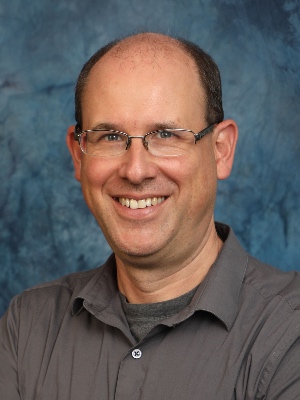
Dominik Wodarz
· ProfessorUniversity of California, San Diego · Ecology, Behavior & Evolution
Active 1992–2026
Academic metrics are sourced from OpenAlex and public funding records; values may differ from Google Scholar.
About
Dominik Wodarz obtained his undergraduate degree in Biology at Imperial College London and received a PhD in Zoology from the University of Oxford. He spent his postdoctoral years as a member of the Institute for Advanced Study in Princeton. Before joining the University of California San Diego (UCSD), he held faculty positions at the Fred Hutchinson Cancer Research Center in Seattle and the University of California Irvine. His professional biography highlights a strong background in biology and zoology, with significant postdoctoral experience at a prestigious research institute and faculty roles at notable research centers prior to his current position at UCSD.
Research topics
- Sociology
- Political Science
- Mathematics
- Demography
- Law
- Econometrics
- Economics
- Statistics
- Geography
- Biology
Selected publications
Programming tumor evolution with selection gene drives to proactively combat drug resistance
Nature Biotechnology · 2024-07-04 · 14 citations
articleOpen accessMutant fixation in the presence of a natural enemy
Nature Communications · 2023-10-20 · 5 citations
articleOpen access1st authorCorrespondingThe literature about mutant invasion and fixation typically assumes populations to exist in isolation from their ecosystem. Yet, populations are part of ecological communities, and enemy-victim (e.g. predator-prey or pathogen-host) interactions are particularly common. We use spatially explicit, computational pathogen-host models (with wild-type and mutant hosts) to re-visit the established theory about mutant fixation, where the pathogen equally attacks both wild-type and mutant individuals. Mu…
Virus Evolution · 2024-01-01 · 4 citations
articleOpen accessSenior authorAbstract In secondary lymphoid tissues, human immunodeficiency virus (HIV) can replicate in both the follicular and extrafollicular compartments. Yet, virus is concentrated in the follicular compartment in the absence of antiretroviral therapy, in part due to the lack of cytotoxic T lymphocyte (CTL)–mediated activity there. CTLs home to the extrafollicular compartment, where they can suppress virus load to relatively low levels. We use mathematical models to show that this compartmentalization c…
Proceedings of the National Academy of Sciences · 2024-09-09 · 4 citations
articleOpen accessSenior authorCorrespondingA major next step in hematopoietic stem cell (HSC) biology is to enhance our quantitative understanding of cellular and evolutionary dynamics involved in undisturbed hematopoiesis. Mathematical models have been and continue to be key in this respect, and are most powerful when parameterized experimentally and containing sufficient biological complexity. In this paper, we use data from label propagation experiments in mice to parameterize a mathematical model of hematopoiesis that includes homeos…
Nature Communications · 2025-10-27 · 1 citations
articleOpen access
Recent grants
NIH · $530k · 2011
NIH · $1.1M · 2016
Hybrid Deterministic-Stochastic Methodology for Simulating Spatial Evolution in Large Populations
NSF · $400k · 2018–2022
Frequent coauthors
- 202 shared
Natalia L. Komarova
- 32 shared
Ignacio A. Rodriguez-Brenes
- 29 shared
Ajay Goel
- 24 shared
David N. Levy
- 24 shared
Jesse Kreger
University of Southern California
- 24 shared
Martin A. Nowak
Harvard University
- 23 shared
Luis M. Schang
Cornell University
- 20 shared
Paul Klenerman
John Radcliffe Hospital
Labs
Similar researchers at University of California, San Diego
- Resume-aware match score
- Save to shortlist
- AI-drafted outreach
See your match with Dominik Wodarz
PhdFit ranks faculty by your research interests, methods, and publications — grounded in their actual work, not templates.
- Free to start
- No credit card
- 30-second signup