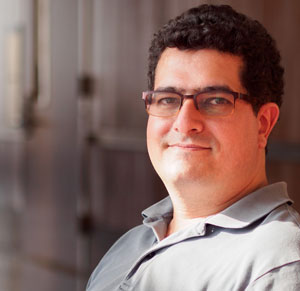
Xavier Darzacq
· Edward E. Penhoet Distinguished Endowed Chair in Global Health and Infectious Disease, Professor of Molecular TherapeuticsVerifiedUniversity of California, Berkeley · Biological Sciences
Active 1998–2026
About
Xavier Darzacq is the Edward E. Penhoet Distinguished Endowed Chair in Global Health and Infectious Disease and a Professor of Molecular Therapeutics at the University of California, Berkeley. His research description can be found at http://mcb.berkeley.edu/faculty/ggd/darzacqx.html. He is based in the Li Ka Shing Center, with office located at 488 Li Ka Shing Center, and his lab is situated at 475D Li Ka Shing Center. Darzacq's work focuses on molecular and cell biology, contributing to the understanding of global health and infectious diseases through his role in the Department of Molecular & Cell Biology at UC Berkeley.
Research topics
- Biology
- Cell biology
- Computational biology
- Computer Science
- Genetics
- Medicine
- Business
- Risk analysis (engineering)
- Data science
Selected publications
Data for: Unstructured Transcription Factor Interactions Enable Emergent Specificity
Zenodo (CERN European Organization for Nuclear Research) · 2026-03-13
datasetOpen accessThis repository contains all single-molecule data and FRAP movies required to reproduce the quantitative results reported in the 2026 Science publication by Abidi et al., titled “Unstructured Transcription Factor Interactions Enable Emergent Specificity.” The dataset supports diffusion coefficient distribution analyses, proximity index calculations, single-cell green-to-violet detection comparisons, and FRAP recovery measurements. Data are organized by figure. Each FigureX archive contains the data used to generate the corresponding main figure panels. Supplementary figure archives contain additional biological replicates. FRAP data and custom analysis scripts used in the manuscript are provided in separate archives.
Biophysical Journal · 2026-02-01
articleSenior authorUnstructured transcription factor interactions enable emergent specificity
Science · 2026-03-19 · 5 citations
articleHow intrinsically disordered regions (IDRs) influence chromatin binding and nuclear organization of transcription factors (TFs) remains unclear. We employed proximity-assisted photoactivation (PAPA), a single-molecule protein-protein interaction sensor, to investigate how IDRs might influence TF interactions with each other and with chromatin in live cells. We found that the Sp1 DNA binding domain (DBD) interacted poorly with chromatin and did not colocalize with Sp1. Weak interaction of the isolated IDR with full-length Sp1 was enhanced by fusion to various unrelated DBDs. Live imaging of Drosophila polytene chromosomes confirmed that an IDR could confer sharp locus specificity on an otherwise nonspecific DBD. These findings suggest that TF specificity emerges on chromatin when ensembles of diverse, unstructured interactions are scaffolded by transient DNA contacts.
BPS2026 – Exclusive protein interactions are responsible for functional competition
Biophysical Journal · 2026-02-01
articleData for: Unstructured Transcription Factor Interactions Enable Emergent Specificity
Zenodo (CERN European Organization for Nuclear Research) · 2026-03-13
datasetOpen accessThis repository contains all single-molecule data and FRAP movies required to reproduce the quantitative results reported in the 2026 Science publication by Abidi et al., titled “Unstructured Transcription Factor Interactions Enable Emergent Specificity.” The dataset supports diffusion coefficient distribution analyses, proximity index calculations, single-cell green-to-violet detection comparisons, and FRAP recovery measurements. Data are organized by figure. Each FigureX archive contains the data used to generate the corresponding main figure panels. Supplementary figure archives contain additional biological replicates. FRAP data and custom analysis scripts used in the manuscript are provided in separate archives.
Biophysical Journal · 2026-02-01
articleSenior authoreLife · 2025-01-10 · 7 citations
articleOpen accessSenior authorType II nuclear receptors (T2NRs) require heterodimerization with a common partner, the retinoid X receptor (RXR), to bind cognate DNA recognition sites in chromatin. Based on previous biochemical and overexpression studies, binding of T2NRs to chromatin is proposed to be regulated by competition for a limiting pool of the core RXR subunit. However, this mechanism has not yet been tested for endogenous proteins in live cells. Using single-molecule tracking (SMT) and proximity-assisted photoactivation (PAPA), we monitored interactions between endogenously tagged RXR and retinoic acid receptor (RAR) in live cells. Unexpectedly, we find that higher expression of RAR, but not RXR, increases heterodimerization and chromatin binding in U2OS cells. This surprising finding indicates the limiting factor is not RXR but likely its cadre of obligate dimer binding partners. SMT and PAPA thus provide a direct way to probe which components are functionally limiting within a complex TF interaction network providing new insights into mechanisms of gene regulation in vivo with implications for drug development targeting nuclear receptors.
Nucleic Acids Research · 2025-06-13
articleOpen accessTo date, most studies explored changes in 3D-genome organization between different tissues or during differentiation, which involve massive reprogramming of transcriptional programs. Much fewer studies examined alterations in genome organization in response to cellular stress, which involves less pervasive transcriptional modulation. Here, we examined associations between spatial chromatin organization and gene expression in two different biological contexts: transcriptional programs determining cell identity and transcriptional responses to stress, using p53 activation as a model. We selected 10 cell lines of diverse tissues, and in each performed micro-C, RNA-seq, and p53 ChIP-seq, before and after p53 induction. In the comparison between cell types, we delineated marked correlations between gene expression and spatial genome organization and identified hundreds of active enhancer-promoter loops associated with the expression of cell-type marker genes. In contrast, within each cell type, no such links were observed for expression changes induced by p53 activation, even for enhancers and promoters activated by p53 binding. Our analysis points to a fundamental difference between chromatin interactions that define cell identity and those that are established in response to cellular stress. Our results on p53-induced transcriptional responses support the recently proposed TF activity gradient model, which speculated a contact-independent mechanism for enhancer-promoter communication.
Author response: Short activation domains control chromatin association of transcription factors
2025-08-26
peer-reviewOpen accessSingle-molecule tracking of transcription factors in living cells revealed how mutations that make short activation domains stronger increased the fraction of transcription factor molecules bound to chromatin and led to longer residence times on chromatin.
Journal of the American Chemical Society · 2025-06-12 · 9 citations
articleSynthetic fluorophores built on a classic rhodamine scaffold are essential for modern microscopy. An attractive feature of synthetic fluorophores is their potential to access long-wavelength excitation and emission profiles (>650 nm) that are difficult to achieve through genetically encoded methods like fluorescent proteins. Here, we present a new strategy to achieve excitation and emission above 650 nm: bis(trifluoromethyl)carborhodamine dyes, or BF dyes. In BF dyes, the geminal methyl groups of carborhodamines are replaced with trifluoromethyl (CF3) groups. This accomplishes two things. First, CF3 groups substantially red shift in the optical profile by over 90 nm compared to classic, oxygen-bridged rhodamine dyes, resulting in a dye framework with excitation and emission profiles >650 nm and high brightness (extinction coefficient >140,000 M–1 cm–1 and fluorescent quantum yield of 33%). Second, CF3 groups render BF dyes fluorogenic, by shifting the position of the open-closed equilibrium of the colorless lactone and colored zwitterion form, resulting in up to a 30-fold improvement in fluorogenicity compared to silicon-bridged rhodamines. In this paper, we present the design and computational analysis of BF dyes; synthetic studies to access over a dozen new BF dyes through a unique, late-stage functionalization strategy; spectra characterization; and applications in advanced fluorescence microscopy including no-wash intracellular labeling, functional imaging with chemigenetic indicators, and single molecule tracking in living cells. Together, this report shows that bis(trifluoromethyl)carborhodamine dyes provide a complementary approach to achieving long-wavelength, fluorogenic dyes for live cell microscopy that do not rely on dimethyl silicon rhodamines.
Recent grants
An integrated approach to analyze and target EWS/FLI in Ewing sarcoma
NIH · $12.3M · 2018–2023
Tools For Imaging the Functional Genome in Living Cells and Tissues
NIH · $1.7M · 2015–2020
Tools For Imaging the Functional Genome in Living Cells and Tissues
NIH · $2.5M · 2015–2020
Frequent coauthors
- 223 shared
Robert Tjian
California Institute for Regenerative Medicine
- 158 shared
Maxime Dahan
- 133 shared
Ignacio Izeddin
Centre National de la Recherche Scientifique
- 127 shared
Anders S. Hansen
Massachusetts Institute of Technology
- 114 shared
Claire Dugast‐Darzacq
- 87 shared
Maxime Woringer
- 73 shared
Claudia Cattoglio
Howard Hughes Medical Institute
- 60 shared
I. Cissé
Max Planck Institute of Immunobiology and Epigenetics
Education
- 2007
Habilitation a Diriger les Recherches, Biology
Ecole Normale Supérieure Département de Biologie
- 2002
PhD, Biology
Université Paul Sabatier
Awards & honors
- Edward E. Penhoet Distinguished Endowed Chair in Global Heal…
- Resume-aware match score
- Save to shortlist
- AI-drafted outreach
See your match with Xavier Darzacq
PhdFit ranks faculty by your research interests, methods, and publications — grounded in their actual work, not templates.
- Free to start
- No credit card
- 30-second signup