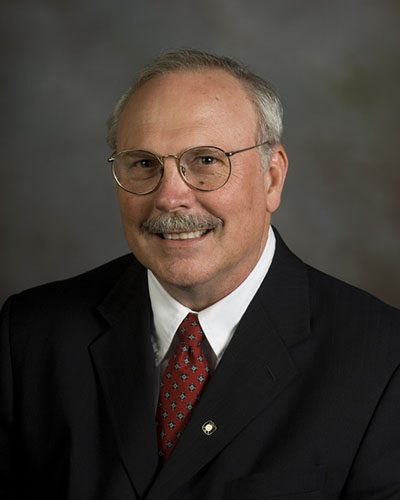
Dennis R. Dean
· University Distinguished Professor and Fralin Hall Principal ScientistVerifiedVirginia Tech · Biochemistry
Active 1959–2026
About
Dennis R. Dean is a University Distinguished Professor in the Department of Biochemistry at Virginia Tech, with his research focused on the biochemistry of biological nitrogen fixation and the biological pathways for assembly of simple and complex metalloclusters. His laboratory has developed biochemical-genetic approaches to identify substrate interactions with nitrogenase, leading to a comprehensive model of substrate interaction at the nitrogenase active site. Recently, in collaboration with Lance Seefeldt, his team used genetic approaches to remodel nitrogenase, enabling it to reduce carbon dioxide to produce methane and short-chain olefins, which suggests potential avenues for metal-based catalysts in carbon dioxide sequestration. His research also investigates the biological assembly of iron-sulfur clusters, which are among nature’s most ancient prosthetic groups and may have contributed to the emergence of life on earth. His group discovered the biological mechanism for iron-sulfur cluster assembly and introduced the concept that these prosthetic groups are pre-assembled on molecular scaffolds. Both in vitro and in vivo approaches have established the universality of these processes, with ongoing work including structural elucidation of biosynthetic complexes and whole-genome transcriptome analysis of bacterial strains defective in iron-sulfur assembly. Dr. Dean has held various leadership roles, including Director of the Fralin Life Science Institute since 2008, and has contributed significantly to research in nitrogenase mechanisms and metallocluster biosynthesis.
Research topics
- Chemistry
- Photochemistry
- Organic chemistry
- Biochemical engineering
- Stereochemistry
- Ecology
- Crystallography
- Medicinal chemistry
- Combinatorial chemistry
- Inorganic chemistry
- Computational chemistry
- Biochemistry
- Nanotechnology
Selected publications
Sulfite Is Not Required for N <sub>2</sub> Reduction Catalyzed by Mo-Nitrogenase
Journal of the American Chemical Society · 2026-04-17
articleMo-nitrogenase catalyzes the reduction of dinitrogen (N2) to two ammonia (NH3) at the active-site FeMo-cofactor. Substrate activation requires the accumulation of three or four electrons and protons as two Fe-bound hydrides and is coupled to obligatory H2 release through reductive hydride elimination. Subsequent delivery of four or five additional electrons and protons to the bound N2 yields two NH3 molecules. Increasing evidence suggests that at least one belt sulfide within FeMo-cofactor is dynamically involved in the catalytic cycle. A recent report further proposed that sulfite (SO32–) is required for N2 reduction, with sulfite binding required for NH3 release and a subsequent six-electron reduction of the bound sulfite to regenerate the resting cofactor. To test this proposal, we conducted turnover studies of Mo-nitrogenase under sulfite-free conditions using a reduced viologen as reductant and protein preparations devoid of dithionite or sulfite. Under these conditions, nitrogenase effectively catalyzed both N2 reduction and proton reduction, exhibiting steady-state turnover under N2 for 6 min, with a turnover number exceeding 150, approaching that observed with dithionite as reductant. The same H2-formed/N2-reduced ratio was observed whether dithionite or the viologen species was used as reductant. Further, EPR spectroscopic analyses showed that the FeMo-cofactor returned to its resting state after multiple catalytic cycles in the absence of sulfite. Finally, physiological bypass of sulfite formation does not affect the capacity for diazotrophic growth of the model nitrogen-fixing organism Azotobacter vinelandii. These results demonstrate that sulfite is not required for Mo-nitrogenase-catalyzed N2 reduction either in vitro or in vivo.
Trafficking of a nitrogenase FeMo-cofactor assembly intermediate
Nature Chemical Biology · 2026-03-23 · 1 citations
articleOpen accessThe maturation of the unique FeMo-cofactor of molybdenum nitrogenase is a multistep process requiring the sequential action of a series of maturase complexes. As a final step, the NifEN complex forms FeMo-cofactor from the precursor NifB-co, also called L-cluster, through replacement of an apical iron ion by molybdenum and the attachment of an organic homocitrate ligand. NifB-co is delivered by a small cofactor chaperone, NifX, and initially bound near the surface of the maturase NifEN. Here, we report high-resolution cryo-electron microscopy structures of NifEN in complex with NifX, showing NifB-co binding to NifEN in full detail, capturing both interacting partners in the act of cluster transfer. In a dynamic transfer complex, the large metal cluster is coordinated by single residues from both NifEN and NifX. In silico studies concur with these structures but suggest a third, internal conversion site where cluster maturation likely takes place.
2025-09-05
otherThe biological synthesis of iron–sulfur (Fe–S) clusters requires dedicated pathways involved in the recruitment and activation of Fe and S for cluster assembly with subsequent transfer of preformed clusters to acceptor proteins. Several pathways have been described that include various numbers and types of biosynthetic components, although all of them share the same basic principles for [Fe–S] cluster formation and delivery to target proteins. The NifUS system was discovered and first described in studies involving the model diazotroph Azotobacter vinelandii . It has a dedicated role in serving as the starting point for the activation of [Fe–S] cluster-containing proteins specifically involved in biological nitrogen fixation. NifS is a pyridoxal-5′-phosphate containing l -cysteine-dependent sulfur transferase that delivers activated sulfur to the three-domain NifU, which not only serves as a scaffold for the construction of [2Fe–2S] and [4Fe–4S] clusters but also participates in their delivery to various target proteins involved in nitrogen fixation. Interestingly, analysis of sequenced genomes reveals that the three-domain NifU and NifU-like encoded proteins are not limited to diazotrophs, suggesting a broader role for this system in [Fe–S] cluster biogenesis in other organisms. The colocalization of adjacent nifU and nifS encoding sequences in most of these genomes also provides a strong indication for the involvement of the NifU–NifS [Fe–S] cluster assembly and delivery toolkit for activation of [Fe–S] cluster-containing proteins in a variety of organisms that do not fix nitrogen.
Molecular sorting of nitrogenase catalytic cofactors
bioRxiv (Cold Spring Harbor Laboratory) · 2025-01-21
preprintOpen accessAbstract The free-living diazotroph Azotobacter vinelandii produces three genetically distinct but functionally and mechanistically similar nitrogenase isozymes, designated as Mo-dependent, V-dependent, and Fe-only. They respectively harbor nearly identical catalytic cofactors that are distinguished by a heterometal site occupied by Mo (FeMo-cofactor), V (FeV-cofactor), or Fe (FeFe-cofactor). Completion of FeMo-cofactor and FeV-cofactor formation occurs on molecular scaffolds prior to delivery to their catalytic partners. In contrast, completion of FeFe-cofactor assembly occurs directly within its cognate catalytic partner. Because hybrid nitrogenase species that contain the incorrect cofactor type cannot reduce N 2 to support diazotrophic growth there must be a way to prevent misincorporation of an incorrect cofactor when different nitrogenase isozyme systems are produced at the same time. Here, we show that fidelity of the Fe-only nitrogenase is preserved by blocking the misincorporation of either FeMo-cofactor or FeV-cofactor during its maturation. This protection is accomplished by a two-domain protein, designated AnfO. It is shown that the N-terminal domain of AnfO binds to an immature form of the Fe-only nitrogenase and the C-terminal domain, tethered to the N-terminal domain by a flexible linker, has the capacity to capture FeMo- and FeV-cofactor. AnfO does not prevent the normal activation of Fe-only nitrogenase because completion of FeFe-cofactor assembly occurs within its catalytic partner and, therefore, is never available for capture by AnfO. These results support a post-translational mechanism involving the molecular sorting of structurally similar metallocofactors that involve both protein-protein interactions and metallocofactor binding while exploiting differential pathways for nitrogenase associated catalytic cofactor assembly.
Toward a Unified Kinetic Model of Nitrogenase Catalysis
ACS Catalysis · 2025-10-15 · 5 citations
articleThe microbial enzyme nitrogenase catalyzes the MgATP-dependent reduction of N2 to 2NH3, a transformation central to the global nitrogen cycle. While the canonical Thorneley–Lowe (TL) kinetic model has long served as a mechanistic framework, it does not incorporate several recent insights. Here, we present an updated kinetic model for Mo-nitrogenase that incorporates these new findings. A significant insight is that electron transfer (ET) from the reduced Fe protein to the FeMo-cofactor is gated by MgATP-dependent conformational transitions and can be described as a probabilistic event that is dependent on the ligand bound to the active-site metallocofactor. The updated kinetic model quantitatively reproduces steady-state product formation rates across a broad range of experimental conditions, yielding revised estimates for key rate constants. It is demonstrated that under N2 turnover, the probability of productive ET to the active site decreases by ∼60%, resulting in a significant fraction of Fe protein cycles that are unproductive for electron delivery. This mechanistic feature explains the observed rate limitation in N2 reduction and implies a revised minimum energetic cost of approximately 25 MgATP per N2 reduced. Integrating these new features into the revised kinetic model provides a more complete and usable foundation for understanding nitrogenase catalysis.
Chemical Science · 2025-01-01 · 4 citations
articleOpen access(H) state of FeV-co, like that of FeFe-co, contains a hydride bound to a formally oxidized cofactor. The mechanistic differences observed here provide a contribution towards understanding the sources of catalytic differences among the three nitrogenase isozymes.
Molecular sorting of nitrogenase catalytic cofactors
Journal of Biological Chemistry · 2025-02-10 · 3 citations
articleOpen accessThe free-living diazotroph <i>Azotobacter vinelandii</i> produces three genetically distinct but functionally and mechanistically similar nitrogenase isozymes, designated as Mo-dependent, V-dependent, and Fe-only. They respectively harbor nearly identical catalytic cofactors that are distinguished by a heterometal site occupied by Mo (FeMo-cofactor), V (FeV-cofactor), or Fe (FeFe-cofactor). Completion of FeMo-cofactor and FeV-cofactor formation occurs on molecular scaffolds prior to delivery to their catalytic partners. In contrast, completion of FeFe-cofactor assembly occurs directly within its cognate catalytic partner. Because hybrid nitrogenase species that contain the incorrect cofactor type cannot reduce N<sub>2</sub> to support diazotrophic growth, there must be a way to prevent misincorporation of an incorrect cofactor when different nitrogenase isozyme systems are produced at the same time. Here, we show that fidelity of the Fe-only nitrogenase is preserved by blocking the misincorporation of either FeMo-cofactor or FeV-cofactor during its maturation. This protection is accomplished by a two-domain protein, designated AnfO. It is shown that the N-terminal domain of AnfO binds to an immature form of the Fe-only nitrogenase and the C-terminal domain, tethered to the N-terminal domain by a flexible linker, has the capacity to capture FeMo- and FeV-cofactor. AnfO does not prevent the normal activation of Fe-only nitrogenase because completion of FeFe-cofactor assembly occurs within its catalytic partner and, therefore, is never available for capture by AnfO. These results support a post-translational mechanism involving the molecular sorting of structurally similar metallocofactors that involve both protein-protein interactions and metallocofactor binding while exploiting differential pathways for nitrogenase associated catalytic cofactor assembly.
On the path to [Fe-S] protein maturation: A personal perspective
Biochimica et Biophysica Acta (BBA) - Molecular Cell Research · 2024-05-16 · 5 citations
review1st authorCorrespondingFigshare · 2023-01-01
datasetOpen accessUnderstanding how Nature accomplishes the reduction of inert nitrogen gas to form metabolically tractable ammonia at ambient temperature and pressure has challenged scientists for more than a century. Such an understanding is a key aspect toward accomplishing the transfer of the genetic determinants of biological nitrogen fixation to crop plants as well as for the development of improved synthetic catalysts based on the biological mechanism. Over the past 30 years, the free-living nitrogen-fixing bacterium <i>Azotobacter vinelandii</i> emerged as a preferred model organism for mechanistic, structural, genetic, and physiological studies aimed at understanding biological nitrogen fixation. This review provides a contemporary overview of these studies and places them within the context of their historical development.
mBio · 2023-12-21 · 9 citations
articleOpen accessBiological nitrogen fixation, the conversion of inert N2 to metabolically usable NH3, is a process exclusive to diazotrophic microorganisms and relies on the activity of nitrogenases. The assembly of the nitrogenase [7Fe-9S-C-Mo- R -homocitrate]-cofactor (FeMo-co) in a eukaryotic cell is a pivotal milestone that will pave the way to engineer cereals with nitrogen fixing capabilities and therefore independent of nitrogen fertilizers. In this study, we identified NifEN protein complexes that were functional in the model eukaryotic organism Saccharomyces cerevisiae . NifEN is an essential component of the FeMo-co biosynthesis pathway. Furthermore, the FeMo-co biosynthetic pathway was recapitulated in vitro using only proteins expressed in S. cerevisiae . FeMo-co biosynthesis was achieved by combining nitrogenase FeMo-co assembly components from different species, a promising strategy to engineer nitrogen fixation in eukaryotic organisms.
Recent grants
Iron-sulfur Cluster Assembly in Bacteria
NSF · $624k · 2002–2007
Maturation of [Fe-S] Proteins in Bacteria
NSF · $820k · 2007–2013
Frequent coauthors
- 301 shared
Lance C. Seefeldt
- 271 shared
Brian M. Hoffman
Northwestern University
- 132 shared
Mikhail Laryukhin
National Eye Institute
- 126 shared
Hong-In Lee
Kyungpook National University
- 115 shared
Patricia C. Dos Santos
Wake Forest University
- 103 shared
Robert Y. Igarashi
University of Central Florida
- 75 shared
Tran-Chin Yang
Northwestern University
- 74 shared
Brett M. Barney
University of Minnesota
Labs
Dennis R. Dean LaboratoryPI
Education
- 1979
Doctor of Philosophy, Molecular Biology
Purdue University
- 1973
Bachelor of Arts
Wabash College
- Resume-aware match score
- Save to shortlist
- AI-drafted outreach
See your match with Dennis R. Dean
PhdFit ranks faculty by your research interests, methods, and publications — grounded in their actual work, not templates.
- Free to start
- No credit card
- 30-second signup