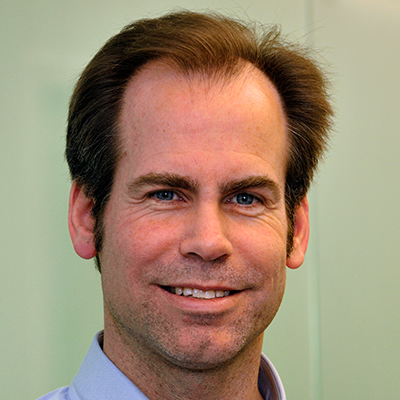
Dennis E. Discher
· ProfessorVerifiedUniversity of Pennsylvania · Rehabilitation Medicine
Active 1993–2026
About
Dennis E. Discher, Ph.D., is a Professor of Chemical & Biomolecular Engineering at the University of Pennsylvania's Perelman School of Medicine. He is affiliated with the Graduate Groups in Pharmacology and Cell and Molecular Biology. His research expertise includes the study of biomolecular engineering, with a focus on cellular mechanics, biomaterials, and the physical principles underlying cell behavior. His work involves understanding how cells interact with their environment at a molecular level, contributing to advancements in biomedical engineering and cell biology. Dr. Discher's contributions include exploring the mechanical properties of cells and tissues, which have implications for disease understanding and tissue engineering.
Research topics
- Biology
- Computer Science
- Medicine
- Genetics
- Biochemistry
- Computational biology
- Immunology
- Biotechnology
- Internal medicine
- Biomedical engineering
- Cell biology
- Neuroscience
- Cancer research
Selected publications
Biophysical Journal · 2026-02-01
article1st authorCorrespondingCell confinement initiates a delayed but heritable loss of chromosomes
Cell Reports · 2026-03-01
articleOpen accessSenior authorHeritable genetic changes continually arise in cancer, especially in solid tumors where cells are sometimes compressed. Rare heritable losses of chromosomes in live cells are quantified here with chromosome reporters (ChReporters), which reveal losses only after imposing a threshold level of confinement. Compression to ∼60% of interphase height ruptures few nuclei compared to deeper compression but perturbs mitotic spindles and prolongs pro/metaphase. Chromosome mis-segregation into micronuclei is discovered only after release from modest confinement, but arrest and death predominate. All such effects are phenocopied by nocodazole washout, which generates a "memory" of prolonged mitosis. The effects also differ from the rapid induction of micronuclei by a spindle-assembly checkpoint inhibitor and by a clinical CDK4/6 inhibitor of cell-cycle entry. Single-cell RNA sequencing confirms chromosome loss days after confinement and reveals dysregulation of chromosome-segregation pathways. Chromosome losses as mitotic memories of confinement ultimately address knowledge gaps in mechanobiology and cancer evolution.
Molecular Biology of the Cell · 2026-01-28
articleOpen accessSenior authorAs with many cell types, macrophages are sometimes filled with micron-sized lipid droplets (LD's), but effects on phagocytosis of other cells, particulates, and microbes remain unclear. Here, we show that LDs restructure the cytoskeleton but remain round, consistent with a high interfacial tension; functionally, LD's impair actomyosin-driven uptake, which proves independent of target size. Engulfment of targets starts at the apical surface, but LD's displace apical actomyosin to the basal cortex. Partial rescue occurs tissue-relevant compressive stresses which activate actomyosin. Macrophages that are densely filled with LD's or pre-engulfed rigid beads likewise activate actomyosin, which again rescues phagocytosis relative to sparsely loaded cells. As further evidence of LD rigidity, both LD's and rigid beads impede macrophage migration through small pores, and LD's pressed into a nucleus cause rapid focal rupture independent of actin. LD rigidity thus disrupts cytoskeleton organization and nucleus integrity, suppressing motility processes unless actomyosin is activated by cell compression or stretching.
Cell confinement initiates a delayed but heritable loss of chromosomes
bioRxiv (Cold Spring Harbor Laboratory) · 2026-02-03
articleOpen accessSenior authorSUMMARY Heritable genetic changes continually arise in cancer, especially in solid tumors where cells sometimes appear compressed. Rare heritable losses of chromosomes in live cells are quantified here with chromosome reporters (ChReporters) that reveal similar levels of loss after imposing a threshold level of confinement. Compression to ∼60% of interphase height ruptures few nuclei compared to deeper compression but perturbs mitotic spindles and prolongs pro/metaphase. Chromosome mis-segregation into micronuclei is discovered only after release from modest confinement, but arrest and death predominate. All such effects are phenocopied by Nocodazole washout that generates a ‘memory’ of prolonged mitosis, and effects differ from the rapid induction of micronuclei by a spindle assembly checkpoint inhibitor and by a clinical CDK4/6-inhibitor of cell cycle entry. Single-cell-RNA-sequencing confirms chromosome loss days after confinement and reveals persistence of chromosome segregation pathways. Chromosome losses as mitotic memories of confinement ultimately address knowledge gaps in mechanobiology and cancer evolution.
Abstract 766: Physically driven chromosome instabilities spur macrophages to attack cooperatively.
Cancer Research · 2026-04-03
article1st authorCorrespondingAbstract Extracellular matrix often accumulates in and around solid tumors, and such tumors also evolve diverse mutations that drive cancers, confound therapies, and modulate immune interactions. Across cancer types, we observe chromosome number changes associate with collagen-I levels, and our experiments show rare heritable chromosome losses are induced by a stiff 3D matrix around spheroids. Chromosome reporters (ChReporters) reveal losses in as few as ∼0.1% of cells, with a mechanism in spheroids based on distortion of mitotic spindles - which increases with knockdown of the candidate tumor suppressor myosin-II. Chromosomes mis-segregate into micronuclei that increase with matrix stiffness despite suppressed cell division. Drugs that increase micronuclei in 2D and that rely on an unperturbed spindle show no effect in 3D where the spindle is perturbed. Tumors in vivo that are surrounded by stiff collagen likewise show more but varied chromosome loss and slower growth than 2D cultures. High variance of ChReporter-negative colonies further illustrate increased heterogeneity with 3D matrix stiffness and heritable mutations per Luria-Delbruck theory. Physical learning models of evolving chromosome numbers in proliferating cells are developed and fit key statistical trends.Temperature is another physical stressor - as solid tumors tend to be warm - and we show it has similar outcomes as matrix physical properties. Heating is also now part of various therapies as are immune-engineering approaches. We take advantage of Macrophages that often pervade solid tumors where clusters of macrophages are sometimes seen and associate with longer survival of patients. However, clustering mechanisms, responses to stressor above, and impacts on key functions such as phagocytosis remain obscure. Under conditions that maximize cancer cell phagocytosis within cohesive tumors, we uncover pathways that favor dynamic clusters and find a colocalization of tumor-intrusive pseudopodia which we term “intrudopodia.” Cluster formation is favored by M1 macrophages after exposure to interferons and T cell-derived cytokines. M1 macrophages upregulate specific cell-cell adhesion receptors but suppress actomyosin contractility, with both pathways contributing to cluster formation and unleashing pseudopodia. Macrophage neighbors in tumor spheroids indeed coextend intrudopodia between cancer cell junctions—at least when phagocytosis conditions are maximized by checkpoint disruption and other strategies. Intrudopodia from neighbors help detach and individualize cancer cells for rapid engulfment. Cooperative phagocytosis thus overcomes solid tumor cohesion—and might explain why the macrophage clustering factor ITGAL associates with patient survival. Citation Format: Dennis Discher, Markus Sprenger, Joanna Georgiou, Tristan Marchena, Jude Khatib. Physically driven chromosome instabilities spur macrophages to attack cooperatively [abstract]. In: Proceedings of the American Association for Cancer Research Annual Meeting 2026; Part 1 (Regular Abstracts); 2026 Apr 17-22; San Diego, CA. Philadelphia (PA): AACR; Cancer Res 2026;86(7 Suppl):Abstract nr 766.
bioRxiv (Cold Spring Harbor Laboratory) · 2025-01-30 · 2 citations
preprintOpen accessSenior authorCorrespondingAbstract Solid tumors often have an abundance of collagen-I that stiffens the tissue, and they are invariably driven by mutations that include chromosome losses and gains. These observations are linked here by showing that 3D matrix stiffness induces heritable changes to a cell ’ s DNA. We use live-cell chromosome reporters (ChReporters) and hydrogels of tunable stiffness to show mitotic compression, micronuclei counts, ChReporter losses and heterogeneity all increase as functions of stiffness. Increased mistakes occur despite suppressed cell division in stiff matrix and minimal size variation between spheroids. Colonies of ChReporter-negative cells within cancer spheroids align with Luria-Delbruck ’ s seminal theory for heritable mutations, which predicts inter-spheroid variances that exceed Poisson statistics. Suppression of the contractility motor Myosin-II also increases chromosome loss in 3D but not 2D and does not affect spheroid growth – thus clarifying Myosin-II ’ s putative role as a tumor suppressor. Consistent with experiments, pan-cancer analyses of clinical data associates chromosome losses and gains with collagen-I levels and genetic variation. Stiff extracellular matrix thus drives mechano-evolution of solid tumors as a Darwin-Lamarck process with heterogeneity that complicates therapy.
Nature Nanotechnology · 2025-08-11 · 42 citations
articleOpen accessAbstract 7465: Clustered macrophages cooperate to eliminate tumors via coordinated intrudopodia
Cancer Research · 2025-04-21
article1st authorCorrespondingAbstract Macrophages often pervade solid tumors, but observations that macrophage clusters might associate with patient survival have remained largely unexplored. We observe dynamic macrophage clusters in tumors under conditions that maximize cancer cell phagocytosis, and our reductionist approaches to cluster formation reveal pathways and roles for tumor-intrusive pseudopodia. Aggregates form over hours on low-adhesion substrates after ‘M1’ polarization of macrophages with interferons, including Tcell-derived cytokines, and yet clusters prove fluid on timescales of minutes. Clusters also sort from M2 macrophages which are induced by an interleukin and that disperse on the same substrates. M1’s upregulate cell-cell adhesion receptors but suppress actomyosin contractility, and while both pathways contribute to cluster formation, decreased cortical tension was predicted to unleash pseudopodia. Macrophage neighbors in tumor spheroids indeed extend intrusive pseudopodia or ‘intrudopodia’ in between adjacent cancer cell junctions - at least when phagocytosis conditions are maximized, and coordinated intrudopodia help detach and individualize cancer cells for rapid engulfment. Macrophage clusters thereby provide a cooperative advantage for phagocytosis to overcome solid tumor cohesion. Citation Format: Dennis E. Discher, Lawrence Dooling. Clustered macrophages cooperate to eliminate tumors via coordinated intrudopodia [abstract]. In: Proceedings of the American Association for Cancer Research Annual Meeting 2025; Part 1 (Regular Abstracts); 2025 Apr 25-30; Chicago, IL. Philadelphia (PA): AACR; Cancer Res 2025;85(8_Suppl_1):Abstract nr 7465.
BPS2025 - Mechanical strain causes heritable mutations
Biophysical Journal · 2025-02-01
article1st authorCorrespondingClustered macrophages cooperate to eliminate tumors via coordinated intrudopodia
Proceedings of the National Academy of Sciences · 2025-07-01 · 8 citations
articleOpen accessSenior authorCorrespondingMacrophages often pervade solid tumors, and clusters of macrophages sometimes associate with longer survival of patients. However, clustering mechanisms and impacts on key functions such as phagocytosis remain obscure. Here, under conditions that maximize cancer cell phagocytosis within cohesive tumors, we uncover pathways that favor dynamic clusters and find a colocalization of tumor-intrusive pseudopodia which we term “intrudopodia.” Cluster formation over hours on low-adhesion substrates occurs after macrophage induction to a state colloquially referred to as M1 after exposure to interferons and T cell–derived cytokines. Clusters prove fluid on timescales of minutes and also sort from interleukin-4-treated, so-called M2 macrophages that tend to disperse. M1 macrophages upregulate specific cell–cell adhesion receptors but suppress actomyosin contractility, with both pathways contributing to cluster formation. Decreased cortical tension was not only reflected in a low level of nuclear lamin-A that downregulates cytoskeletal targets of serum response factor and tends to soften the nucleus but was also predicted to unleash pseudopodia. Macrophage neighbors in tumor spheroids indeed coextend intrudopodia between cancer cell junctions—at least when phagocytosis conditions are maximized. Intrudopodia from neighbors help detach and individualize cancer cells for rapid engulfment. Juxtaposition of a macrophage cluster with tumor cell nests defines a broad interface that minimizes cancer cell nearest neighbor interactions and maximizes coordination of macrophage intrudopodia. Cooperative phagocytosis thus overcomes solid tumor cohesion—and might explain why the macrophage clustering factor ITGAL associates with patient survival.
Recent grants
NIH · $364k · 2011
NIH · $426k · 2018
Nanoscience of Self 2.0: blocking CD47 recognition by phagocytes in blood & solid tumor clearance
NIH · $3.1M · 2014–2022
NIH · $2.8M · 2015
NIH · $474k · 2013
Frequent coauthors
- 116 shared
Jerome Irianto
Florida Department of Health
- 89 shared
Roger A. Greenberg
University of Pennsylvania
- 88 shared
Charlotte R. Pfeifer
Rockefeller University
- 82 shared
Yuntao Xia
- 81 shared
Lawrence J. Dooling
- 72 shared
Irena L. Ivanovska
University of Pennsylvania
- 61 shared
Jason C. Andrechak
University of Pennsylvania
- 56 shared
Michael P. Tobin
University of Pennsylvania
Education
Ph.D.
University of Pennsylvania
- Resume-aware match score
- Save to shortlist
- AI-drafted outreach
See your match with Dennis E. Discher
PhdFit ranks faculty by your research interests, methods, and publications — grounded in their actual work, not templates.
- Free to start
- No credit card
- 30-second signup