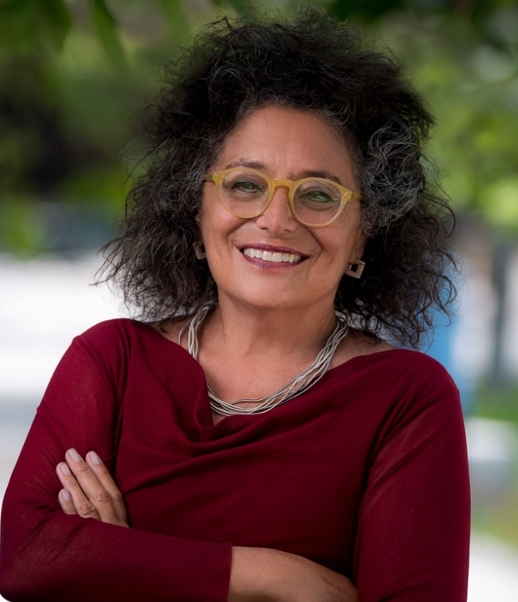
Deborah Hertz
· ProfessorUniversity of California, San Diego · History
Active 1978–2024
About
Deborah Hertz is a historian and the Herman Wouk Chair in Modern Jewish Studies at the University of California at San Diego. Her specialties include modern German history, modern Jewish history, and modern European women's history. Her current research focuses on the history of radical Jewish women. Hertz has contributed to various academic discussions through lectures and publications, exploring themes such as nationalism in Europe, the history of Jews in Germany, and Jewish high society in old regime Berlin. She has authored several books, including 'How Jews Became Germans,' 'Wie Juden Deutsche Wurden,' 'Jewish High Society in Old Regime Berlin,' and 'Die Judischen Salons Im Alten Berlin.' Her work often examines the social and cultural dynamics of Jewish communities and their integration into broader European society.
Research topics
- History
- Political science
- Art
- Sociology
- Philosophy
Selected publications
The normative framework for data : an idealistic construction?
theses.fr (ABES) · 2024-11-13
articleOpen access1st authorCorrespondingL’objet de cette étude est d’entreprendre une analyse critique de la construction du cadre normatif des données. Il s’agit de comprendre comment le législateur a appréhendé ce nouvel objet de droit : les données transcendent l’ensemble des matières juridiques et soulèvent de nouveaux enjeux. L’approche transversale de cette étude permet d’identifier le cadre normatif afin d’instaurer une typologie des notions de données et les différents régimes juridiques. L’analyse de l’élaboration du cadre complexe permet d’anticiper sa mise en œuvre et notamment, les difficultés d’articulation et d’effectivité des normes. Plus précisément, l’étude permet d’observer et de démontrer l’influence des acteurs du numérique dans l’élaboration des normes.
Nashim A Journal of Jewish Women s Studies & Gender Issues · 2019-01-01
article1st authorCorrespondingThe Leo Baeck Institute Year Book · 2019-01-01 · 1 citations
article1st authorCorrespondingAbstract This article reconstructs the friendship between the Romantic author Clemens Brentano and the Jewish salonnière Rahel Levin, and explores her motivations for maintaining a friendship with him in spite of his public and private attacks on contemporary Jews, including her. Through analysis of his 1811 speech at the Christlich-deutsche Tischgesellschaft and the letters they exchanged, the article shows how limited Levin’s options were for balancing her identity as a Jew with her social and intellectual ambitions.
Jewish High Society in Old Regime Berlin
Yale University Press eBooks · 2018-12-10
book1st authorCorrespondingDuring the quarter century between 1780 and 1806, Berlin's courtly and intellectual elites gathered in the homes of a few wealthy, cultivated Jewish women to discuss the events of the day. Princes, nobles, upwardly mobile writers, actors, and beautiful Jewish women flocked to the salons of Rahel Varnhagen, Henriette Herz, and Dorothea von Courland, creating both a new cultural institution and an example of social mixing unprecedented in the German past. In this book, Deborah Hertz offers the first detailed history of these salons, using rich narrative as well as analytic social history to explain why such an institution arose and what it meant to those involved. Hertz reconstructs the cultural and social context that nurtured salon life, describing how the salons emerged out of courtly society, commercial leisure institutions, and the city's new intellectual clubs. Using a collective biography of one hundred participants in sixteen salons, Hertz shows that there were complex social and personal motives for salon participation. Noblemen, for example, needed Jewish financiers for private loans, but they also wanted access to more progressive cultural currents. For Jewish women, salon leadership offered not only an escape from a restricted home life but also social and personal power, power that was frequently consolidated in their upwardly mobile marriages to noblemen. However advantageous and stimulating these salons were for their participants, they were the product of a transitory convergence of social and cultural structures. Hertz concludes by exploring how both underground antisemitic gossip and the new patriotism unleashed by the upheavals in Prussia after 1806 destroyed Jewish salon life in Berlin.
SEVEN. Seductive Conversion and Romantic Intermarriage
Yale University Press eBooks · 2018-12-31
book-chapter1st authorCorrespondingYale University Press eBooks · 2018-12-31
book-chapter1st authorCorrespondingTHREE. The Male Intelligentsia
Yale University Press eBooks · 2018-12-31
book-chapter1st authorCorrespondingYale University Press eBooks · 2018-12-31
book-chapter1st authorCorrespondingFOUR. Public Leisure and the Rise of Salons
Yale University Press eBooks · 2018-12-31
book-chapter1st authorCorresponding
Frequent coauthors
- 5 shared
Jack Jacobs
- 4 shared
Jane Arnold
- 4 shared
Julie H. Rubin
Harvard University
- 3 shared
Patrick Curry
University of Rochester
- 1 shared
Marjanne E. Goozé
- 1 shared
Rudrangshu Mukherjee
- 1 shared
Joan W. Scott
Institute for Advanced Study
- 1 shared
Laura Lee Downs
European University Institute
Awards & honors
- Herman Wouk Chair in Modern Jewish Studies, University of Ca…
- Resume-aware match score
- Save to shortlist
- AI-drafted outreach
See your match with Deborah Hertz
PhdFit ranks faculty by your research interests, methods, and publications — grounded in their actual work, not templates.
- Free to start
- No credit card
- 30-second signup