
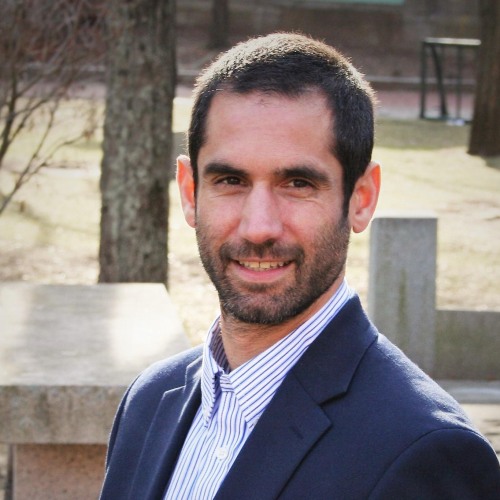
David Williams
· Professor of Behavioral and Social Sciences, Professor of Psychiatry and Human Behavior, Associate Dean of School of Public HealthBrown University · Behavioral and Social Sciences
Active 1842–2026
Academic metrics are sourced from OpenAlex and public funding records; values may differ from Google Scholar.
About
David M. Williams is a Professor of Behavioral and Social Sciences, as well as a Professor of Psychiatry and Human Behavior at Brown University. He also serves as the Associate Dean of the School of Public Health. Dr. Williams holds a BS in psychology from Stockton University and a PhD in clinical psychology from Virginia Tech. Since joining Brown University’s research faculty in 2006 and the teaching faculty in 2009, his work has focused on health behavior science, particularly examining the psychological and social determinants of health-related behaviors such as exercise, smoking cessation, and weight management. His research explores affective responses to physical activity, self-regulation, outcome expectancy, and motivation, contributing to the development of theory-based interventions aimed at promoting healthy behaviors. Dr. Williams has authored two books on health behavior and has an extensive publication record, including articles that investigate the mediators and moderators of health behavior change, the role of affect and self-efficacy, and the efficacy of various intervention strategies.
Research topics
- Computer Science
- Radiology
- Developmental psychology
- Social psychology
- Intensive care medicine
- Cognitive psychology
- Medicine
- Linguistics
- Psychology
- Communication
Selected publications
Affective Determinants of Physical Activity: A Conceptual Framework and Narrative Review
Frontiers in Psychology · 2020 · 195 citations
Senior authorCorresponding(e.g., intrinsic motivation, fear, and hedonic motivation). After defining each category of affective construct, we provide examples of relevant research showing how each construct may relate to PA behavior. We conclude each section with a discussion of future directions for research.
Journal of Behavioral Medicine · 2024-11-10 · 4 citations
reviewPsycho-Oncology · 2025-07-30 · 1 citations
articleOpen accessBACKGROUND: Leaders in the field have called for exercise counseling to become standard of care by 2029. An Affect-based exercise prescription (Affect-Rx) may be a viable strategy for supporting this effort. AIMS: Guided by the ORBIT Model for developing behavioral treatments, this Phase 1b study evaluated breast cancer survivors' perceived acceptability of Affect-Rx. Additionally, the feasibility of trial methods and opportunities for protocol refinements were assessed. METHOD: Participants wer…
Psychology of sport and exercise · 2025-11-13
articleArXiv.org · 2025-11-11
preprintOpen accessSenior authorWe present the full sample of measurements of the warm dust emission of 31 strongly-lensed, multiply imaged quasars, observed with JWST MIRI multiband imaging, which we use to constrain the particle properties of dark matter. The strongly lensed warm dust region of quasars is compact and statistically sensitive to a population of dark matter halos down to masses of $10^6$ M$_\odot$. The high spatial resolution and infrared sensitivity of MIRI make it uniquely suited to measure multiply imaged wa…
Recent grants
NIH · $410k · 2012
NIH · $62k · 2006
NIH · $378k · 2018–2021
Frequent coauthors
- 189 shared
Michael P. Pender
- 182 shared
Anne‐Louise Ponsonby
Murdoch Children's Research Institute
- 165 shared
Bruce Taylor
University of Tasmania
- 153 shared
Ingrid van der Mei
University of Tasmania
- 152 shared
Alan Coulthard
University of Queensland
- 148 shared
Robyn Lucas
Australian National University
- 144 shared
Shira Dunsiger
John Brown University
- 143 shared
Patricia C. Valery
Education
B.S., Psychology
Stockton University
Ph.D., Clinical Psychology
Virginia Tech
Similar researchers at Brown University
- Resume-aware match score
- Save to shortlist
- AI-drafted outreach
See your match with David Williams
PhdFit ranks faculty by your research interests, methods, and publications — grounded in their actual work, not templates.
- Free to start
- No credit card
- 30-second signup