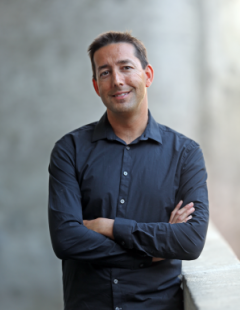
David Paul
· Associate Professor, Musicology ProgramVerifiedUniversity of California, Santa Barbara · Music
Active 1995–2024
About
Dr. David Paul is an Associate Professor in the Department of Music at the University of California, Santa Barbara, specializing in Musicology and Theory. His main research interest is the way in which music has contributed to the construction of American identity in the 19th and 20th centuries. He authored the book Charles Ives in the Mirror: American Histories of an Iconic Composer, which is a reception history of Ives that links discourse about the composer to broader discussions concerning what it means to be American. His scholarly work also includes an essay titled “Censorship and the Politics of Reception: The Filmic Afterlife of Marc Blitzstein’s The Cradle Will Rock,” published in The Oxford Handbook of Music Censorship. This essay explores how screenwriters such as Ring Lardner Jr., Orson Welles, and Tim Robbins have interpreted the circumstances surrounding the premiere of Blitzstein’s WPA-era musical. Dr. Paul has initiated a new book project tentatively titled After the Ball is Over: Memorializing the 1893 World’s Columbian Exposition in Popular Media, which examines how the cultural significance of the exposition has been refigured over the last 120 years through various media including dime novels, popular songs, Broadway shows, films, books, and video games. Additionally, he has published an article in the Journal of the American Musicological Society analyzing Charles Ives through the perspectives of Henry and Sidney Cowell, framing Ives as a figure transitioning from American ethnographer to Cold War icon.
Research topics
- Computer Science
- Political Science
- Sociology
- Literature
- Artificial Intelligence
- Law
- Art
- Remote sensing
- Art history
- Algorithm
- History
- Geology
- Mathematics
- Psychoanalysis
- Philosophy
- Psychology
- Aesthetics
- Library science
- Statistics
Selected publications
Contemporary Voice of Dalit · 2023
1st authorCorresponding- Sociology
- Literature
- Sociology
This research study investigates narrative disruptions and subversions in Dalit and post-apocalyptic literature using a postmodern psychoanalytic methodology. Drawing on the concepts of Jacques Lacan and Homi K. Bhabha, the research argues that these literary genres use language and plot to subvert and disrupt dominant power structures, social hierarchies and hegemonic discourses. The study examines a few works of Dalit and post-apocalyptic fiction to show how both genres use narrative methods such as fragmentation, irony, parody and subversion to question established standards of representation and disclose the traumas and disjunctions of the oppressed. The voice of the oppressed is explicit through the analysis of the selected texts.
Deep Spatial Interpolation of Rain Field for U.K. Satellite Networks
IEEE Transactions on Antennas and Propagation · 2022 · 6 citations
- Computer Science
- Artificial Intelligence
- Algorithm
This article presents two new state-of-the-art spatial rain field interpolation convolutional neural networks (SRFICNNs), referred to as learned deviation (LD) and learned interpolation (LI) models, for predicting the point rain rate at finer spatial scales. The main contribution is the successful introduction of the prior-art deep learning technique into high-resolution (HR) rainfall rate prediction with significant improvement in accuracy. This is very important for the effective implementation of fade mitigation techniques for both terrestrial and satellite networks. The comparison of the models’ performances with ground truth (radar measurements) shows that the proposed models give an excellent mean square error (MSE) and structural SIMilarity (SSIM) in rainfall field reconstruction if the network depth falls in the range of 15–25 weight layers. The final model uses 20 layers for HR point rain rate prediction. Further study shows that the LD model offers a faster convergence and yields a more accurate rain rate prediction. In particular, this article compares the rain rate exceedance distribution and Log-Normality property from the model estimates with values calculated from measured data. Results show that the LD model gives a highly accurate estimate of these two indices with the corresponding root mean square (rms) error of <inline-formula xmlns:mml="http://www.w3.org/1998/Math/MathML" xmlns:xlink="http://www.w3.org/1999/xlink"> <tex-math notation="LaTeX">$5.1709\times 10^{-4}$ </tex-math></inline-formula> and 0.0013, respectively.
American Music · 2021
1st authorCorresponding- Political Science
- Computer Science
- Art history
Research Article| October 01 2021 Race and the Legacy of the World’s Columbian Exposition in American Popular Theater from the Gilded Age to Show Boat (1927) David C. Paul David C. Paul David C. Paul is an associate professor at the University of California, Santa Barbara. He is the author of Charles Ives in the Mirror (2012) and has published articles in the Journal of the American Musicological Society and the Journal of Musicology and contributed an essay to The Oxford Handbook of Music Censorship. He is currently working on a book about the reception of the World’s Columbian Exposition in popular media. Search for other works by this author on: This Site Google American Music (2021) 39 (3): 325–364. https://doi.org/10.5406/americanmusic.39.3.0325 Cite Icon Cite Share Icon Share Facebook Twitter LinkedIn MailTo Permissions Search Site Citation David C. Paul; Race and the Legacy of the World’s Columbian Exposition in American Popular Theater from the Gilded Age to Show Boat (1927). American Music 1 January 2021; 39 (3): 325–364. doi: https://doi.org/10.5406/americanmusic.39.3.0325 Download citation file: Zotero Reference Manager EasyBib Bookends Mendeley Papers EndNote RefWorks BibTex toolbar search Search Dropdown Menu toolbar search search input Search input auto suggest filter your search All Scholarly Publishing CollectiveUniversity of Illinois PressAmerican Music Search Advanced Search The text of this article is only available as a PDF. Copyright 2021 by the Board of Trustees of the University of Illinois2021 Article PDF first page preview Close Modal You do not currently have access to this content.
Frequent coauthors
- 2 shared
Guangguang Yang
- 2 shared
Jun Chen
- 2 shared
G. Alan
Vellore Institute of Technology University
- 1 shared
Zebin Chen
Sun Yat-sen University
- 1 shared
Abdul-Hadi Al-Hassani
Iraq University College
- 1 shared
David Ndzi
University of the West of Scotland
- 1 shared
Lange Osb
- 1 shared
Yanyan Yang
Gansu University of Traditional Chinese Medicine
Education
- 2020
Master of Arts, Department of English
Madras Christian College
- 2018
Bachelor of Arts, Department of English
Bishop Heber College
Similar researchers at University of California, Santa Barbara
- Resume-aware match score
- Save to shortlist
- AI-drafted outreach
See your match with David Paul
PhdFit ranks faculty by your research interests, methods, and publications — grounded in their actual work, not templates.
- Free to start
- No credit card
- 30-second signup