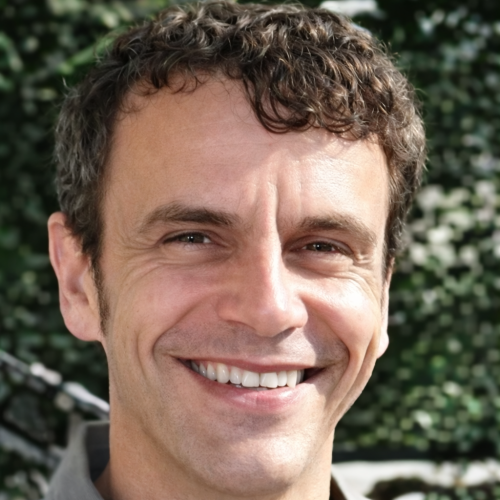
David Lowe
· Professor of PhysicsVerifiedBrown University · Physics
Active 1983–2026
About
David Lowe is a Professor of Physics who joined the Brown University faculty in 1997. He holds a B.A. and M.A. from Cambridge University and earned his Ph.D. in theoretical physics from Princeton University in 1993. His postdoctoral research includes positions at the University of California at Santa Barbara and a Senior Research Fellowship at the California Institute of Technology. His research focuses on theoretical physics topics such as black hole holography, quantum information, and the AdS/CFT correspondence. Throughout his career, he has contributed to understanding black hole entropy, the information paradox, and the holographic description of spacetime, with numerous publications in high-energy physics and quantum gravity.
Research topics
- Geometry
- Mathematical physics
- Mathematics
- Physics
- Classical mechanics
- Theoretical physics
- Mathematical analysis
- Quantum mechanics
- Pure mathematics
Selected publications
FT-016: Master Equation Verification
Zenodo (CERN European Organization for Nuclear Research) · 2026-03-22
preprintOpen access1st authorCorrespondingProvides computational verification of the Master Equation chi — independent numerical confirmation that the core structural predictions hold under algorithmic testing.
Generalized effective field theory for four-dimensional black hole evaporation
Journal of High Energy Physics · 2026-03-16
articleOpen accessA bstract The quantum induced stress tensor of 3+1-dimensional Einstein gravity, with conformally coupled matter, is studied in an effective field theory approach. In this context, Riegert’s non-local effective action is sufficient to reproduce the trace anomaly in curved spacetime but in general the effective action can include additional non-local but scale invariant terms that influence the semiclassical physics without affecting the trace anomaly. Here, a truncated model, with only one additional term involving the square of the Weyl tensor, is used to find the induced stress tensor in a black hole background. With suitable physical conditions, a solution of the resulting 4th order equations leads, in a static limit, to a unique quantum state matching expected properties of the Unruh state.
FT-014: The Same Equation Everywhere
Zenodo (CERN European Organization for Nuclear Research) · 2026-03-23
preprintOpen access1st authorCorrespondingthe Master Equation chi appears as isomorphic structure across physics domains — showing that apparently independent equations share a common informational substrate. Includes the Isomorphism Discrimination Method.
FT-016: Master Equation Verification
Zenodo (CERN European Organization for Nuclear Research) · 2026-03-22
preprintOpen access1st authorCorrespondingProvides computational verification of the Master Equation chi — independent numerical confirmation that the core structural predictions hold under algorithmic testing.
FT-014: The Same Equation Everywhere
Zenodo (CERN European Organization for Nuclear Research) · 2026-03-23
preprintOpen access1st authorCorrespondingthe Master Equation chi appears as isomorphic structure across physics domains — showing that apparently independent equations share a common informational substrate. Includes the Isomorphism Discrimination Method.
Breakdown of Semiclassical Gravity in Four-Dimensional Black Hole Evaporation
arXiv (Cornell University) · 2026-05-01
preprintOpen access1st authorCorrespondingWe study black hole formation and evaporation in a four-dimensional semiclassical model that preserves diffeomorphism invariance and reproduces the one-loop trace anomaly. Solving the quantum-corrected Einstein equations for the collapse of a spherically symmetric null shell, we follow the formation and evaporation of a black hole with back-reaction included. The semiclassical solutions develop a spacelike thunderbolt singularity that emerges after the apparent horizon has receded and extends far from the black hole where the semiclassical curvature is a priori expected to be parametrically small. This behavior arises from a nonlinear instability of the higher-derivative semiclassical equations and is generic in models with anomaly-induced quantum corrections. The thunderbolt signals a breakdown of semiclassical effective field theory over macroscopic distances and undermines the standard formulation of the black hole information paradox.
Breakdown of Semiclassical Gravity in Four-Dimensional Black Hole Evaporation
arXiv (Cornell University) · 2026-05-01
articleOpen access1st authorCorrespondingWe study black hole formation and evaporation in a four-dimensional semiclassical model that preserves diffeomorphism invariance and reproduces the one-loop trace anomaly. Solving the quantum-corrected Einstein equations for the collapse of a spherically symmetric null shell, we follow the formation and evaporation of a black hole with back-reaction included. The semiclassical solutions develop a spacelike thunderbolt singularity that emerges after the apparent horizon has receded and extends far from the black hole where the semiclassical curvature is a priori expected to be parametrically small. This behavior arises from a nonlinear instability of the higher-derivative semiclassical equations and is generic in models with anomaly-induced quantum corrections. The thunderbolt signals a breakdown of semiclassical effective field theory over macroscopic distances and undermines the standard formulation of the black hole information paradox.
Effective field theory description of Hawking radiation
Journal of High Energy Physics · 2025-11-12 · 1 citations
articleOpen access1st authorCorrespondingA bstract A study is made of Hawking radiation from four-dimensional black holes using effective field theory methods. The trace anomaly for the stress tensor in a general curved spacetime background is reproduced using Riegert’s action. The semiclassical stress tensor is evaluated in a Schwarzschild background taking a time-independent limit for the quantum state. Imposing physical boundary conditions on an initial Cauchy surface leads to a unique state, analogous to the Unruh state with a vanishing ingoing flux and a finite outgoing flux. In particular, there is no sign of quantum hair arising from this nonlocal effective action.
Journal of High Energy Physics · 2025-04-09
articleOpen access1st authorCorrespondingA bstract We begin by reexamining the holographic reconstruction of scalar fields in four- dimensional anti-de Sitter spacetime, adopting a purely Lorentzian signature derivation, reproducing earlier results of HKLL and generalizing to arbitrary boundary metrics. The approach is extended to gravitational perturbations, focussing on perturbations around AdS 4 and show that the mapping can be formulated as a purely light-like integral of the conformal field theory stress energy tensor. An example is considered of relevance to the flat spacetime limit with nontrivial BMS charges turned on, potentially providing a quantum field theory definition of celestial CFT as a large central charge limit of a 3d CFT.
Effective Field Theory Description of Hawking Radiation
ArXiv.org · 2025-05-12
preprintOpen access1st authorCorrespondingA study is made of Hawking radiation from four-dimensional black holes using effective field theory methods. The trace anomaly for the stress tensor in a general curved spacetime background is reproduced using Riegert's action. The semiclassical stress tensor is evaluated in a Schwarzschild background taking a time-independent limit for the quantum state. Imposing physical boundary conditions on an initial Cauchy surface leads to a unique state, analogous to the Unruh state with a vanishing ingoing flux and a finite outgoing flux. In particular, there is no sign of quantum hair arising from this nonlocal effective action.
Frequent coauthors
- 44 shared
Lárus Thorlacius
- 26 shared
Gilad Lifschytz
University of Haifa
- 20 shared
Daniel Kabat
- 17 shared
Atreya Chatterjee
- 15 shared
Steven Corley
- 14 shared
Kevin Goldstein
National Institute for Theoretical Physics
- 13 shared
Chang Liu
Yangzhou University
- 12 shared
Klaus Larjo
Brown University
Labs
Education
B.A.
Cambridge University
M.A.
Cambridge University
- 1993
Ph.D., theoretical physics
Princeton University
- Resume-aware match score
- Save to shortlist
- AI-drafted outreach
See your match with David Lowe
PhdFit ranks faculty by your research interests, methods, and publications — grounded in their actual work, not templates.
- Free to start
- No credit card
- 30-second signup