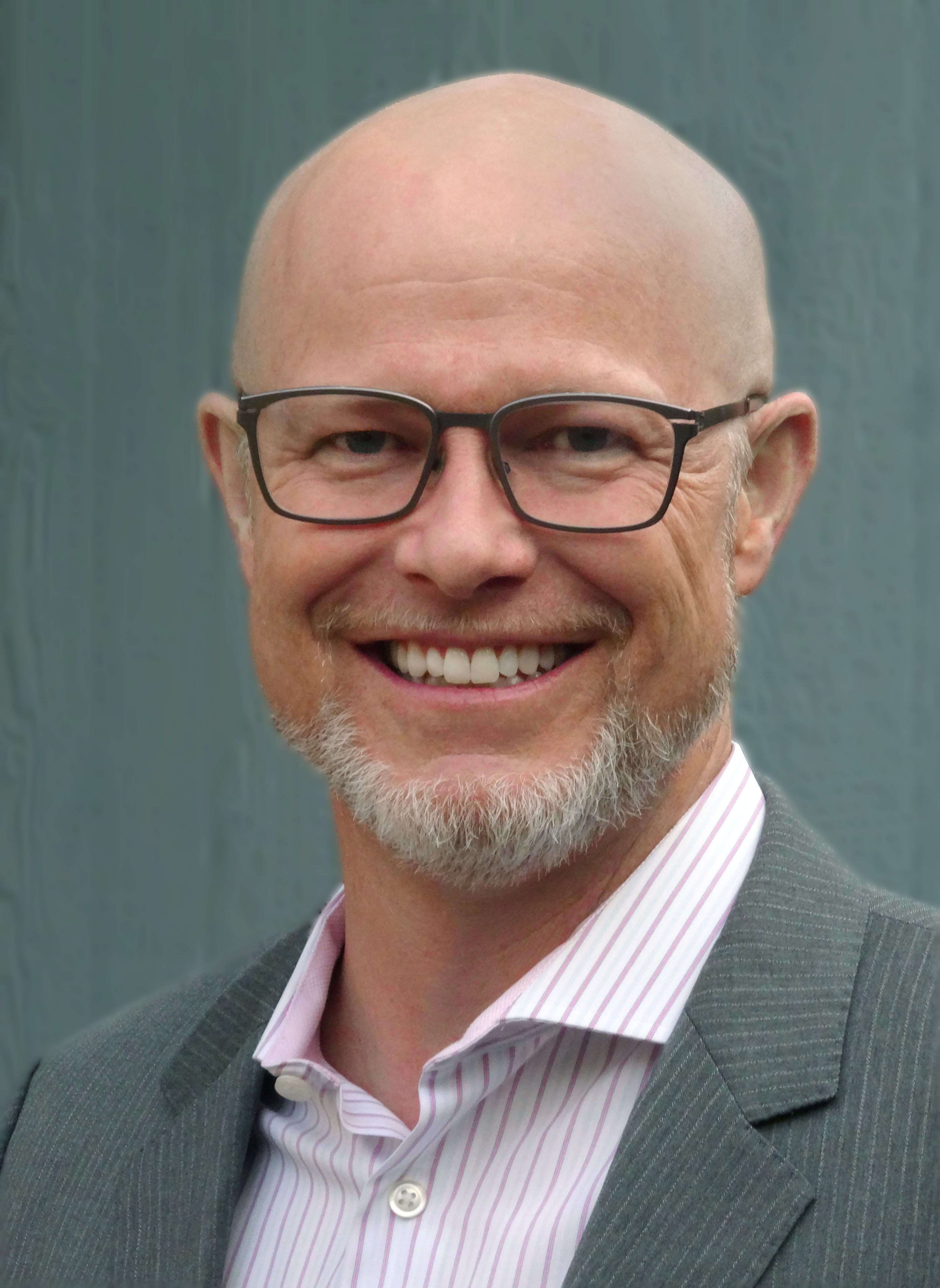
David FitzGerald
· Professor, T.E. Gildred Chair in U.S.-Mexican Relations and honorary Sergio Vieira de Mello Chair in refugee studiesVerifiedUniversity of California, San Diego · Sociology
Active 1874–2025
About
Sociology professor at University of California San Diego and (co)author of The Refugee System (2023); Refuge beyond Reach (2019); and Culling the Masses (2014). I research policies and experiences around migration and asylum.
Research topics
- Sociology
- Social Science
- Geography
- Economic geography
- Artificial Intelligence
- Political Science
- Computer Science
- Archaeology
- Law
- Economics
Selected publications
The limits and possibilities of segmented assimilation theory
Ethnic and Racial Studies · 2025-01-09 · 10 citations
articleOpen access1st authorCorrespondingSegmented assimilation in its current U.S.-centric incarnation is more valuable as a sensitizing concept that suggests where analysts should look rather than as a transportable causal theory of intergenerational change.One of the assumptions behind assimilation theory is that there is a policy and normative consensus that immigrants should integrate into the population.Many states want labor migrants and refugees to be temporary, even if the reality is long-term residence.Their policy goal is that immigrants should not assimilate and there should not even be a second generation.Specifying temporal and spatial scope conditions and extending the notion of segmentation beyond ethnoracial groups to include social segments in societies of origin and destination are practical ways to push this concept toward a more broadly applicable theory.
Perspectives on Politics · 2025-11-03
article1st authorCorrespondingSocial Forces · 2025-01-31
article1st authorCorrespondingInternational Migration Review · 2025-12-18
articleOpen access1st authorCorrespondingAdvocates for refugees often publicize increased numbers of refugees, seemingly to generate greater support for pro-refugee policies. In this research note we test whether reading about a greater number of refugees results in more, less, or unchanged feelings of support for pro-refugee policies via a survey experiment from a national sample of more than 3000 U.S. adults. Accounting for uncertainty over whether the public will perceive differential magnitudes on a logarithmic or linear scale, we find that for U.S. adults as a whole, the magnitude of the number of refugees does not lead to support or opposition to policies to (a) admit more refugees or (b) fund refugee relief abroad. Republicans are much less likely to support such policies compared to Democrats, independent of the number of refugees. Surprisingly, Republicans are more likely than Democrats to respond to larger numbers with greater support for both policies. Refugee advocates should not assume that reporting increased numbers of refugees will result in more public support for funding refugees abroad or refugee admissions in the United States.
Remote biopower: Constructing the system of immigrant health controls
Migration Studies · 2025-04-05
articleOpen access1st authorCorrespondingAbstract The selection of migrants based on judgments about their health was a fundamental driver of state migration controls. The USA was a global leader in elaborating these controls, which have become the international norm. The construction of a legal and logistical infrastructure generated state capacity not only to control immigrants on arrival, but also to extend control outward, first over migrants in transit, then to points of embarkation, and finally to places of origin. An historical-institutionalist analysis of the US case using federal laws, regulations, reports, and congressional debates to trace the policy process shows how between the 1880s and 1920s a system of remote controls was developed based on five innovations: 1) the creation of legal fictions in quarantine spaces that a migrant has not legally entered the territory; 2) sanctions on companies carrying inadmissible passengers; 3) stationing officers abroad to carry out screening; 4) transforming neighboring states into restrictive buffer zones; and 5) the establishment of a consular health certificate regime. Policymakers had two goals in creating remote controls: shifting the costs onto private companies and neighboring states and expanding how controls could be used. The original motivations were ensuring that immigrants were safe in transit, healthy on arrival, able to work, and free of contagion. By the 1920s, a consolidated system based on eugenics projected remote biopower, the flexing of Foucauldian biopower beyond the state’s borders. The long-term individuation of medical controls nevertheless retained latent, group-level controls that were activated by the Trump administrations.
Communications in computer and information science · 2024-01-01 · 5 citations
book-chapterOpen accessBase Closures, Neoliberalism, and the Strange Death of the Peace Dividend
Diplomatic History · 2024-11-09
article1st authorCorrespondingHistoria Mexicana · 2024-10-14
articleOpen access1st authorCorresponding-
Ethnographic Analysis: D. Fitzgerald
2023-01-01 · 1 citations
book-chapter1st authorCorrespondingThe Post-Vietnam Recovery, Operation Desert Storm and the Veneration of the Volunteer Soldier
Cambridge University Press eBooks · 2023-10-19 · 1 citations
book-chapter1st authorCorrespondingThis chapter traces the Army’s rehabilitation of its reputation in the wake of the Vietnam War. Two features were central to this transformation: the first was the advent of the All-Volunteer Force and the post-Vietnam reforms to Army training, equipment and doctrine. After a shaky start, the All-Volunteer Force’s success normalised the notion of soldiering as an occupation rather than an obligation, and reforms seemed to create a much more professional and competent force than the one that was wracked by unrest and uncertainty. Second, the Army’s performance in Operation Desert Storm affirmed this narrative of professionalism and competence. Nowhere was this more apparent than in the aftermath of the war. The celebrations that took place to welcome home Gulf War veterans stood out as the largest seen in the United States since the end of World War II. Representing a crucial moment in the American public’s deepening veneration for US soldiers and veterans, the Gulf War celebrations marked a turning point when the Vietnam-era image of the soldier as a broken or rebellious draftee was finally and purposefully eclipsed by the notion of the volunteer service member as hero.
Recent grants
Collaborative Research: Race, Immigration, and Citizenship in the Americas
NSF · $131k · 2008–2011
Frequent coauthors
- 17 shared
David Cook‐Martín
University of Colorado Boulder
- 11 shared
David P. Ryan
Harvard University
- 9 shared
Sudeshna Kar
Artemis Hospitals
- 9 shared
Preeti Koli
Hindu College of Pharmacy
- 9 shared
Sankar Adhya
National Cancer Institute
- 9 shared
Sudhanshu Sudan
University of Guelph
- 4 shared
Davut Çekmecelioğlu
Cleveland Clinic
- 4 shared
Thanos Athanasiou
Imperial College London
Education
- 2005
PhD, Sociology
University of California Los Angeles
Awards & honors
- ASA Human Rights Section Gordon Hirabayashi Book Award, 2021
- International Studies Association Human Rights Section Best…
- ASA International Migration Section Best Book Award, 2020
- CHOICE Outstanding Academic Title, 2019
- ASA Distinguished Scholarly Book Award, 2017
- Resume-aware match score
- Save to shortlist
- AI-drafted outreach
See your match with David FitzGerald
PhdFit ranks faculty by your research interests, methods, and publications — grounded in their actual work, not templates.
- Free to start
- No credit card
- 30-second signup