
Resume-aware faculty matching

Find professors who actually fit you

Upload your resume. Four AI agents analyze your background, rank the faculty who fit, inspect their recent research, and help you draft outreach — grounded in their actual work, not templates.

Free to startNo credit cardCancel anytime
Top matches Balanced preset
Dr. Sarah Chen
Stanford · Interpretability · NLP
91
Dr. Marcus Holloway
MIT · Robotics · RL
84
Dr. Aisha Okonkwo
CMU · Fairness · HCI
82
Nova · Professor Researcher · re-ranking top 20…
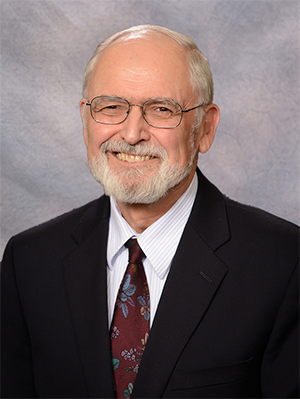
David Claridge

David Claridge

· Professor, Mechanical Engineering Director of Energy Systems LaboratoryVerified

Texas A&M University · Mechanical Engineering

Active 1975–2025

h-index34
Citations3.6k
Papers40624 last 5y
Funding
See your match with David Claridge — sign in to PhdFit.Sign in

About

Our nationally recognized faculty, researchers and professional staff are dedicated to excellence in research, education, innovation and service. Learn more about the individuals who make up the Department of Mechanical Engineering by visiting their profiles.

Research topics

  • Computer Science
  • Mechanical engineering
  • Engineering
  • Statistics
  • Process engineering
  • Architectural engineering
  • Industrial engineering
  • Automotive engineering
  • Waste management
  • Electrical engineering
  • Environmental science

Selected publications

  • Impact of air on re-circulated hydronic pumping efficiency: Origin of air and performance degradation modeling

    Journal of Building Engineering · 2025-03-10

    articleSenior author
  • Impact of air on vertical pipe sections pressure loss in a re-circulated hydronic system

    Science and Technology for the Built Environment · 2025-08-26

    articleSenior author
  • Digital Dentistry for Primary Care

    BDJ clinician's guides · 2025-01-01

    book-chapterSenior author
  • Commissioning for Energy Management

    River Publishers eBooks · 2025-10-23

    book-chapter1st authorCorresponding

    Commissioning is a pivotal energy management strategy, emphasizing its application to existing buildings while also addressing new constructions. Existing building commissioning (EBCx) can yield energy savings of 10%–30% with minimal capital investment, offering paybacks of one to three years, alongside improved comfort and reduced maintenance costs. The chapter defines key commissioning types – new building commissioning, recommissioning, retrocommissioning, and ongoing commissioning (OCx) – and details the EBCx process, which includes project development, implementation, and verification phases. It highlights common measures like optimizing HVAC schedules and controls, supported by measurement and verification (M&V) to quantify savings and ensure persistence. For new buildings, commissioning integrates energy efficiency into design and construction, reducing operational issues. Three case studies illustrate practical applications, such as EBCx as a cost-effective energy conservation measure in retrofits. The chapter stresses the importance of staff training, documentation, and continuous performance monitoring to sustain benefits, noting that savings decay (7%–9% annually) can be mitigated with follow-up. Aimed at energy managers, it provides guidance for in-house or outsourced commissioning, enhancing building performance, and aligning with energy management goals.

  • Novel Chiller Modeling Strategies for Low-Cost Measurement and Verification of Retrofit Measures

    2024-09-11

    articleSenior author
  • Evaluating inverse modeling methods for measurement and verification of chiller energy efficiency measures

    Applied Energy · 2024-11-05 · 1 citations

    articleOpen accessSenior author

    A commonly budget and time constrained yet crucial measurement and verification process for chiller energy efficiency measures often requires rarely trended chiller performance data for the pre-retrofit or post-retrofit chiller necessitating chiller modeling for year-round performance prediction. This study evaluates chiller inverse modeling methods for measurement and verification applications. Variable speed drive-controlled centrifugal chillers operating in a hot and humid climate are used as case studies. Two scenarios are explored: one where full-range metered chiller data are available and another with limited data that requires a short-term metering process. The biquadratic black-box and Gordon-Ng with a variable entropy term models perform exceptionally well when full-range chiller performance data is available, displaying a coefficient of variation of approximately 5 % for both training and test datasets . However, in situations that use short-term metered data not covering the full range, the fundamental and Foliaco reformulated Gordon-Ng models outperform other models. These models show minimal degradation in average statistical performance when trained with one-month metering data instead of four-month data, indicating their potential to capture the year-round chiller performance variation with short-term metered data. Furthermore, the optimal metering period for an accurate modeling process is identified as one containing data from at least one shoulder month like April, May, or October for a hot and humid climate. These findings provide valuable guidance for practitioners involved in chiller efficiency measure assessments, emphasizing the significance of proper model selection and an appropriate metering period for a reliable measurement and verification process. • M&V of chiller energy efficiency measures requires rarely available year-round data. • The biquadratic model performs best when trained with full-range chiller data. • A method to assess the performance of chiller inverse models for M&V is developed. • The Gordon-Ng model performs best when trained with shorter metering periods' data. • An optimum metering period should contain data from a shoulder season month.

  • Dynamics of Bubble Growth and Collapse Under Pressure Perturbation

    2024-07-15

    articleSenior author

    Abstract This study investigates the dynamic response of deformable particles to pressure perturbations, utilizing analytical and numerical analyses. Numerical simulations using Fluent software explore the impact of internal pressure deviations, step changes, and oscillations in ambient pressure across a wide size range. The study uncovers systematic and damped oscillatory responses to pressure deviations, highlighting the significance of liquid viscosity and surface tension in determining equilibrium states. Particle size emerges as a key factor, influencing equilibrium pressures, dynamic responses, and power spectral characteristics. Findings include smaller particles exhibiting higher equilibrium pressures and longer stabilization times. Power Spectral Density (PSD) analysis reveals a consistent dominant frequency, with smaller particles displaying higher peak frequencies. Analytical exploration emphasizes the roles of surface tension, viscosity, temperature, and mean ambient pressure in shaping peak frequency and deformation magnitude. The analysis shows smaller particle size have larger peak frequency, but smaller deformation. Moreover, raising surface tension leads to a wider range of particle sizes whose peak frequencies are not zero.

  • Rheological Analysis of Stress and Strain Rate of Non-Spherical Bubble With Multi-Mode Interfacial Perturbation in a Single and Multi-Bubble Systems Under Pressure Waves

    2024-11-17

    articleSenior author

    Abstract This paper introduces a multi-mode perturbation model for non-spherical bubbles, developed using potential function theory and spherical harmonics. Employing a sophisticated numerical framework that integrates adaptive time advancement (ATA) and mesh refinement (AMR), the study rigorously solves coupled ordinary differential equations (ODEs) and partial differential equations (PDEs) in a non-dimensional framework. Analysis is split between Rayleigh collapse under constant external pressure and dynamic collapse influenced by acoustic pressure waves. The study systematically investigates the effects of initial particle size, perturbation amplitude, and mode degree on Rayleigh collapse dynamics, revealing that larger bubbles exhibit longer collapse and rebound times, while smaller bubbles rapidly reach equilibrium. In scenarios involving acoustic waves, the investigation focuses on the impact of wave frequency and medium compressibility. Results indicate that higher wave frequencies and fluid compressibility significantly reduce the time for system oscillations to synchronize with external pressure waves, enhancing damping effects. Specifically, compressibility was found to accelerate synchronization, reducing large-amplitude oscillation cycles more than twofold compared to incompressible conditions. Additionally, at higher perturbation modes, amplitude damping occurs more rapidly, underscoring the influence of mode degree on the damping characteristics. Spanning Reynolds numbers from 1.65 to 1.65E+7 for Rayleigh collapses and 9.98E−4 to 9.98E+3 for acoustic-driven scenarios, the research highlights the substantial impact of fluid compressibility and perturbation parameters on bubble dynamics, providing insights that contrast sharply between micro-scale and macro-scale particle behaviors.

  • Exploring the theoretical minimum energy use in the U.S. office building sector

    Science and Technology for the Built Environment · 2024-11-11

    articleSenior author
  • Quantitative fault detection and diagnosis methods for vapour compression chillers: Exploring the potential for field-implementation

    Renewable and Sustainable Energy Reviews · 2024-04-06 · 13 citations

    articleSenior authorCorresponding

Frequent coauthors

  • J. S. Haberl

    Texas A&M University

    90 shared
  • Juan-Carlos Baltazar

    59 shared
  • W. D. Turner

    Oak Ridge National Laboratory

    57 shared
  • T.A. Reddy

    26 shared
  • Mingsheng Liu

    25 shared
  • Xiaoli Li

    23 shared
  • W. D. Turner

    22 shared
  • Kimberly Jone

    20 shared

Education

  • Ph.D., Physics

    Stanford University

    1976
  • M.S., Physics

    Stanford University

    1966
  • B.S. Engineering Physics, Physics

    Walla Walla University

    1964

Awards & honors

  • AFS Graduate Mentoring Award - 2024
  • TEES Faculty Fellow Award - 2024
  • TAMU Graduate Faculty Mentoring Award - 2024
  • ASHRAE Louise & Bill Holladay Distinguished Fellow Award - 2…
  • ASHRAE Exceptional Service Award - 2021
  • Resume-aware match score
  • Save to shortlist
  • AI-drafted outreach

See your match with David Claridge

PhdFit ranks faculty by your research interests, methods, and publications — grounded in their actual work, not templates.

  • Free to start
  • No credit card
  • 30-second signup