
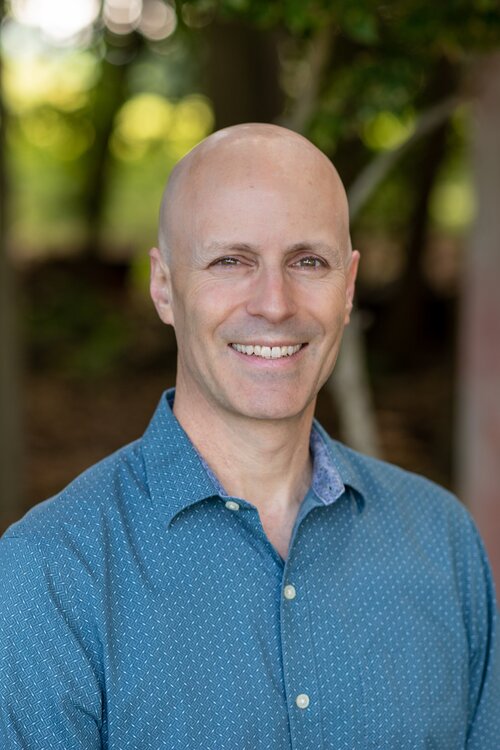
Daniel Simons
· Affiliated ProfessorUniversity of Illinois Urbana-Champaign · Advertising
Active 1969–2026
Academic metrics are sourced from OpenAlex and public funding records; values may differ from Google Scholar.
About
Dr. Daniel J. Simons is a professor of psychology at the University of Illinois, Urbana-Champaign, where he leads the Visual Cognition Laboratory. He holds a position in the Department of Psychology and is affiliated with the Center for Social and Behavioral Science, as well as holding a courtesy appointment in the Charles H. Sandage Department of Advertising. His research focuses on the limits of awareness and memory, investigating why people are often unaware of these limits and exploring the implications for both personal and professional contexts. Dr. Simons earned his BA from Carleton College and his Ph.D. in experimental psychology from Cornell University. Prior to joining the University of Illinois in 2002, he spent five years on the faculty at Harvard University. Dr. Simons is recognized as a Fellow and Charter Member of the Association for Psychological Science and a fellow of the Psychonomic Society. He is an Alfred P. Sloan Fellow and has received numerous awards for his research and teaching, including the 2003 Early Career Award from the American Psychological Association. Alongside his co-author Christopher Chabris, he received the 2004 Ig Nobel Award for research that combines humor with insight. He was the founding editor in chief of the APS journal Advances in Methods and Practices in Psychological Science. Dr. Simons is the co-author of the 2023 book Nobody's Fool: Why We Get Taken In and What We Can Do About It and the 2010 New York Times bestseller The…
Research topics
- Psychology
- Cognitive psychology
- Social psychology
- Mathematics
- Philosophy
- Combinatorics
- Statistics
- Cognitive science
Selected publications
The Trajectory of Truth: A Longitudinal Study of the Illusory Truth Effect
Journal of Cognition · 2021 · 54 citations
= 4.14; H1), with the effect diminishing as delay increased (H2). False information repeated over short timescales might have a greater effect on truth judgements than repetitions over longer timescales. Researchers should consider the implications of the choice of intersession interval when designing future illusory truth effect research.
A reproducible systematic map of research on the illusory truth effect
Psychonomic Bulletin & Review · 2021 · 51 citations
Senior authorCorrespondingPeople believe information more if they have encountered it before, a finding known as the illusory truth effect. But what is the evidence for the generality and pervasiveness of the illusory truth effect? Our preregistered systematic map describes the existing knowledge base and objectively assesses the quality, completeness and interpretability of the evidence provided by empirical studies in the literature. A systematic search of 16 bibliographic and grey literature databases identified 93 re…
Attention Perception & Psychophysics · 2023-10-01 · 6 citations
articleOpen accessSenior authorInattentional blindness in medicine
Cognitive Research Principles and Implications · 2024-03-27 · 5 citations
articleOpen accessSenior authorPeople often fail to notice unexpected stimuli when their attention is directed elsewhere. Most studies of this "inattentional blindness" have been conducted using laboratory tasks with little connection to real-world performance. Medical case reports document examples of missed findings in radiographs and CT images, unintentionally retained guidewires following surgery, and additional conditions being overlooked after making initial diagnoses. These cases suggest that inattentional blindness mi…
Subjective evidence evaluation survey for many-analysts studies
Royal Society Open Science · 2024-07-01 · 5 citations
articleOpen accessMany-analysts studies explore how well an empirical claim withstands plausible alternative analyses of the same dataset by multiple, independent analysis teams. Conclusions from these studies typically rely on a single outcome metric (e.g. effect size) provided by each analysis team. Although informative about the range of plausible effects in a dataset, a single effect size from each team does not provide a complete, nuanced understanding of how analysis choices are related to the outcome. We u…
Recent grants
NIH · $1.5M · 2005
NIH · $1.3M · 2008
NIH · $1.4M · 2012
Frequent coauthors
- 32 shared
Walter R. Boot
Cornell University
- 24 shared
Christopher F. Chabris
- 19 shared
George E. Carvell
University of Pittsburgh
- 18 shared
Arthur F. Kramer
- 16 shared
Alex O. Holcombe
University of Sydney
- 15 shared
Daniel T. Levin
Vanderbilt University
- 15 shared
Katherine Wood
Bentley University
- 14 shared
Cary Stothart
U.S. Army Research Institute for the Behavioral and Social Sciences
Education
- 1997
Ph.D., Psychology
Cornell University
- 1992
graduate student, Psychology
Harvard University
- 1991
B.A., Psychology
Carleton College
Similar researchers at University of Illinois Urbana-Champaign
- Resume-aware match score
- Save to shortlist
- AI-drafted outreach
See your match with Daniel Simons
PhdFit ranks faculty by your research interests, methods, and publications — grounded in their actual work, not templates.
- Free to start
- No credit card
- 30-second signup