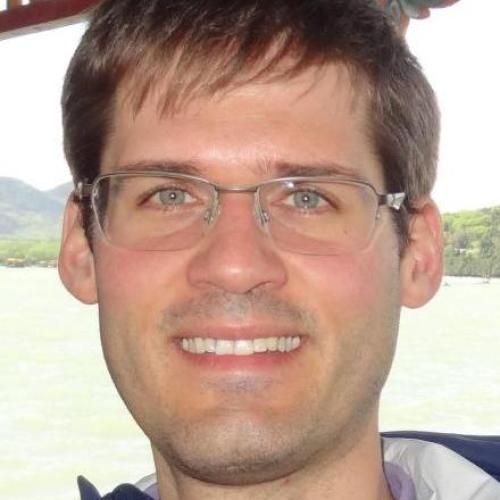
Marko Cetina
VerifiedDuke University · Civil & Environmental Engineering
Active 2006–2025
About
Marko Cetina is an Assistant Professor of Physics at Duke University and a member of the Department of Electrical and Computer Engineering. He holds a B.S. degree from the California Institute of Technology obtained in 2004 and a Ph.D. from the Massachusetts Institute of Technology earned in 2011. His research focuses on quantum computing, quantum information, and quantum simulation, with significant contributions to understanding thermalization dynamics in lattice gauge theories, error correction in quantum systems, and the development of quantum gates and interactions in trapped-ion systems. Cetina has authored numerous publications in high-impact journals, advancing the field of quantum physics through experimental and theoretical work. He also teaches courses related to atomic physics, quantum optics, and mechanics at Duke University.
Research topics
- Computer Science
- Quantum mechanics
- Physics
- Engineering
- Algorithm
- Statistical physics
- Electrical engineering
- Distributed computing
Selected publications
Hybrid digital-analog protocols for simulating quantum multi-body interactions
ArXiv.org · 2025-12-24
articleOpen accessSenior authorWhile quantum simulators promise to explore quantum many-body physics beyond classical computation, their capabilities are limited by the available native interactions in the hardware. On many platforms, accessible Hamiltonians are largely restricted to one- and two-body interactions, limiting access to multi-body Hamiltonians and to systems governed by simultaneous, non-commuting interaction terms that are central to condensed matter, quantum chemistry, and high-energy physics. We introduce and experimentally demonstrate a hybrid digital-analog protocol that overcomes these limitations by embedding analog evolution between shallow entangling-gate layers. This method produces effective Hamiltonians with simultaneous non-commuting three- and four-body interactions that are generated non-perturbatively and without Trotter error -- capabilities not practically attainable on near-term hardware using purely digital or purely analog schemes. We implement our scheme on a trapped-ion quantum processor and use it to realize a topological spin chain exhibiting prethermal strong zero modes persisting at high temperature, as well as models featuring three- and four-body interactions. Our hardware-agnostic and scalable method opens new routes to realizing complex many-body physics across quantum platforms.
Quantum Machine Learning via Contrastive Training
ArXiv.org · 2025-11-17
preprintOpen accessQuantum machine learning (QML) has attracted growing interest with the rapid parallel advances in large-scale classical machine learning and quantum technologies. Similar to classical machine learning, QML models also face challenges arising from the scarcity of labeled data, particularly as their scale and complexity increase. Here, we introduce self-supervised pretraining of quantum representations that reduces reliance on labeled data by learning invariances from unlabeled examples. We implement this paradigm on a programmable trapped-ion quantum computer, encoding images as quantum states. In situ contrastive pretraining on hardware yields a representation that, when fine-tuned, classifies image families with higher mean test accuracy and lower run-to-run variability than models trained from random initialization. Performance improvement is especially significant in regimes with limited labeled training data. We show that the learned invariances generalize beyond the pretraining image samples. Unlike prior work, our pipeline derives similarity from measured quantum overlaps and executes all training and classification stages on hardware. These results establish a label-efficient route to quantum representation learning, with direct relevance to quantum-native datasets and a clear path to larger classical inputs.
Hybrid digital-analog protocols for simulating quantum multi-body interactions
arXiv (Cornell University) · 2025-12-24
preprintOpen accessSenior authorWhile quantum simulators promise to explore quantum many-body physics beyond classical computation, their capabilities are limited by the available native interactions in the hardware. On many platforms, accessible Hamiltonians are largely restricted to one- and two-body interactions, limiting access to multi-body Hamiltonians and to systems governed by simultaneous, non-commuting interaction terms that are central to condensed matter, quantum chemistry, and high-energy physics. We introduce and experimentally demonstrate a hybrid digital-analog protocol that overcomes these limitations by embedding analog evolution between shallow entangling-gate layers. This method produces effective Hamiltonians with simultaneous non-commuting three- and four-body interactions that are generated non-perturbatively and without Trotter error -- capabilities not practically attainable on near-term hardware using purely digital or purely analog schemes. We implement our scheme on a trapped-ion quantum processor and use it to realize a topological spin chain exhibiting prethermal strong zero modes persisting at high temperature, as well as models featuring three- and four-body interactions. Our hardware-agnostic and scalable method opens new routes to realizing complex many-body physics across quantum platforms.
Quantum computing universal thermalization dynamics in a (2 + 1)D Lattice Gauge Theory
Nature Communications · 2025-07-01 · 8 citations
articleOpen accessSenior authorSimulating non-equilibrium phenomena in strongly-interacting quantum many-body systems, including thermalization, is a promising application of near-term and future quantum computation. By performing experiments on a digital quantum computer consisting of fully-connected optically-controlled trapped ions, we study the role of entanglement in the thermalization dynamics of a Z2 lattice gauge theory in 2+1 spacetime dimensions. Using randomized-measurement protocols, we efficiently learn a classical approximation of non-equilibrium states that yields the gap-ratio distribution and the spectral form factor of the entanglement Hamiltonian. These observables exhibit universal early-time signals for quantum chaos, a prerequisite for thermalization. Our work, therefore, establishes quantum computers as robust tools for studying universal features of thermalization in complex many-body systems, including in gauge theories. Probing quantum many-body systems while undergoing thermalisation is challenging, especially when looking for signatures of ergodicity and quantum chaos. Here, the authors study a lattice gauge theory in 2+1 dimensions using a trapped-ion-based universal digital quantum computer, unveiling the role of entanglement in the thermalization dynamics.
Probing Entanglement Scaling Across a Quantum Phase Transition on a Quantum Computer
arXiv (Cornell University) · 2024-12-24
preprintOpen accessSenior authorThe investigation of strongly-correlated quantum matter is difficult due to the curse of dimensionality and intricate entanglement structures. These challenges are particularly pronounced in the vicinity of continuous quantum phase transitions, where quantum fluctuations manifest across all length scales. While quantum simulators give controlled access to a number of strongly correlated systems, the study of critical phenomena has been hampered by finite-size effects arising from diverging correlation lengths. Moreover, the experimental investigation of entanglement in many-body systems has been hindered by limitations in measurement protocols. To address these challenges, we employ the multiscale entanglement renormalization ansatz (MERA) and implement a holographic scheme for subsystem tomography on a fully-connected trapped-ion quantum computer. Our method accurately represents infinite systems and long-range correlations with few qubits, facilitating the efficient extraction of observables and entanglement properties, even at criticality. We observe a quantum phase transition with spontaneous symmetry breaking and reveal the evolution of entanglement properties across the critical point. For the first time, we demonstrate log-law scaling of subsystem entanglement entropies at criticality on a digital quantum computer. This achievement highlights the potential of MERA for the investigation of strongly-correlated many-body systems on quantum computers.
Experimental implementation of an efficient test of quantumness
Physical review. A/Physical review, A · 2024-01-09 · 3 citations
articleOpen accessThe authors implement a noninteractive test of quantumness, or an algorithm for verifying whether an untrusted device is capable of quantum computation, on an ion-trap quantum computer. Their results clearly exceed the classical bound.
Quantum Computing Universal Thermalization Dynamics in a (2+1)D Lattice Gauge Theory
arXiv (Cornell University) · 2024-07-31
preprintOpen accessSenior authorSimulating non-equilibrium phenomena in strongly-interacting quantum many-body systems, including thermalization, is a promising application of near-term and future quantum computation. By performing experiments on a digital quantum computer consisting of fully-connected optically-controlled trapped ions, we study the role of entanglement in the thermalization dynamics of a $Z_2$ lattice gauge theory in 2+1 spacetime dimensions. Using randomized-measurement protocols, we efficiently learn a classical approximation of non-equilibrium states that yields the gap-ratio distribution and the spectral form factor of the entanglement Hamiltonian. These observables exhibit universal early-time signals for quantum chaos, a prerequisite for thermalization. Our work, therefore, establishes quantum computers as robust tools for studying universal features of thermalization in complex many-body systems, including in gauge theories.
Comparing Shor and Steane error correction using the Bacon-Shor code
Science Advances · 2024-11-06 · 19 citations
articleOpen accessSenior authorCorrespondingQuantum states decohere through interaction with the environment. Quantum error correction can preserve coherence through active feedback wherein quantum information is encoded into a logical state with a high degree of symmetry. Perturbations are detected by measuring the symmetries of the state and corrected by applying gates based on these measurements. To measure the symmetries without perturbing the data, ancillary quantum states are required. Shor error correction uses a separate quantum state for the measurement of each symmetry. Steane error correction maps the perturbations onto a logical ancilla qubit, which is then measured to check several symmetries simultaneously. We experimentally compare Shor and Steane correction of bit flip errors using the Bacon-Shor code implemented in a chain of 23 trapped atomic ions. We find that the Steane method produces fewer errors after a single round of error correction and less disturbance to the data qubits without error correction.
Demonstration of three- and four-body interactions between trapped-ion spins
Nature Physics · 2023-06-29 · 51 citations
articleSenior authorInteractive cryptographic proofs of quantumness using mid-circuit measurements
Nature Physics · 2023-08-03 · 19 citations
articleOpen access
Frequent coauthors
- 144 shared
C. Monroe
Keck Hospital of USC
- 102 shared
Crystal Noel
Duke University
- 99 shared
Daiwei Zhu
IonQ (United States)
- 93 shared
Debopriyo Biswas
- 91 shared
Andrew Risinger
Joint Quantum Institute
- 85 shared
Laird Egan
Joint Quantum Institute
- 36 shared
Michael Jag
Austrian Academy of Sciences
- 36 shared
Vladan Vuletić
MIT-Harvard Center for Ultracold Atoms
Labs
Duke Quantum CenterPI
- Resume-aware match score
- Save to shortlist
- AI-drafted outreach
See your match with Marko Cetina
PhdFit ranks faculty by your research interests, methods, and publications — grounded in their actual work, not templates.
- Free to start
- No credit card
- 30-second signup