Resume-aware faculty matching

Find professors who actually fit you

Upload your resume. Four AI agents analyze your background, rank the faculty who fit, inspect their recent research, and help you draft outreach — grounded in their actual work, not templates.

Free to startNo credit cardCancel anytime
Top matches Balanced preset
Dr. Sarah Chen
Stanford · Interpretability · NLP
91
Dr. Marcus Holloway
MIT · Robotics · RL
84
Dr. Aisha Okonkwo
CMU · Fairness · HCI
82
Nova · Professor Researcher · re-ranking top 20…
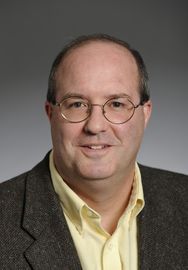
Colin Morningstar

Colin Morningstar

· ProfessorVerified

Carnegie Mellon University · Physics

Active 1989–2025

h-index39
Citations7.2k
Papers31775 last 5y
Funding$3.3M
See your match with Colin Morningstar — sign in to PhdFit.Sign in

About

Colin Morningstar is a professor with a Ph.D. from the University of Toronto. His research primarily focuses on nonperturbative phenomena in quantum field theories, with a particular emphasis on the study of hadron formation and confinement in quantum chromodynamics (QCD). He employs computer simulations of quarks and gluons to investigate these phenomena. His work includes Monte Carlo computations of the nucleon excitation mass spectrum, the Yang-Mills glueball spectrum, and the spectrum of heavy-quark hybrid mesons using the leading Born-Oppenheimer approximation, which neglects light quark loops. Additionally, he studies the spectrum of gluons in the presence of a static quark-antiquark pair. Professor Morningstar has delivered numerous invited talks and plenary lectures at international workshops and conferences, highlighting recent advances in baryon studies from lattice QCD, implementations of Luescher's two-particle formalism, and scattering analyses including higher partial waves and multiple decay channels. His contributions also cover excited hadron resonances, stochastic LapH methods, and the Monte Carlo method in quantum field theory and quantum mechanics. He has been actively involved in teaching a range of physics courses, including field theory, intermediate electromagnetism, quantum mechanics, and physics for engineering students, demonstrating a commitment to both research and education in theoretical and computational physics.

Research topics

  • Physics
  • Particle physics
  • Astronomy
  • Computer Science
  • Nuclear physics
  • Mathematical physics
  • Optics

Selected publications

  • QCD Predictions for Physical Multimeson Scattering Amplitudes

    Physical Review Letters · 2025-05-28 · 13 citations

    articleOpen access

    We use lattice QCD calculations of the finite-volume spectra of systems of two and three mesons to determine, for the first time, three-particle scattering amplitudes with physical quark masses. Our results are for combinations of π^{+} and K^{+}, at a lattice spacing a=0.063 fm, and in the isospin-symmetric limit. We also obtain accurate results for maximal-isospin two-meson amplitudes, with those for π^{+}K^{+} and 2K^{+} being the first determinations at the physical point. Dense lattice spectra are obtained using the stochastic Laplacian-Heaviside method, and the analysis leading to scattering amplitudes is done using the relativistic finite-volume formalism. Results are compared to chiral perturbation theory and to phenomenological fits to experimental data, finding good agreement.

  • Two- and three-meson scattering amplitudes with physical quark masses from lattice QCD

    ArXiv.org · 2025-02-25

    preprintOpen access

    We study systems of two and three mesons composed of pions and kaons at maximal isospin using four CLS ensembles with $a\approx 0.063\;$fm, including one with approximately physical quark masses. Using the stochastic Laplacian-Heaviside method, we determine the energy spectrum of these systems including many levels in different momentum frames and irreducible representations. Using the relativistic two- and three-body finite-volume formalism, we constrain the two and three-meson K matrices, including not only the leading $s$ wave, but also $p$ and $d$ waves. By solving the three-body integral equations, we determine, for the first time, the physical-point scattering amplitudes for $3π^+$, $3K^+$, $π^+π^+ K^+$ and $K^+ K^+ π^+$ systems. These are determined for total angular momentum $J^P=0^-$, $1^+$, and $2^-$. We also obtain accurate results for $2π^+$, $π^+ K^+$, and $2K^+$ phase shifts. We compare our results to Chiral Perturbation Theory, and to phenomenological fits.

  • Di-nucleons do not form bound states at heavy pion mass

    ArXiv.org · 2025-05-08

    preprintOpen access

    We perform a high-statistics lattice QCD calculation of the low-energy two-nucleon scattering amplitudes. In order to address discrepancies in the literature, the calculation is performed at a heavy pion mass in the limit that the light quark masses are equal to the physical strange quark mass, $m_π= m_K \simeq 714 $ MeV. Using a state-of-the-art momentum space method, we rule out the presence of a bound di-nucleon in both the isospin 0 (deuteron) and 1 (di-neutron) channels, in contrast with many previous results that made use of compact hexaquark creation operators. In order to diagnose the discrepancy, we add such hexaquark interpolating operators to our basis and find that they do not affect the determination of the two-nucleon finite volume spectrum, and thus they do not couple to deeply bound di-nucleons that are missed by the momentum-space operators. Further, we perform a high-statistics calculation of the HAL QCD potential on the same gauge ensembles and find qualitative agreement with our main results. We conclude that di-nucleons do not form bound states at heavy pion masses and that previous identification of deeply bound di-nucleons must have arisen from a misidentification of the spectrum from off-diagonal elements of a correlation function.

  • QCD predictions for physical multimeson scattering amplitudes

    arXiv (Cornell University) · 2025-02-20

    preprintOpen access

    We use lattice QCD calculations of the finite-volume spectra of systems of two and three mesons to determine, for the first time, three-particle scattering amplitudes with physical quark masses. Our results are for combinations of $π^+$ and $K^+$, at a lattice spacing $a=0.063\;$fm, and in the isospin-symmetric limit. We also obtain accurate results for maximal-isospin two-meson amplitudes, with those for $π^+ K^+$ and $2K^+$ being the first determinations at the physical point. Dense lattice spectra are obtained using the stochastic Laplacian-Heaviside method, and the analysis leading to scattering amplitudes is done using the relativistic finite-volume formalism. Results are compared to chiral perturbation theory and to phenomenological fits to experimental data, finding good agreement.

  • Nucleon scattering from lattice QCD

    2025-10-12

    articleOpen access1st authorCorresponding

    Recent results from lattice QCD on baryon resonances and meson-baryon, baryon-baryon scattering are presented. Such scattering processes and resonances can be determined in lattice QCD by first obtaining the finite-volume energy spectrum of stationary states involving meson-baryon and baryon-baryon systems. A well-known quantization condition involving the scattering $K$-matrix and a complicated ``box matrix'' also yields a finite-volume energy spectrum. By appropriately parametrizing the scattering $K$-matrix, the best fit values of the $K$-matrix parameters are those which produce a finite-volume spectrum which best matches that obtained from lattice QCD. The $\Delta$ resonance, a recent study of the two-pole nature of scattering near the $\Lambda(1405)$, and $NN$ scattering in the $SU(3)$ flavor limit are highlighted.

  • Signs of Non-Monotonic Finite-Volume Corrections to $g_A$

    ArXiv.org · 2025-03-12

    preprintOpen access

    We study finite-volume (FV) corrections to determinations of $g_A$ via lattice quantum chromodynamics (QCD) using analytic results and numerical analysis. We observe that $SU(2)$ Heavy Baryon Chiral Perturbation Theory does not provide an unambiguous prediction for the sign of the FV correction, which is not surprising when one also considers large-$N_c$ constraints on the axial couplings. We further show that non-monotonic FV corrections are naturally allowed when one considers either including explicit $Δ$-resonance degrees of freedom or one works to higher orders in the chiral expansion. We investigate the potential impact of these FV corrections with a precision study of $g_A$ using models of FV corrections that are monotonic and non-monotonic. Using lattice QCD data that is approximately at the 1% level of precision, we do not see significant evidence of non-monotonic corrections. Looking forward to the next phase of lattice QCD calculations, we estimate that calculations that are between the 0.1%-1%-level of precision may be sensitive to these FV artifacts. Finally, we present an update of the CalLat prediction of $g_A$ in the isospin limit with sub-percent precision, $g_A^{\rm QCD} = 1.2674(96)$.

  • Lattice QCD study of πΣ-K¯N scattering and the Λ(1405) resonance

    UNC Libraries · 2024-10-22

    articleOpen access

    A lattice QCD computation of the coupled channel πΣ–K¯N scattering amplitudes in the Λ(1405) region is detailed. Results are obtained using a single ensemble of gauge field configurations with Nf=2+1 dynamical quark flavors and mπ≈200 MeV and mK≈487 MeV. Hermitian correlation matrices using both single baryon and meson-baryon interpolating operators for a variety of different total momenta and irreducible representations are used. Several parametrizations of the two-channel scattering K-matrix are utilized to obtain the scattering amplitudes from the finite-volume spectrum. The amplitudes, continued to the complex energy plane, exhibit a virtual bound state below the πΣ threshold and a resonance pole just below the K¯N threshold.

  • The Λ(1405) pole structure from Lattice QCD: A coupled-channel <i>π</i>Σ − <i>K</i><i>N</i> study

    EPJ Web of Conferences · 2024-01-01 · 2 citations

    articleOpen access

    This report summarizes results of the first lattice QCD calculation of coupled-channel πΣ − K ¯ N scattering in the Λ(1405) region. This study was carried out using a single CLS ensemble with a heavier-than-physical pion mass m π ≈ 200 MeV and a lighter-than-physical kaon mass m K ≈ 487 MeV. Once the finite-volume energy spectrum has been reliably extracted, the Lüscher method was employed to obtain scattering amplitudes. Through a variety of parametrizations of the two-channel K -matrix, the final results show a virtual bound state below the πΣ threshold and a resonance right below K ¯ N .

  • Lattice QCD study of <mml:math xmlns:mml="http://www.w3.org/1998/Math/MathML" display="inline"><mml:mi>π</mml:mi><mml:mi mathvariant="normal">Σ</mml:mi><mml:mo>−</mml:mo><mml:mover accent="true"><mml:mi>K</mml:mi><mml:mo stretchy="false">¯</mml:mo></mml:mover><mml:mi>N</mml:mi></mml:math> scattering and the <mml:math xmlns:mml="http://www.w3.org/1998/Math/MathML" display="inline"><mml:mi mathvariant="normal">Λ</mml:mi><mml:mo stretchy="false">(</mml:mo><mml:mn>1405</mml:mn><mml:mo stretchy="false">)</mml:mo></mml:math> resonance

    Physical review. D/Physical review. D. · 2024-01-30 · 35 citations

    articleOpen access

    A lattice QCD computation of the coupled channel <a:math xmlns:a="http://www.w3.org/1998/Math/MathML" display="inline"><a:mi>π</a:mi><a:mi mathvariant="normal">Σ</a:mi><a:mi>–</a:mi><a:mover accent="true"><a:mi>K</a:mi><a:mo stretchy="false">¯</a:mo></a:mover><a:mi>N</a:mi></a:math> scattering amplitudes in the <f:math xmlns:f="http://www.w3.org/1998/Math/MathML" display="inline"><f:mi mathvariant="normal">Λ</f:mi><f:mo stretchy="false">(</f:mo><f:mn>1405</f:mn><f:mo stretchy="false">)</f:mo></f:math> region is detailed. Results are obtained using a single ensemble of gauge field configurations with <k:math xmlns:k="http://www.w3.org/1998/Math/MathML" display="inline"><k:msub><k:mi>N</k:mi><k:mi mathvariant="normal">f</k:mi></k:msub><k:mo>=</k:mo><k:mn>2</k:mn><k:mo>+</k:mo><k:mn>1</k:mn></k:math> dynamical quark flavors and <n:math xmlns:n="http://www.w3.org/1998/Math/MathML" display="inline"><n:msub><n:mi>m</n:mi><n:mi>π</n:mi></n:msub><n:mo>≈</n:mo><n:mn>200</n:mn><n:mtext> </n:mtext><n:mtext> </n:mtext><n:mi>MeV</n:mi></n:math> and <p:math xmlns:p="http://www.w3.org/1998/Math/MathML" display="inline"><p:msub><p:mi>m</p:mi><p:mi>K</p:mi></p:msub><p:mo>≈</p:mo><p:mn>487</p:mn><p:mtext> </p:mtext><p:mtext> </p:mtext><p:mi>MeV</p:mi></p:math>. Hermitian correlation matrices using both single baryon and meson-baryon interpolating operators for a variety of different total momenta and irreducible representations are used. Several parametrizations of the two-channel scattering <r:math xmlns:r="http://www.w3.org/1998/Math/MathML" display="inline"><r:mi>K</r:mi></r:math>-matrix are utilized to obtain the scattering amplitudes from the finite-volume spectrum. The amplitudes, continued to the complex energy plane, exhibit a virtual bound state below the <t:math xmlns:t="http://www.w3.org/1998/Math/MathML" display="inline"><t:mi>π</t:mi><t:mi mathvariant="normal">Σ</t:mi></t:math> threshold and a resonance pole just below the <w:math xmlns:w="http://www.w3.org/1998/Math/MathML" display="inline"><w:mover accent="true"><w:mi>K</w:mi><w:mo stretchy="false">¯</w:mo></w:mover><w:mi>N</w:mi></w:math> threshold. Published by the American Physical Society 2024

  • Two-Pole Nature of the <mml:math xmlns:mml="http://www.w3.org/1998/Math/MathML" display="inline"><mml:mi mathvariant="normal">Λ</mml:mi><mml:mo stretchy="false">(</mml:mo><mml:mn>1405</mml:mn><mml:mo stretchy="false">)</mml:mo></mml:math> Resonance from Lattice QCD

    Physical Review Letters · 2024-01-30 · 37 citations

    articleOpen access

    This Letter presents the first lattice QCD computation of the coupled channel πΣ-K[over ¯]N scattering amplitudes at energies near 1405 MeV. These amplitudes contain the resonance Λ(1405) with strangeness S=-1 and isospin, spin, and parity quantum numbers I(J^{P})=0(1/2^{-}). However, whether there is a single resonance or two nearby resonance poles in this region is controversial theoretically and experimentally. Using single-baryon and meson-baryon operators to extract the finite-volume stationary-state energies to obtain the scattering amplitudes at slightly unphysical quark masses corresponding to m_{π}≈200 MeV and m_{K}≈487 MeV, this study finds the amplitudes exhibit a virtual bound state below the πΣ threshold in addition to the established resonance pole just below the K[over ¯]N threshold. Several parametrizations of the two-channel K matrix are employed to fit the lattice QCD results, all of which support the two-pole picture suggested by SU(3) chiral symmetry and unitarity.

Recent grants

Frequent coauthors

  • John Bulava

    Deutsches Elektronen-Synchrotron DESY

    410 shared
  • Ben Hörz

    Intel (Germany)

    301 shared
  • Andrew D. Hanlon

    Brookhaven National Laboratory

    255 shared
  • Keisuke Jimmy Juge

    University of the Pacific

    167 shared
  • Daniel Mohler

    GSI Helmholtz Centre for Heavy Ion Research

    128 shared
  • Chik Him Wong

    University of Wuppertal

    120 shared
  • André Walker-Loud

    Lawrence Berkeley National Laboratory

    117 shared
  • Sarah Skinner

    115 shared

Labs

  • Colin Morningstar's LabPI

    Research interests primarily concern nonperturbative phenomena in quantum field theories, with particular emphasis on the study of hadron formation and confinement in quantum chromodynamics using computer simulations of quarks and gluons.

Education

  • Ph.D., Theoretical Particle Physics

    University of Toronto (Canada)

    1991
  • M.S., Theoretical Particle Physics

    University of Toronto (Canada)

    1986

Awards & honors

  • Fellow, American Physical Society
  • Resume-aware match score
  • Save to shortlist
  • AI-drafted outreach

See your match with Colin Morningstar

PhdFit ranks faculty by your research interests, methods, and publications — grounded in their actual work, not templates.

  • Free to start
  • No credit card
  • 30-second signup