
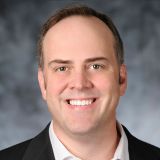
Clint Schow
· ProfessorUniversity of California, Santa Barbara · Electrical and Computer Engineering
Active 1995–2025
Academic metrics are sourced from OpenAlex and public funding records; values may differ from Google Scholar.
About
Clint Schow is a Professor in the Department of Electrical and Computer Engineering at UC Santa Barbara. His research interests include optoelectronic and electronic integration and co-design, photonic switching, equalization techniques for high-speed optical links, optoelectronic devices, and integrated transceiver packaging. He is associated with the Schow Group and is based in the Harold Frank Hall, Rm 4155. His contact information includes a phone number (+1 805-893-2875), email (schow@ece.ucsb.edu), and office location (3205C Engineering Science Building).
Research topics
- Computer Science
- Electronic engineering
- Engineering
- Optics
- Physics
- Electrical engineering
- Telecommunications
- Optoelectronics
- Computer hardware
Selected publications
Analog Coherent Detection for Energy Efficient Intra-Data Center Links at 200 Gbps Per Wavelength
Journal of Lightwave Technology · 2020 · 81 citations
Senior authorCorrespondingAs datacenters continue to scale in size, energy efficiency for short reach (<; 2 km) links is a major factor for networks that may connect hundreds of thousands of servers. We demonstrate that links based on analog coherent detection (ACD) offer a promising path to simultaneously achieving significantly larger link budgets and improved link energy efficiency. A complete analysis is presented that considers the power consumption of all the photonic and electronic components necessary to realize…
First Demonstration of an O-Band Coherent Link for Intra-Data Center Applications
Journal of Lightwave Technology · 2023 · 26 citations
Senior authorCorrespondingWe report the first demonstration of a full O-band coherent link for intra-data center applications, including custom photonic and electronic integrated circuits for the transmitter and receiver. Full-link 112 Gbps (56 Gbaud QPSK) transmission is shown with <inline-formula xmlns:mml="http://www.w3.org/1998/Math/MathML" xmlns:xlink="http://www.w3.org/1999/xlink"><tex-math notation="LaTeX">$2.1\cdot 10^{-4}$</tex-math></inline-formula> measured BER, and record baud rate 128 Gbps (64 Gbaud QPSK) tr…
IEEE Open Journal of the Solid-State Circuits Society · 2022 · 21 citations
This paper describes the energy-efficient realization of a QPSK optical receiver (CoRX) for short-reach intra-datacenter interconnects based on analog coherent detection. The CoRX comprises inphase and quadrature channels for each polarization and a high-speed phase-frequency detector (PFD) that provides feedback to stabilize an optical local oscillator (LO) and maintain coherence with the received optical signal. Each receive (RX) channel consists of a transimpedance amplifier (TIA) based on a…
Integrated SOAs enable energy-efficient intra-data center coherent links
Optics Express · 2023-04-14 · 12 citations
articleOpen accessSenior authorCoherent optical links are becoming increasingly attractive for intra-data center applications as data rates scale. Realizing the era of high-volume short-reach coherent links will require substantial improvements in transceiver cost and power efficiency, necessitating a reassessment of conventional architectures best-suited for longer-reach links and a review of assumptions for shorter-reach implementations. In this work, we analyze the impact of integrated semiconductor optical amplifiers (SOA…
Journal of Lightwave Technology · 2024-12-24 · 6 citations
articleSenior authorWe report a net 400 Gbps/<inline-formula xmlns:mml="http://www.w3.org/1998/Math/MathML" xmlns:xlink="http://www.w3.org/1999/xlink"><tex-math notation="LaTeX">$\lambda$</tex-math></inline-formula> O-band, dual-polarization, intradyne coherent link using silicon photonic (SiP) transmitter and receiver photonic integrated circuits (PIC) with heterogeneously integrated lasers and semiconductor optical amplifiers (SOA). Operation below the 15.3% overhead 2×10<inline-formula xmlns:mml="http://www.w3.o…
Frequent coauthors
- 107 shared
Alexander Rylyakov
Nokia (United States)
- 82 shared
Christian Baks
IBM Research - Thomas J. Watson Research Center
- 81 shared
Fuad E. Doany
- 63 shared
Daniel M. Kuchta
IBM (United States)
- 54 shared
Benjamin G. Lee
Google (United States)
- 41 shared
James F. Buckwalter
University of California, Santa Barbara
- 40 shared
Yurii A. Vlasov
- 40 shared
Aaron Maharry
University of California, Santa Barbara
Labs
Not provided
Education
- 1999
Ph.D., Electrical and Computer Engineering
The University of Texas at Austin
Similar researchers at University of California, Santa Barbara
- Resume-aware match score
- Save to shortlist
- AI-drafted outreach
See your match with Clint Schow
PhdFit ranks faculty by your research interests, methods, and publications — grounded in their actual work, not templates.
- Free to start
- No credit card
- 30-second signup