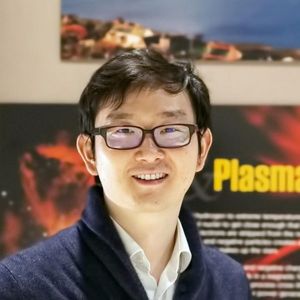
Chuanfei Dong
· Assistant Professor (Astronomy, ECE)VerifiedBoston University · Electrical and Computer Engineering
Active 2009–2026
About
Chuanfei Dong is an Assistant Professor in the Department of Astronomy at Boston University College of Engineering. He holds Ph.D. degrees in Space Science and Scientific Computing from the University of Michigan, obtained in 2015. His primary research interests include star-terrestrial planet interactions within our solar system and beyond, magnetic reconnection and turbulence, wave-particle interactions, physics-informed machine learning, and high intensity laser-plasma interactions. He is affiliated with the Department of Electrical and Computer Engineering as well, serving as a faculty member in both departments. Dr. Dong's work focuses on understanding complex space and plasma phenomena through advanced computational and observational methods, contributing to the broader field of space science and engineering.
Research topics
- Physics
- Astronomy
- Astrobiology
- Geography
- Engineering
- Computer Science
- Geology
- Aerospace engineering
- Remote sensing
- Aeronautics
- Environmental science
- Archaeology
- Astrophysics
- Meteorology
Selected publications
V530 Per and AD Leo Stellar Flare Observations
Zenodo (CERN European Organization for Nuclear Research) · 2026-02-28
datasetOpen access1st authorCorrespondingSpring 2026 observations taken of V530 Per and AD Leo. Data taken using PRISM aboard the Perkins Telescope with the H-alpha filter.
V530 Per and AD Leo Stellar Flare Observations
Zenodo (CERN European Organization for Nuclear Research) · 2026-02-28
datasetOpen access1st authorCorrespondingSpring 2026 observations taken of V530 Per and AD Leo. Data taken using PRISM aboard the Perkins Telescope with the H-alpha filter.
AGU Advances · 2025-10-24 · 1 citations
articleOpen accessAbstract Magnetotail current sheet (CS) flapping is a universal plasma phenomenon observed at multiple planets, yet its triggering mechanisms remain poorly understood outside of Earth. At Mars, single‐spacecraft observations have also reported tail flapping, but the processes responsible for its onset have never been identified. In this study, we investigate the potential correlation between magnetic reconnection and magnetotail flapping using multipoint measurements from Mars Atmosphere and Volatile EvolutioN (MAVEN) and Tianwen‐1 (TW‐1) missions. We analyze an example event in which MAVEN observed a reconnection‐associated CS crossing in the near tail while TW‐1 simultaneously detected CS flapping further downtail. A statistical survey of joint observations from November 2021 to February 2024 identifies that about two‐thirds of TW‐1 flapping events coincide with reconnection signatures observed by MAVEN. Multiple magnetic flux ropes were also detected before or during flapping intervals, similar to previous observations at Earth, suggesting that reconnection‐generated magnetic flux ropes may propagate tailward and drive plasma instabilities that trigger the tail flapping at Mars. These results provide the first multipoint evidence of a potential statistical correlation between magnetic reconnection and magnetotail flapping at Mars, enabling us to explore the potential triggering mechanism of magnetotail flapping. Our findings also offer new insights into Martian magnetotail dynamics and broaden the comparative understanding of this fundamental plasma process across planetary environments.
Journal of Geophysical Research Space Physics · 2025-10-01
articleAbstract Magnetic reconnection and turbulence are two fundamental processes in space plasma environments. They are intricately coupled, driving energy transfer and conversion. Despite significant research efforts, the development of turbulence within the reconnection diffusion region and its impact on the reconnection process remain open questions. In this study, we analyze 16 magnetotail reconnection cases observed by the Magnetospheric Multiscale (MMS) mission, focusing on the diffusion regions in the vicinity of the X‐line. We find that turbulence tends to be stronger in diffusion regions with lower plasma density and plasma beta. Turbulence can enhance the electron energization process in the diffusion region primarily through electron heating. As turbulence intensifies, the continuous current layer of the diffusion region breaks into fragmented currents, suggesting a transition from laminar to turbulent reconnection. Moreover, spectral breaks between ion and electron cyclotron frequencies are consistently observed in magnetic and electric field fluctuations within reconnecting current sheets, suggesting that such breaks may be a characteristic feature of the reconnection process. These findings provide valuable insights into the development and role of turbulence within the reconnection diffusion region.
arXiv (Cornell University) · 2025-09-08
preprintOpen accessThe Martian magnetosheath acts as a conduit for mass and energy transfer between the upstream solar wind and its induced magnetosphere. However, our understanding of its global properties remains limited. Using nine years of data from NASA's Mars Atmosphere and Volatile EvolutioN (MAVEN) mission, we performed a quantitative statistical analysis to explore the spatial distribution of the magnetic fields, solar wind and planetary ions in the magnetosheath. We discovered significant asymmetries in the magnetic field, solar wind protons, and planetary ions between the quasi-perpendicular and quasi-parallel magnetosheaths. The asymmetries in the Martian magnetosheath exhibit both similarities and differences compared to those in the Earth's and Venus' magnetosheaths. These results indicate that the Martian magnetosheath is distinctly shaped by both shock geometry and planetary ions.
Exoplanet Atmospheric Escape Observations with the Habitable Worlds Observatory
ArXiv.org · 2025-07-08
preprintOpen accessThe Decadal Survey on Astronomy and Astrophysics 2020 highlights the importance of advancing research focused on discovering and characterizing habitable worlds. In line with this priority, our goal is to investigate how planetary systems evolve through atmospheric escape and to develop methods for identifying potentially Earth-like planets. By leveraging the ultraviolet (UV) capabilities of the Habitable Worlds Observatory (HWO), we can use transit spectroscopy to observe atmospheric escape in exoplanets and explore the processes that shape their evolution, assess the ability of small planets to retain their atmospheres, and search for signs of Earth-like atmospheres. To achieve this, we support the development of a UV spectrograph with moderate- to high-resolution capabilities for point-source observations, coverage of key spectral features in the 100-300 nm range, and detectors that can register high count rates reliably. This article is an adaptation of a science case document developed for the Characterizing Exoplanets Steering Committee within HWO's Solar Systems in Context Working Group.
Observation of a Knotted Electron Diffusion Region in Earth's Magnetotail Reconnection
arXiv (Cornell University) · 2025-07-14
preprintOpen accessMagnetic reconnection is a fundamental plasma process that alters the magnetic field topology and releases magnetic energy. Most numerical simulations and spacecraft observations assume a two-dimensional diffusion region, with the electron diffusion region (EDR) embedded in the same plane as the ion diffusion region (IDR) and a uniform guide field throughout. Using observations from Magnetospheric Multiscale (MMS) mission, we report a non-coplanar, knotted EDR in Earth's magnetotail current sheet. The reconnection plane of the knotted EDR deviates by approximately 38° from that of the IDR, with the guide field exhibiting both a 38° directional shift and a twofold increase in amplitude. Moreover, the Hall magnetic field is bipolar in the EDR but quadrupolar in the IDR, indicating different Hall current structures at electron and ion scales. These observations highlight the importance of three-dimensional effects and illustrate the complexity of multiscale coupling between the EDR and IDR during reconnection studies.1
ArXiv.org · 2025-09-20
preprintOpen accessAstronomers are debating whether the plentiful "sub-Neptune" exoplanets -- worlds a bit larger than Earth but smaller than Neptune -- are predominantly rocky planets, water-rich "ocean worlds," or gas-enshrouded mini-Neptunes. This question is crucial because such sub-Neptune-sized planets are among the most common in our galaxy, yet we have no analog in our own solar system, making them a key to understanding planet formation and diversity. It also directly impacts the search for habitable worlds: larger-than-Earth planets with solid surfaces or oceans could support life, whereas gas-rich mini-Neptunes likely cannot. However, distinguishing these types using only a planet's mass and radius is very challenging, because different compositions can produce similar densities, leaving a world's nature ambiguous with current data. The proposed Habitable Worlds Observatory (HWO), a future NASA flagship telescope, offers a solution. HWO could directly image and spectroscopically analyze starlight reflected from 50~100 sub-Neptunes around nearby stars, aiming to reveal their atmospheric compositions and potential surfaces. Using visible and near-infrared spectroscopy along with sensitive polarimetry, HWO would detect atmospheric gases (such as water vapor, methane, and carbon dioxide) and search for telltale surface signatures, including rock absorption features and the characteristic reflectivity patterns of oceans. By analyzing these signals, we could determine whether sub-Neptunes are large rocky planets or water worlds rather than gas-dominated mini-Neptunes. Crucially, expanding the search beyond Earth-sized planets to include these abundant sub-Neptunes may uncover entirely new classes of potentially habitable worlds, directly advancing HWO's mission to identify and characterize planets that could support life.
Physics-Informed Neural Networks for Modeling the Martian Induced Magnetosphere
ArXiv.org · 2025-12-18
preprintOpen accessUnderstanding the magnetic field environment around Mars and its response to upstream solar wind conditions provide key insights into the processes driving atmospheric ion escape. To date, global models of Martian induced magnetosphere have been exclusively physics-based, relying on computationally intensive simulations. For the first time, we develop a data-driven model of the Martian induced magnetospheric magnetic field using Physics-Informed Neural Network (PINN) combined with MAVEN observations and physical laws. Trained under varying solar wind conditions, including B_IMF, P_SW, and θ_cone, the data-driven model accurately reconstructs the three-dimensional magnetic field configuration and its variability in response to upstream solar wind drivers. Based on the PINN results, we identify key dependencies of magnetic field configuration on solar wind parameters, including the hemispheric asymmetries of the draped field line strength in the Mars-Solar-Electric coordinates. These findings demonstrate the capability of PINNs to reconstruct complex magnetic field structures in the Martian induced magnetosphere, thereby offering a promising tool for advancing studies of solar wind-Mars interactions.
Geophysical Research Letters · 2025-10-03 · 5 citations
articleOpen accessCorrespondingAbstract The Martian magnetosheath acts as a conduit for mass and energy transfer between the upstream solar wind and its induced magnetosphere. However, our understanding of its global properties remains limited. Using 9 years of data from NASA's Mars Atmosphere and Volatile EvolutioN mission, we performed a quantitative statistical analysis to explore the spatial distribution of the magnetic fields, solar wind and planetary ions in the magnetosheath. We discovered significant asymmetries in the magnetic field, solar wind protons, and planetary ions between the quasi‐perpendicular and quasi‐parallel magnetosheaths. The asymmetries in the Martian magnetosheath exhibit both similarities and differences compared to those in the Earth's and Venus' magnetosheaths. These results indicate that the Martian magnetosheath is distinctly shaped by both shock geometry and planetary ions.
Frequent coauthors
- 122 shared
B. M. Jakosky
Laboratory for Atmospheric and Space Physics
- 114 shared
Yingjuan Ma
Planetary Science Institute
- 100 shared
D. A. Brain
- 99 shared
Liang Wang
- 90 shared
S. Curry
- 83 shared
J. G. Luhmann
University of California, Berkeley
- 81 shared
Xiaohua Fang
University of Colorado Boulder
- 80 shared
Yong Wei
Chinese Academy of Sciences
- Resume-aware match score
- Save to shortlist
- AI-drafted outreach
See your match with Chuanfei Dong
PhdFit ranks faculty by your research interests, methods, and publications — grounded in their actual work, not templates.
- Free to start
- No credit card
- 30-second signup