
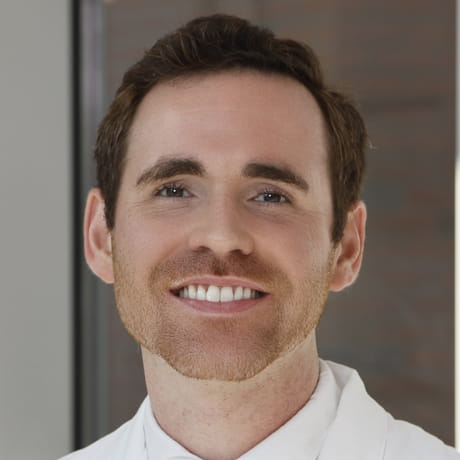
Christopher Brooks
· MDOhio State University · Otolaryngology
Active 1974–2024
Academic metrics are sourced from OpenAlex and public funding records; values may differ from Google Scholar.
About
Christopher Brooks, MD, is an allergy and immunology physician and an Assistant Professor at The Ohio State University Wexner Medical Center. He specializes in treating a variety of conditions related to allergy and immunology, including seasonal allergies, food-related symptoms, recurrent infections, and complex immunological disorders. Dr. Brooks is committed to providing inclusive, individualized, and compassionate care, ensuring that each patient understands all their options before proceeding with a treatment plan. He emphasizes the use of innovative, evidence-based treatments, leveraging advancements in genetic testing and biologic therapies. His academic and research efforts focus on immunotherapy, including intralymphatic immunotherapy, and improving processes to eliminate unnecessary drug allergies from patients' allergy lists. Dr. Brooks is actively involved in research and education, mentoring medical students and participating in community service through volunteer work with the Columbus Free Clinic and the Medical Reserve Corps. He is dedicated to community service and advocacy for improved access to quality healthcare, working with various organizations and legislators to address healthcare disparities. His background includes a fellowship in Allergy & Immunology at Ohio State University Wexner Medical Center, and he holds certifications from the American Board of Allergy & Immunology and the American Board of Pediatrics.
Research topics
- Computer Science
- Mathematics
- Biology
- Artificial Intelligence
- Combinatorics
- Engineering
- Virology
- Chemistry
- Geology
- Physics
Selected publications
Molecular Mechanisms of Prolactin and Its Receptor
Endocrine Reviews · 2012-08-01 · 164 citations
reviewOpen access1st authorCorrespondingProlactin and the prolactin receptors are members of a family of hormone/receptor pairs which include GH, erythropoietin, and other ligand/receptor pairs. The mechanisms of these ligand/receptor pairs have broad similarities, including general structures, ligand/receptor stoichiometries, and activation of several common signaling pathways. But significant variations in the structural and mechanistic details are present among these hormones and their type 1 receptors. The prolactin receptor is pa…
Enjoying sad music: A test of the prolactin theory
Musicae Scientiae · 2019-12-25 · 41 citations
articlePhilosophers have long wrestled with the apparent paradox of the enjoyment of negative emotional portrayals in the arts. An example of this apparent paradox is the enjoyment among some listeners of nominally sad music. An experiment is reported in which 39 participants listened to sad and happy music while serum prolactin (PRL) concentrations were measured. The purpose of the experiment was to test an a priori theory, proposed by Huron, that liking sad music is mediated by elevated PRL levels. C…
Virus Research · 2011-11-10 · 39 citations
articleObligate Ordered Binding of Human Lactogenic Cytokines
Journal of Biological Chemistry · 2010-04-29 · 16 citations
articleOpen accessSenior authorCorrespondingClass 1 cytokines bind two receptors to create an active heterotrimeric complex. It has been argued that ligand binding to their receptors is an ordered process, but a structural mechanism describing this process has not been determined. We have previously described an obligate ordered binding mechanism for the human prolactin/prolactin receptor heterotrimeric complex. In this work we expand this conceptual understanding of ordered binding to include three human lactogenic hormones: prolactin, g…
Functional Impact of Manipulation on the Relative Orientation of Human Prolactin Receptor Domains
Biochemistry · 2011-05-17 · 13 citations
articleSenior authorHormone binding creates active receptor dimers for class 1 cytokine receptors; however, the detailed molecular mechanism by which these receptors are activated by their ligands is not well characterized, and it is unknown if these receptors share common mechanisms. A rotation model has been proposed for the activation of human erythropoietin receptor and human growth hormone receptor and is supported by evidence showing that additions of alanine at the junction of the transmembrane (TM) and intr…
Recent grants
NIH · $1.0M · 2010
Multiscale Modeling and Enhanced Sampling of Protein-Protein Recognition
NSF · $1.2M · 2015–2021
NIH · $324k · 1996
Frequent coauthors
- 7 shared
Eugene R. DeSombre
University of Chicago
- 7 shared
John R. Latendresse
- 7 shared
Lawrence J. Berliner
University of Denver
- 6 shared
Vijay Reddy
Scripps Institution of Oceanography
- 6 shared
Elwood V. Jensen
- 6 shared
Dmitry B. Veprintsev
Paul Scherrer Institute
- 5 shared
Vladimir N. Uversky
- 5 shared
Jeffrey M. Canfield
Labs
Otolaryngology & Head and Neck Surgery - Allergy & ImmunologyPI
Awards & honors
- Chrysalis Project scholarship from a national allergy organi…
- Commitment to Service Award from The Ohio State University
Similar researchers at Ohio State University
- Resume-aware match score
- Save to shortlist
- AI-drafted outreach
See your match with Christopher Brooks
PhdFit ranks faculty by your research interests, methods, and publications — grounded in their actual work, not templates.
- Free to start
- No credit card
- 30-second signup