Resume-aware faculty matching

Find professors who actually fit you

Upload your resume. Four AI agents analyze your background, rank the faculty who fit, inspect their recent research, and help you draft outreach — grounded in their actual work, not templates.

Free to startNo credit cardCancel anytime
Top matches Balanced preset
Dr. Sarah Chen
Stanford · Interpretability · NLP
91
Dr. Marcus Holloway
MIT · Robotics · RL
84
Dr. Aisha Okonkwo
CMU · Fairness · HCI
82
Nova · Professor Researcher · re-ranking top 20…
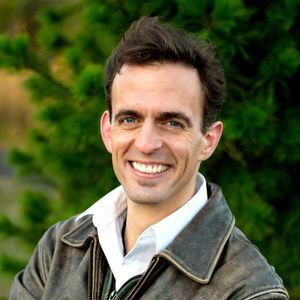
Christoph Nolte

Christoph Nolte

· Associate Professor of Earth & EnvironmentVerified

Boston University · Computing & Data Sciences

Active 1895–2026

h-index29
Citations3.9k
Papers9340 last 5y
Funding$288k1 active
See your match with Christoph Nolte — sign in to PhdFit.Sign in

About

Christoph Nolte is an Associate Professor of Earth & Environment at Boston University and an affiliated faculty member at the Faculty of Computing & Data Sciences. His research focuses on understanding and comparing the effectiveness of efforts to protect and restore terrestrial ecosystems. Many of his projects combine remote sensing and large-scale spatio-temporal social data related to people, policies, and properties, utilizing quasi-experimental causal inference and predictive machine learning techniques. He teaches courses in environmental statistics, economics, data science for conservation decisions, and environmental data synthesis and analysis. Christoph has a background that includes a Post-Doctoral fellowship in Earth System Science at Stanford University and a PhD in Natural Resources & Environment from the University of Michigan. His conservation research has been conducted across 24 countries in the Americas, Europe, Asia, and the Middle East, and he has studied in four languages. He collaborates with government agencies, donors, land trusts, indigenous governments, and early-career researchers.

Research topics

  • Geography
  • Business
  • Economics
  • Environmental resource management
  • Finance
  • Natural resource economics
  • Environmental science
  • Computer Science
  • Ecology
  • Statistics
  • Environmental planning
  • Marketing
  • Agroforestry
  • Medicine
  • Actuarial science
  • Regional science
  • Mathematics
  • Biology
  • Cartography
  • Archaeology
  • Data science
  • Environmental health
  • Database

Selected publications

  • Die Bedeutung von semiterrestrischen Böden für die Grund- und Oberflächengewässerqualität Nordwestdeutschlands

    DBGPrints Repository (German Soil Science Society (DBG)) · 2026-05-19

    articleOpen access1st authorCorresponding

    Die in vielen Grundwasserkörpern Nordwestdeutschland rezent ablaufende Denitrifikation bedingt eine umfassende Minderung der eingetragenen N-Frachten. Zur Identifi-zierung dieses für die Wasserqualität wichtigen Prozesses stehen einfache und aussagekräftige Methoden zur Verfügung (N2/Ar, Regionalisierungen, hydrochemische Auswertungen). Die semiterrestrischen Bodentypen (Gley, Anmoor) bilden wichtige Senken. Deren Funktion kann insbesondere bei Modifikationen des standörtlichen Wasser-haushaltes verloren gehen. Intakte Auen und Niederungen bedingen vermutlich eine weitere Minderung vor dem Zustrom in die Vorfluter. Der Beitrag schließt mit Empfehlungen, deren Ziel die Schärfung des Prozessverständnisses sowie eine nachhaltige Sicherung der zukünftigen Grund- und Oberflächenwasserqualität ist.

  • Making a difference takes time: assessing the impact of Colombian public land acquisitions on forest cover in the Andes

    2026-05-01

    articleOpen accessSenior author

    Public land acquisitions (PLAs) are a promising conservation instrument, combining the permanence of protected areas with the voluntary, compensatory structure of payments for ecosystem services, yet causal evidence on their effectiveness remains limited. Colombia’s Article 111 mandate, which requires departments to allocate 1% of revenue to land acquisition for watershed protection, has produced one of the world’s largest and longest-running PLA programs, enabling rigorous evaluation. We estimate the impact of 2,512 PLAs in the Colombian Andes on parcel-level forest cover from 2001 to 2021 using covariate matching and staggered difference-in-differences. PLAs have a statistically significant, time-accumulating effect on forest cover, increasing from 0.16 percentage points after one year of protection to 2.53 percentage points after 15 years. Effects are driven primarily by forest regrowth rather than avoided deforestation, consistent with program targeting and active reforestation on acquired parcels. Benchmarking against the literature, estimated effect sizes fall within the range reported for protected areas and payments for ecosystem services. These results indicate that PLAs can generate measurable conservation gains even when implemented in relatively low-threat landscapes. Crucially, impacts emerge slowly and accumulate over time, implying that evaluations based on short post-treatment windows will systematically underestimate their effectiveness.

  • Two decades of land cover changes in the Colombian Andes

    2025-08-27

    articleOpen access

    The Colombian Andes faces severe anthropogenic pressures from deforestation, agricultural expansion, mining, and urban development. Given its status as one of the world’s biodiversity hotspot, land cover monitoring for effective conservation strategies and sustainable development planning is essential. While early research relied on coarse or medium-resolution satellite imagery for limited temporal coverage, recent initiatives like MapBiomas Colombia have improved national-scale mapping capabilities. However, mapping the complex spectral-temporal patterns of heterogeneous tropical mountain environments benefits from advanced methods that can track long-term surface trends. This study presents comprehensive annual land cover maps for the Colombian Andes and Sierra Nevada of Santa Marta spanning 1997-2024, representing the longest and most detailed temporal analysis of this critical region to date. We employed the Continuous Change Detection and Classification (CCDC) algorithm applied to Landsat data, coupled with machine learning models trained on a custom dataset designed to address existing limitations in temporal depth and spatial detail. Our time series approach leverages spectral-temporal signatures to distinguish land cover types with similar spectral characteristics but distinct temporal behaviors, providing a unique method for monitoring forest dynamics, habitat changes, and anthropogenic impacts across the Colombian Andes.

  • Understanding variation in impacts from private protected areas across regions and protection mechanisms to inform organizational practices

    Conservation Biology · 2024-02-08 · 6 citations

    articleOpen access

    Private land protection is an important and growing tool to address biodiversity loss and climate change. Thus, better empirical evidence on the effectiveness of private land protection and organizational practices, such as targeting of lands for protection and choice of protection mechanism (i.e., fee simple land acquisition and conservation easements), is needed. We addressed this gap by estimating the impacts of The Nature Conservancy's (TNC) (a large nongovernmental organization with relatively decentralized management) conservation land acquisitions and easements from 1988 to 2016 in three regions of the United States (Mid-Atlantic, New England and New York, and California). We estimated impact in terms of avoided conversion by comparing natural land cover on 3179 protected parcels with matched unprotected parcels. Nineteen of 21 ecoregional plans used threats of agriculture and development to identify priorities for protection. When regions and protection mechanisms were pooled, on average there was no evidence of avoided conversion from 1988 to 2016. Accounting for mechanisms, TNC land acquisitions avoided conversion and easements did not. TNC's easements on parcels acquired by conservation partners did avoid conversion. Limitations of these results include focus on a single measure of impact, inability to capture future avoided conversion, and low land cover change accuracy in California. Our results suggest that private land protection managers who seek to avoid land conversion in the near to medium term should increase focus on areas with higher threats. Special attention should be paid to strengthening accountability and the role of partners, improving or clarifying how easements are used, and facilitating the flow of resources to work with the greatest potential impact.

  • Ecosystem service values provided by National Parks to residential property owners

    Ecological Economics · 2024-03-21 · 12 citations

    article
  • An approach to designing efficient implementation of 30×30 terrestrial conservation commitments

    Conservation Science and Practice · 2024-09-19 · 1 citations

    articleOpen access

    Abstract In response to biodiversity declines worldwide, over 190 nations committed to protect 30% of their lands and waters by 2030 (hereafter, 30×30). Systematic conservation planning and return on investment analysis can be helpful tools for determining where protection efforts could deliver the most efficient and effective reserve design, and supporting decision‐making when trade‐offs among objectives are required. Here, we propose a framework for efficient “30×30” implementation and apply it to the state of California (USA). Because conservation of a region's full suite of biodiversity is the primary objective of the global initiative, we prioritized representation in our analysis. We used Zonation to identify networks that close the gap in representation of major habitat types in California's protected area network and that also conserve the places important for biodiversity or climate change mitigation. We identified networks that are efficient relative to metrics likely to be important in implementation including land acquisition cost, number of transactions, and conservation benefit per hectare, and we illustrate not only trade‐offs associated with these metrics but also differences in the co‐benefits achieved. Five of the eight major habitat types in California are not currently protected at a 30% level statewide, and if representation was achieved solely through private land acquisition, targets could be met for as little as $5.84 billion, with as few as 364 transactions, or with 2.18 million additional conserved hectares. Implementation of 30×30 will likely require more flexibility than a single network design. A “no regrets” action would be to protect properties that were prioritized across all networks and additional implementation should include properties with characteristics of any of the individual networks. Our analytical framework and implementation guidance can be applied to other geographies and jurisdictions to increase the likelihood of both meeting 30×30 targets and delivering the conservation benefits they aim to secure.

  • Optimal conservation outcomes consider donor geography and their willingness to support more distant projects

    Biological Conservation · 2024-08-10 · 1 citations

    articleSenior author
  • Socio-economic and environmental trade-offs in Amazonian protected areas and Indigenous territories revealed by assessing competing land uses

    Nature Ecology & Evolution · 2024-07-15 · 27 citations

    articleOpen access

    Abstract Protected area (PA) assessments rarely evaluate socio-economic and environmental impacts relative to competing land uses, limiting understanding of socio-environmental trade-offs from efforts to protect 30% of the globe by 2030. Here we assess deforestation and poverty outcomes (fiscal income, income inequality, sanitation and literacy) between 2000 and 2010 of strict PAs (SPAs), sustainable-use PAs (SUPAs) and Indigenous territories (ITs) compared with different land uses (agriculture and mining concessions) across ~5,500 census tracts in the Brazilian Legal Amazon. ITs reduced deforestation relative to all alternative land uses (48–83%) but had smaller socio-economic benefits compared with other protection types and land uses (18–36% depending on outcome), indicating that Indigenous communities experience socio-economic trade-offs. By contrast, SUPAs, and potentially SPAs, did not reduce deforestation relative to small-scale agriculture (landholdings <10 ha) but did so relative to larger agricultural landholdings (70–82%). Critically, these reductions in deforestation frequently occurred without negative socio-economic outcomes. By contrast, ITs and SUPAs protected against deforestation from mining, but at the cost of smaller improvements in income and inequality. Our results suggest that although PAs in the Brazilian Legal Amazon substantially reduced deforestation without compromising local socio-economic development, efforts to secure Indigenous rights need additional interventions to ensure these communities are not further disadvantaged.

  • Improving estimates of land protection costs in a tropical biodiversity hotspot

    Frontiers in Ecology and the Environment · 2023-12-07 · 3 citations

    reviewOpen access1st authorCorresponding

    Accurate estimates of the costs of land protection are useful for understanding where biodiversity conservation goals can be achieved at the lowest cost to society. However, because of the scarcity of high‐quality cost maps for tropical countries, conservation planning studies often ignore cost or rely on untested proxies, such as agricultural rent or land‐use intensity. Here, we show how analysts can estimate land protection costs using original data of public land acquisitions, global predictor datasets, and simple machine‐learning models. For the Colombian Andes, a global biodiversity hotspot, we found that the principal driver of the cost of land protection is urban proximity, not agricultural rent. We derived cost estimates that predict public land protection costs more accurately than available cost proxies and identified new protection priorities for 143 threatened bird species. A more systematic collection of cost records of land protection will help inform public decisions on national and global biodiversity protection priorities.

  • Anticipating anthropogenic threats in acquiring new protected areas

    Conservation Biology · 2023-09-05 · 3 citations

    article

    Biodiversity continues to decline despite protected area expansion and global conservation commitments. Biodiversity losses occur in existing protected areas, yet common methods used to select protected areas ignore postimplementation threats that reduce effectiveness. We developed a conservation planning framework that considers the ongoing anthropogenic threats within protected areas when selecting sites and the value of planning for costly threat-mitigating activities (i.e., enforcement) at the time of siting decisions. We applied the framework to a set of landscapes that contained the range of possible correlations between species richness and threat. Accounting for threats and implementing enforcement activities increased benefits from protected areas without increasing budgets. Threat information was valuable in conserving more species per spending level even without enforcement, especially on landscapes with randomly distributed threats. Benefits from including threat information and enforcement were greatest when human threats peaked in areas of high species richness and were lowest where human threats were negatively associated with species richness. Because acquiring information on threats and using threat-mitigating activities are costly, our findings can guide decision-makers regarding the settings in which to pursue these planning steps.

Recent grants

Frequent coauthors

  • Éric F. Lambin

    Stanford University

    21 shared
  • Bernd F. Straub

    15 shared
  • Yann le Polain de Waroux

    13 shared
  • Saleh Mamun

    13 shared
  • Herbert Mayr

    Ludwig-Maximilians-Universität München

    12 shared
  • Jonathan R. Thompson

    Medical College of Wisconsin

    11 shared
  • Marc Hockings

    International Union for Conservation of Nature

    11 shared
  • Adam Pollack

    Dartmouth College

    11 shared

Education

  • Ph.D., Environmental Science, Policy, and Management

    University of California, Berkeley

    2008
  • M.S., Environmental Science, Policy, and Management

    University of California, Berkeley

    2003
  • B.A., Environmental Studies

    University of California, Santa Barbara

    2001
  • Resume-aware match score
  • Save to shortlist
  • AI-drafted outreach

See your match with Christoph Nolte

PhdFit ranks faculty by your research interests, methods, and publications — grounded in their actual work, not templates.

  • Free to start
  • No credit card
  • 30-second signup