Resume-aware faculty matching

Find professors who actually fit you

Upload your resume. Four AI agents analyze your background, rank the faculty who fit, inspect their recent research, and help you draft outreach — grounded in their actual work, not templates.

Free to startNo credit cardCancel anytime
Top matches Balanced preset
Dr. Sarah Chen
Stanford · Interpretability · NLP
91
Dr. Marcus Holloway
MIT · Robotics · RL
84
Dr. Aisha Okonkwo
CMU · Fairness · HCI
82
Nova · Professor Researcher · re-ranking top 20…
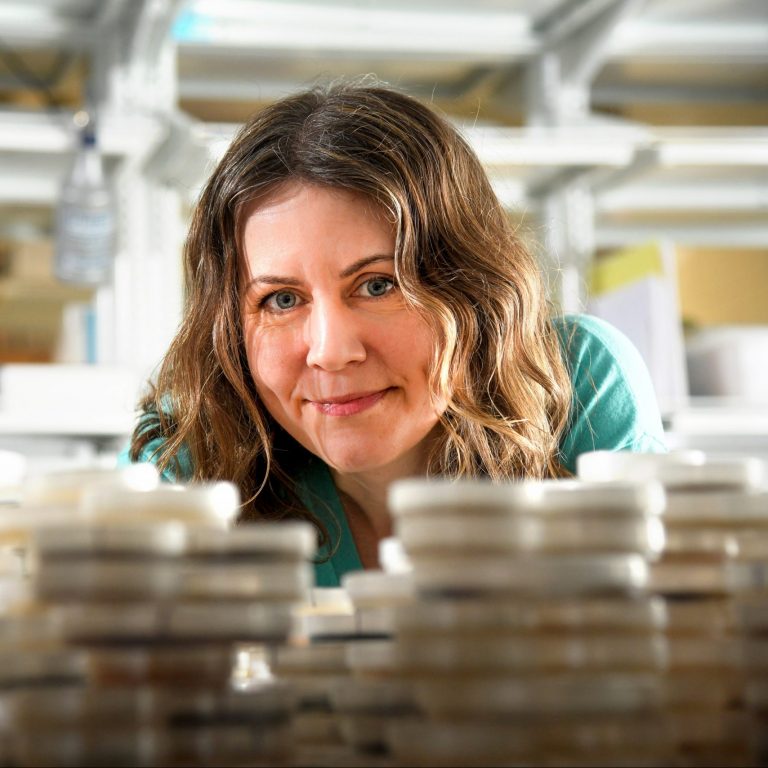
Christine Hawkes

Christine Hawkes

Verified

North Carolina State University · Microbiology

Active 1994–2025

h-index43
Citations7.8k
Papers14454 last 5y
Funding$1.1M
See your match with Christine Hawkes — sign in to PhdFit.Sign in

About

Christine Hawkes is an ecologist specializing in the functions of plant and soil microbiomes. She holds a bachelor’s degree in environmental studies from Bucknell University and a Ph.D. in biology from the University of Pennsylvania. Her dissertation research focused on how soil microorganisms affect the population viability of endangered plants. As a David H. Smith Postdoctoral Fellow, she studied the role of soil microbes in plant invasions and nitrogen cycling at the University of California, Berkeley. During her NSF Postdoctoral Fellowship, she addressed how root-associated microbes influence carbon cycling under warming temperatures. Hawkes currently leads a multidisciplinary research program that investigates how plant microbiomes mediate plant stress phenotypes and how drought and climate legacies impact plant and soil microbiomes. Her work emphasizes systems-based analyses, deep-learning, and modeling to decode the taxonomic diversity and functional potential of plant microbiomes, with a focus on developing strategies to harness microbial functions for improving crop resilience. Her research includes studying the microbiome of wheat, particularly the phyllosphere microbiome of flag leaves, to enhance crop yield and stress tolerance, and understanding microbial moisture responses to better predict soil carbon dynamics.

Research topics

  • Biology
  • Ecology
  • Agronomy
  • Soil science
  • Internal medicine
  • Surgery
  • Geography
  • Environmental science
  • Cardiology
  • Medicine

Selected publications

  • A Case of Anomalous Origin of the Middle Cerebral Artery

    Canadian Journal of Neurological Sciences / Journal Canadien des Sciences Neurologiques · 2025-01-08

    article
  • Molecular, physiological and whole-plant responses to experimental precipitation manipulation in a C4 perennial grass

    Forest Service Research Data Archive · 2025-12-11

    dataset

    This archive contains research data collected and/or funded by Forest Service Research and Development (FS R&D), U.S. Department of Agriculture. It is a resource for accessing both short and long-term FS R&D research data, which includes Experimental Forest and Range data. It is a way to both preserve and share the quality science of our researchers.

  • Clinical characteristics, management, and outcomes of traumatic cerebral venous sinus thrombosis

    The Journal of Trauma: Injury, Infection, and Critical Care · 2025-09-15 · 1 citations

    article

    BACKGROUND: Traumatic cerebral venous sinus thrombosis (CVST) is abnormal clotting in one or more cerebral veins or sinuses following trauma. Its clinical significance is uncertain. Management is challenging because patients are at increased risk for bleeding. Limited studies exist on traumatic CVST. METHODS: Retrospective cohort study of trauma patients admitted to a Level 1 trauma center between January 2014 and October 2023. Main objectives were to assess the following: (1) CVST prevalence, overall and according to head injury severity; (2) characteristics of trauma patients with CVST; and (3) management and outcomes of CVST patients. RESULTS: On admission, all CVST patients (n = 170) had a traumatic brain injury (TBI) and an intracranial hemorrhage, and all except one had a skull fracture. Prevalence of CVST was 0.9% (95% confidence interval [CI], 0.8-1.0) in the overall trauma patient population (n = 18,569), 2.1% (95% CI, 1.9-2.5) in patients with TBI (n = 7,920), and 4.8% (95% CI, 4.0-5.8) in patients with severe TBI (modified head Abbreviated Injury Scale score, ≥4; n = 2,035). Twenty-eight patients with CVST died (16.5%), usually shortly after admission. The majority of patients (n = 100) with CVST were treated with standard venous thromboembolism (VTE) prophylactic dose of anticoagulant while in hospital. During median follow-up of 3 months, none of the patients treated with standard VTE prophylactic dose of anticoagulant developed a symptomatic CVST-related adverse event (death, stroke, intracranial hemorrhage). One patient (1.0%) had asymptomatic CVST-related stroke, three patients (3.0%) developed asymptomatic CVST extension, and 3 patients (3.0%) developed a gastrointestinal bleed on anticoagulant. CONCLUSION: Traumatic CVST prevalence increases with head trauma severity and is unlikely to develop in the absence of skull fracture. Patients treated with standard VTE prophylactic doses of anticoagulants had favorable outcomes with minimal CVST-related complications during hospitalization. Longer-term data are needed to better evaluate traumatic CVST prognosis. LEVEL OF EVIDENCE: Prognostic and Epidemiological; Level IV.

  • Direct and diffuse cross-kingdom interactions in plant microbiome assembly

    bioRxiv (Cold Spring Harbor Laboratory) · 2025-10-24

    preprintSenior author

    Abstract Studies of plant-associated microbial communities consistently indicate a role for classic assembly mechanisms, such as environmental and host filters, but often leave substantial unexplained variation. Biotic interactions within microbial communities may help to fill this gap, specifically cross-kingdom interactions between fungi and bacteria, as these are increasingly found to be important to both assembly and function. We hypothesized that direct interactions between bacteria and fungi are an important driver of composition in low-diversity leaf habitats, where pairwise interactions are more likely. In high-diversity root habitats, we expected diffuse, indirect interactions to be more relevant to composition. To test these hypotheses, we characterized bacterial and fungal communities of switchgrass ( Panicum virgatum L.) leaves and roots at 14 sites spanning mountain to coastal ecoregions of North Carolina, USA. We analyzed putative direct and diffuse interactions using ecological network inference and partitioned variance explained in microbial community composition by spatial, environmental, and biotic interactions. We found that cross-kingdom biotic interactions contributed to microbial community structure. The largest improvements to variance explained (5-11%) were from direct interactions, except for root fungal communities where diffuse interactions (7.5%) explained more than double that of direct interactions (2.8%). These contributions were comparable to those from environmental and spatial factors. The joint effects of putative biotic interactions and environmental conditions also contributed to the explained variation, highlighting the importance of environmental tracking in microbes. These findings suggest that using network inference for identifying cross-kingdom ecological interactions can improve our fundamental understanding of how plant-associated microbiomes assemble, which is also directly relevant to applied efforts such as the effective development of synthetic communities.

  • Incidence and Management of High-Grade Blunt Craniocervical Injury – Lessons Learned in our 10-year Experience.

    Brain and Spine · 2025-01-01

    articleOpen access
  • Tree Species Controls Over Nitrogen and Phosphorus Cycling in a Wet Tropical Forest

    Bulletin of the Ecological Society of America · 2025-01-06 · 1 citations

    articleOpen accessSenior author

    A conundrum in nutrient-poor tropical soils is that regenerating secondary forests can grow rapidly, even though the tight cycling between vegetation and detritus that could conserve phosphorus, a limiting nutrient, is disrupted during degradation/felling of the pre-existing forest.In a long-term experiment in Costa Rica, we compared nitrogen and phosphorus dynamics in four tree species in single-species plantations that started with near-zero nutrients in vegetation.After 25 years, these species differed in nitrogen and phosphorus stocks by 30% and 80% respectively, and thus productivity, owing to species' differences in nitrogen acquisition and effects on phosphorus liberation from soil organo-mineral pools.

  • Invasive Buffelgrass, <i>Cenchrus ciliaris</i>, Balances Opportunistic Acquisition of Foliar fungi With Host and Environmental Filtering in Its Introduced Range

    Molecular Ecology · 2024-12-12

    articleOpen access

    Plants host diverse assemblages of fungi on their foliar tissues, both in internal compartments and on exterior surfaces. When plant distributions shift, they can move with their fungal associates (i.e., co-introduction) or acquire new associates present in the novel environment (host-jumping). The fungal communities that plants acquire influence a plant's ability to establish and spread in this new environment. Here, we aimed to assess whether invasive C. ciliaris hosts similar groups of fungi in its native and introduced ranges and to evaluate community overlap of fungi associated with foliar tissue of C. ciliaris and native and non-native plants within the introduced range. In the introduced range, the majority of OTUs associated with C. ciliaris were not found in its native range, although 3.2% of OTUs were common to both ranges. Of these shared OTU, 77.6% were found on co-occurring natives and non-natives in the introduced range, whereas 22.4% were unique to C. ciliaris indicating a possible co-introduction. Fungal communities within the introduced range contained a higher proportion of generalist symbionts and increased heterogeneity of foliar communities than in its native range. Within the introduced range, host phylogenetic distance explained more variation than native status. Our findings provide evidence that non-natives acquire fungi opportunistically from their environment, although host and environmental filtering is present suggesting that successful invasive plants may be able to limit the effect of poor symbionts and select for better ones. Future experimental work will be needed to confirm the occurrence of host selection and identify its mechanisms.

  • The Management of Intracranial Aneurysms: Current Trends and Future Directions

    Neurology International · 2024-01-03 · 51 citations

    reviewOpen accessSenior author

    Intracranial aneurysms represent a major global health burden. Rupture of an intracranial aneurysm is a catastrophic event. Without access to treatment, the fatality rate is 50% in the first 30 days. Over the last three decades, treatment approaches for intracranial aneurysms have changed dramatically. There have been improvements in the medical management of aneurysmal subarachnoid haemorrhage, and there has been an evolution of treatment strategies. Endovascular therapy is now the mainstay of the treatment of ruptured intracranial aneurysms based on robust randomised controlled trial data. There is now an expansion of treatment indications for unruptured intracranial aneurysms to prevent rupture with both microsurgical clipping and endovascular treatment. Both microsurgical and endovascular treatment modalities have evolved, in particular with the introduction of innovative endovascular treatment options including flow diversion and intra-saccular flow disruption. These novel therapies allow clinicians to treat more complex and previously untreatable aneurysms. We aim to review the evolution of treatment strategies for intracranial aneurysms over time, and discuss emerging technologies that could further improve treatment safety and functional outcomes for patients with an intracranial aneurysm.

  • Stability of the Wheat Seed Mycobiome Across North Carolina’s Longitudinal Gradient

    bioRxiv (Cold Spring Harbor Laboratory) · 2024-02-23

    preprintOpen access

    ABSTRACT Improving wheat yield and performance involves selecting varieties that are well adapted for a regional area. Although host genotype and environment are major factors that impact crop performance and resilience, less is known about the relative contribution and occurrence of wheat seed endophytic fungal communities across spatial and temporal scales. An increased understanding of composition and assembly of beneficial endophytic fungal communities across regional scales provides valuable insight into the stability of the endophytic seed mycobiome. Our aim in this study was to examine the relative contribution and impact of latitude and longitude gradients within North Carolina (NC) on wheat seed fungal community structure of two regionally adapted soft red winter wheat cultivars, Hilliard and USG 3640. We examined the endophytic wheat seed microbiome of the two winter wheat cultivars planted in official variety trials at five geographic locations across NC in 2021 and two geographic locations in 2022. ITS1 sequence-based analysis of surface disinfested wheat seeds was conducted to determine alpha and beta diversity. Species richness is influenced by geographical location, however wheat seed mycobiome community structure is stable across cultivars and years. Latitude and longitude contributed to the observed variation in wheat seed mycobiome structure, in addition to yield, seed moisture, and leaf nutrients. When surveying taxa present within all cultivars, geographical sites and years, Alternaria and Epicoccum spp. exhibited high relative abundance in the wheat seed mycobiome. Our results provide a comprehensive catalog of core fungal taxa well-adapted to diverse environments and conserved across wheat cultivars.

  • Spontaneous Cervical Internal Carotid Artery Vasospasm (SCICAV): It’s Unique

    Canadian Journal of Neurological Sciences / Journal Canadien des Sciences Neurologiques · 2024-10-28

    articleSenior author

Recent grants

Frequent coauthors

  • Stephanie N. Kivlin

    University of Tennessee at Knoxville

    23 shared
  • Brian van Adel

    Hamilton General Hospital

    16 shared
  • Aristeidis H. Katsanos

    Population Health Research Institute

    12 shared
  • Thomas Juenger

    The University of Texas at Austin

    12 shared
  • Aviraj Satish Deshmukh

    United Nations Economic and Social Commission for Asia and the Pacific

    12 shared
  • Jason Bonnette

    The University of Texas at Austin

    10 shared
  • Philip A. Fay

    Grassland, Soil and Water Research Laboratory

    10 shared
  • Michael J. Aspinwall

    10 shared
  • Resume-aware match score
  • Save to shortlist
  • AI-drafted outreach

See your match with Christine Hawkes

PhdFit ranks faculty by your research interests, methods, and publications — grounded in their actual work, not templates.

  • Free to start
  • No credit card
  • 30-second signup