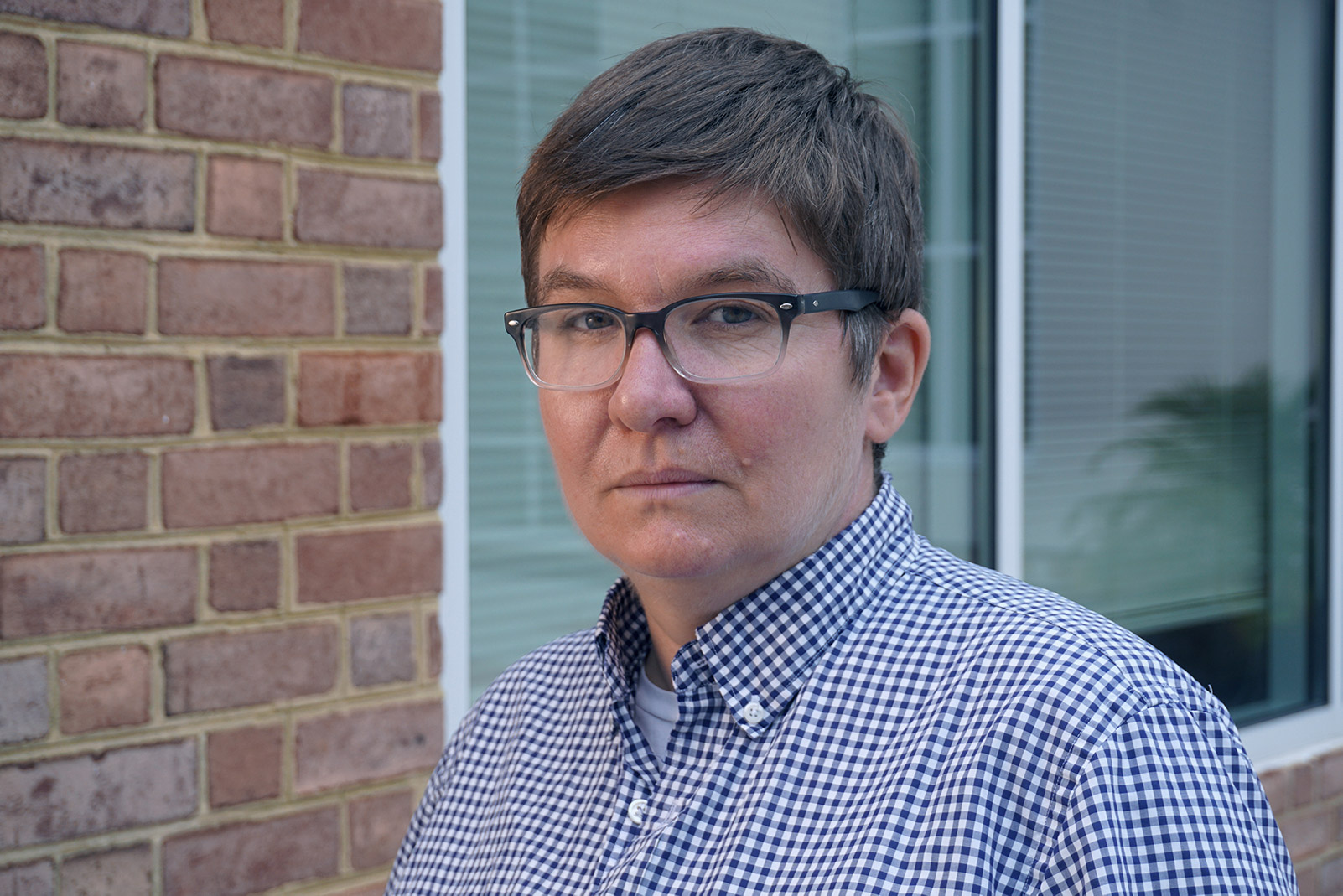
Christina Hanhardt
· Associate Professor and Chair, American StudiesUniversity of Maryland, College Park · American Studies
Active 2007–2024
About
Christina B. Hanhardt is an associate professor in the Department of American Studies at the University of Maryland, where she also serves as the Chair. Her research and teaching focus on the history of post-World War II U.S. social movements and cities, with particular attention to the politics of sexuality and punishment. She is the author of the book Safe Space: Gay Neighborhood History and the Politics of Violence, which has received notable recognition including the Lambda Literary Award for Best Book in LGBT Studies and honorable mentions for the American Studies Association’s John Hope Franklin Prize and Lora Romero Prize. Hanhardt is also a co-editor of a special issue of Women’s Studies Quarterly on gender, sexuality, and state power, and has published extensively in various academic journals and books. Her current work involves a book manuscript titled “Left Out,” which engages debates in queer theory and politics to explore the history of stigma in U.S. left social movements since the 1960s. She has received research support from multiple institutions and is actively involved in professional associations, notably the American Studies Association. Hanhardt has been recognized for her teaching and community engagement, including awards from the University of Maryland and the LGBT Equity Office.
Research topics
- Computer Science
- Sociology
- Social Science
- Political Science
- Operating system
- Criminology
- Media studies
- Gender studies
- Geography
- Law
Selected publications
Labor Studies in Working-Class History of the Americas · 2024-09-01
article1st authorCorresponding“To Mystify, Terrify, and Enchant”: Queer Nation and the Historiography of Queer Politics
QED A Journal in GLBTQ Worldmaking · 2023-01-01 · 1 citations
article1st authorCorrespondingAbstract Queer Nation, founded in New York City in 1990, is one of the earliest activist groups to be organized around the term queer. This article provides a history of the founding chapter of Queer Nation and maps the group's political ideals and strategies, highlighting tensions within and outside the organization about race and gender, liberalism, and antiassimilationism, among other issues. In doing so, the article also offers a framework for thinking about antinormativity in the history and historiography of queer politics and theory.
Women's studies quarterly · 2023-03-01
articleSenior authorIntroduction Dayo F. Gore (bio) and Christina B. Hanhardt (bio) In 2020 the Movement for Black Lives, drawing on what it describes as an "ecosystem of over 170 organizations," relaunched its 2016 Vision for Black Lives platform to build "political will and power" (Movement for Black Lives 2020). Two aspects of the platform stand out to us: first, that an intersectional analysis is at the center of all demands; and second, that "the state" is theorized as a source of punishment that activists reject and as a set of resources that activists might make claims upon. Given our respective research on twentieth-century U.S. social movements (Christina on lesbian, gay, bisexual, transgender and queer activism, and Dayo on Black women's radicalism and the U.S. Left) and investments in contemporary left movements, these issues have long preoccupied our work on and engagement with political organizing. In the last three years the stakes have only intensified. Social and economic conditions in the United States and around the globe demonstrate the necessity of addressing categories of difference while confronting state power, its resources, and institutional reach. From abolitionist demands to "defund the police and invest in communities" to calls for protecting rights such as access to abortion and health care, these years of pandemic, protests, and legal mandates have laid bare the power of the state to shape everyday life and survival. This is especially the case in the context of the recalibration of neoliberalism and white nationalism. Counter to claims on the left and right that identity politics stand in contrast to class politics, or that movements named by single-identity frames are necessarily delimited, many activist responses to the COVID-19 pandemic and leadership during the Black Lives Matter uprisings of the [End Page 11] summer of 2020 treated race, gender, sexuality, and class as tightly interwoven social categories that are essential to building justice movements and radical change. In addition, many of these movements have directly engaged the state, be that in supporting socialist- and progressive-identified political candidates or demanding economic resources for state health infrastructure, even as they have also participated in local mutual aid networks and called for the end of carceral systems, borders, and even the U.S. nation-state itself. We have been struck by how these organizing efforts speak to histories that we have studied of political movements that center identity and economic politics and also urge a revisiting of the ways states mobilize power and belonging through interconnected systems of benefits, discipline, and violence. In considering this special issue we were inspired by important debates about the state that have long animated social movement organizing as well as left and feminist scholarship, such as the place of liberal reforms in radical strategy, the value or limits of centralization and seeding electoral power from below, the challenges of forging new visions on an international scale while sustaining local engagement, and how to recognize the state's co-optation of radical terms without ceding discursive and political ground. We also sought to highlight scholarship and activism emerging from feminists of color that have long made visible the capitalist state's use of social locations beyond class to structure resource distribution. We seek in this issue on State/Power to provide productive insights and provoke further conversation. The articles that follow reroute expected histories and dominant discourses about state power and track how people, particularly Black and other racialized communities, have organized in response. They also take up some precise issues from recent years that have been at the forefront of discussions about the state, such as practices of mutual aid and collective care, the expansion of state punishment alongside the retraction of public resources, and the relationship between local, federal, and global power. Throughout, they explore what directly engaging the state might offer and restrict, and they do so with an attentiveness to identity and difference. The first two articles approach these issues through an analysis of the place of bodily regulation in the operation of the carceral state. In "'The Potential That Was in All of Us': Carceral Disability and the Japanese American Redress Movement," Adria L. Imada looks at how...
CHAPTER 1 Making Community: The Places and Spaces of LGBTQ Collective Identity Formation
Berghahn Books · 2022-09-27
book-chapter1st authorCorrespondingJ<scp>ason</scp> B<scp>aumann</scp>, editor. <i>The Stonewall Reader</i>.
The American Historical Review · 2021-06-01
article1st authorCorrespondingJune 28, 2019, marked the fiftieth anniversary of the Stonewall uprising, the multiday rebellion in response to a police raid of a gay bar in New York City’s Greenwich Village. Stonewall (as it is shorthanded) arguably is the most well-known piece of lesbian, gay, bisexual, and transgender (LGBT) history and its most contested. Popular sources often describe Stonewall as a riot that marked the start of the modern LGBT movement, while historians and activists alike debate its details as well as its significance in shaping local, national, and even international politics. These debates often focus on historical accuracy, such as who was there and what actions they took; but they also place Stonewall in its broader historical contexts, including a longer legacy of lesbian and gay activism and other 1960s social movements, and ask why this uprising garnered so much attention and not similar ones in other cities during this...
New York University Press eBooks · 2020-11-24
book-chapter1st authorCorrespondingSocial Text · 2020 · 3 citations
1st authorCorresponding- Sociology
- Political Science
- Sociology
This roundtable asks what queer studies might offer to an analysis of debates on campus safety. New approaches in queer studies take as their object of study not only sex and gender but also the cultural politics of liberalism; in turn, scholarship on the geopolitics of injury demonstrates the situatedness of both identity and economic forms. Brought together, these scholarly approaches provide an important lens on many of the contradictions of contemporary college campuses. Rendering classrooms and other places on campus as intrinsically embedded in global relations of militarization, securitization, dispossession, and risk management, “safe space” is elaborated in this roundtable in material, administrative, and pragmatic terms: from the conceptualization of alert systems to the racialized fears driving insurance calculations for international study programs to the struggles over academic freedom and student organizing.
2020-10-02
book-chapterOpen access1st authorCorrespondingDuke University Press eBooks · 2020 · 4 citations
1st authorCorresponding- Computer Science
- Computer Science
- Operating system
Winner, 2014 Lambda Literary Award in LGBT StudiesSince the 1970s, a key goal of lesbian and gay activists has been protection against street violence, especially in gay neighborhoods. During the same time, policymakers and private developers declared the containment of urban violence to be a top priority. In this important book, Christina B. Hanhardt examines how LGBT calls for "safe space" have been shaped by broader public safety initiatives that have sought solutions in policing and privatization and have had devastating effects along race and class lines.Drawing on extensive archival and ethnographic research in New York City and San Francisco, Hanhardt traces the entwined histories of LGBT activism, urban development, and U.S. policy in relation to poverty and crime over the past fifty years. She highlights the formation of a mainstream LGBT movement, as well as the very different trajectories followed by radical LGBT and queer grassroots organizations. Placing LGBT activism in the context of shifting liberal and neoliberal policies, Safe Space is a groundbreaking exploration of the contradictory legacies of the LGBT struggle for safety in the city
Berghahn Books · 2020 · 2 citations
1st authorCorresponding- Geography
Frequent coauthors
- 1 shared
Zeb Tortorici
- 1 shared
Kwame Holmes
- 1 shared
Dayo F. Gore
- 1 shared
Aniruddha Dutta
- 1 shared
Susan Stryker
- 1 shared
Tavia Nyong’o
- 1 shared
Paul Amar
- 1 shared
Kevin Murphy
Technological University Dublin
Education
Ph.D., American Studies
New York University
M.A., American Studies
New York University
M.A., Inter-Arts Program
San Francisco State University
B.A., Semiotics
Brown University
Awards & honors
- Lambda Literary Award for Best Book in LGBT Studies
- Honorable mention for the American Studies Association’s Joh…
- Honorable mention for the American Studies Association’s Lor…
- 2013 Teaching Award from Undergraduate Studies
- 2016 Champion of the Community Award from the LGBT Equity Of…
- Resume-aware match score
- Save to shortlist
- AI-drafted outreach
See your match with Christina Hanhardt
PhdFit ranks faculty by your research interests, methods, and publications — grounded in their actual work, not templates.
- Free to start
- No credit card
- 30-second signup