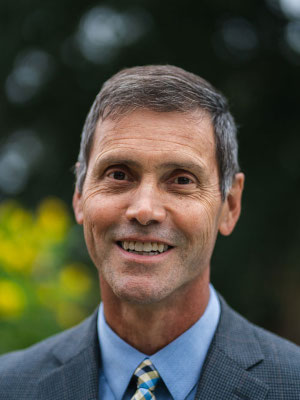
Christian Brannstrom
· Senior Associate Dean for Undergraduate Education, David Bullock Harris Professor of Geosciences, Professor of GeographyVerifiedTexas A&M University · Geography
Active 1995–2025
About
Dr. Christian Brannstrom is a professor of geography at Texas A&M University and serves as the Senior Associate Dean for Undergraduate Education in the College of Arts and Sciences. He holds both A.B. and Ph.D. degrees in international relations and geography. Since joining the Texas A&M faculty in 2003, his research has focused on the social and political aspects of renewable energy and unconventional fossil fuels in Texas, as well as analyzing host community responses to wind energy in northeastern Brazil. His scholarly work includes over 100 articles and book chapters in fields such as energy, land-change science, and historical-environmental geography, supported by organizations like the National Science Foundation, National Geographic Society, and Texas Sea Grant. Dr. Brannstrom has also contributed to academic administration, serving as associate dean for academic affairs in the College of Geosciences, where he implemented a new probation system, helped launch an online master's degree, and served as graduate director and director of Environmental Studies and Environmental Geosciences. His dedication to teaching and experiential learning has been recognized with multiple awards at the university and college levels.
Research topics
- Computer Science
- Economics
- Management
- Engineering
- Business
- Natural resource economics
- Environmental planning
- Ecology
- Political Science
- Environmental resource management
- Environmental economics
- Economic growth
- Environmental science
- Environmental engineering
- Geography
- Library science
- Management science
- Water resource management
Selected publications
Geoforum · 2025-05-22 · 6 citations
articleOpen access• US clean hydrogen hubs reveal diverse strategies for industrial decarbonization. • Federal policies shape hydrogen hubs while prioritizing equity and regional diversity. • Fossil fuel incumbents evolve as central players in hydrogen value chains. • Multi-scalar coalitions redefine governance in clean hydrogen energy transitions. • Hydrogen hubs offer insights into global energy transition dynamics and regional adaptation. Decarbonization is a critical challenge for reaching climate goals, especially for hard-to-abate manufacturing, heavy transport, and power generation sectors. The US Department of Energy (DOE) has promoted hydrogen as a key solution, exemplified by an $8 billion Regional Clean Hydrogen Hub Program (H2H) launched in 2022. We use an analytical framework inspired by recent work in economic geography to evaluate emerging space-making processes in the 22 H2H “finalists” by focusing on processes and relationships in value chains, regional formations, and agentic features. The results illustrate two main findings. First, the state’s role in (re)shaping regions and regional energy transitions reinforces existing regional diversity variation in industrial and resource geography, while imposing new social and community conditions to secure federal funding. Second, the competition has stimulated the growth and connection between new, multi-scalar actors, including novel lead organizations, bipartisan political supporters, and a continued role for oil and gas incumbents. Decarbonization efforts offer new sites for accumulation and incumbents and provide templates for inserting social justice dimensions. Looking to the future, we see the US Clean H2Hubs Program as a site for testing claims in regional-economic geography and comparative cases with hub- or cluster-based hydrogen initiatives in East Asia, the Gulf States, and Europe.
ANÁLISE DOS DISCURSOS DE LEGITIMIDADE NO CONTEXTO DO HIDROGÊNIO VERDE NO ESTADO DO CEARÁ, BRASIL
Caminhos de Geografia · 2025-06-12
articleOpen accessThe search for technological legitimacy is essential for the implementation and dissemination of new technologies for energy transitions, but the geographical understanding of new green hydrogen (GH) hubs is still limited. Based on this, this study analyzed the legitimacy-building process for announced investments in the GH hub located in the state of Ceará, Brazil. To do so, a text corpus of 498 articles from two main newspapers in Ceará was analyzed using qualitative data analysis software. Five main themes were identified in the stakeholders’ discourses: i) natural vocation of the territory, ii) global protagonism, iii) breaking with the past, iv) urgency of the moment, and v) state action. The legitimacy discourses sought to build a solid base of social and institutional support for the GH project in the state, presenting it in public debates as a profitable climate solution and key element in addressing socio-environmental challenges in Ceará. However, there are geographical implications related to the appropriation of traditional territories, the reshaping of new energy landscapes, and the multi-scalar dependency of renewable energy systems, which have received little attention in public debates given the limited space for critical opinions on GH.
Journal of Latin American geography · 2024-09-01
articleOpen access1st authorCorrespondingAnnals of the American Association of Geographers · 2024-01-22 · 5 citations
articleOpen accessIdentifying offshore wind energy sites involves analyzing multiple variables, such as wind speed, proximity to the coastline, and sociocultural factors. This complex decision-making process often involves many stakeholders, resulting in conflicting data and goals. Decision analysis that promotes collaboration, transparency, understanding, and sustainability is key. This study presents a unique model of human–environment interaction that reconciles different perspectives and visualizes the balance between fisheries and wind power. Using three multicriteria decision models (weighted aggregated sum product assessment [WASPAS], technique for order of preference by similarity to ideal solution [TOPSIS], and analytical hierarchy process [AHP]), we analyze the decision mix for wind farm selection and assess the impacts on fisheries using historical data. Our approach was applied to an upwelling system in California, generating ten tailored decision scenarios for different stakeholder groups. The results showed that adaptation scores for specific call areas in northern California decreased when the weight of fishery factors increased, and there was a tendency for high-scoring areas to shift southward as fishery parameters increased. The results of the sensitivity analysis showed that the first-order sensitivity scores of WASPAS were better correlated with the weights compared to TOPSIS, whereas the second-order sensitivity scores were generally lower, indicating a reduced interdependence of our model.
Journal of Latin American geography · 2024-06-01
articleOpen access1st authorCorrespondingReviewed by: Sweet Fuel: A Political and Environmental History of Brazilian Ethanol by Jennifer Eaglin, and: Agriculture's Energy: The Trouble with Ethanol in Brazil's Green Revolution by Thomas D. Rogers Christian Brannstrom Jennifer Eaglin Sweet Fuel: A Political and Environmental History of Brazilian Ethanol. New York: Oxford University Press, 2022. x + 268 pp. Illustrations, maps, notes, index. $48.99 hardcover (ISBN 978-0-197-51068-1); $48.99 e-book (ISBN: 978-0-197-51070-4). Thomas D. Rogers Agriculture's Energy: The Trouble with Ethanol in Brazil's Green Revolution. Chapel Hill, NC: The University of North Carolina Press, 2022. xiii + 287 pp. Photographs, maps, figures, notes, bibliography, index. $99 hardcover (ISBN 978-1-469-67044-7); $29.95 paperback (ISBN 978-1-4696-7045-4); $22.99 e-book (ISBN 978-1-469-67046-1). Brazil's national alcohol (ethanol) Program, known as Proálcool, enacted by the military regime in 1975 and expanded in 1979, was one of the most significant public policies affecting the country's agricultural and industrial sectors. Proálcool initially aimed to supplement gasoline with sugarcane-based ethanol (anhydrous alcohol) through subsidized loans and fuel blend guarantees, then eventually to replace gasoline entirely. More than 95 percent of all new cars in Brazil in 1985 burned ethanol exclusively. The program was disbanded in 1990 due to unsustainable costs associated with supply problems and the decline in oil prices. Proálcool created deep and lasting impacts on Brazilian geography, altering land use, reducing water quality, creating a vast workforce, empowering agro-industrial elites, and forcing changes in the automotive sector. Two recent books by environment-focused historians finally offer English-language analyses that complement a deep and multidisciplinary Brazilian literature on the origins and legacies of Proálcool. Thomas Rogers, in Agriculture's Energy, interprets Proálcool "as the product of models [End Page 203] of development economics and policy that became normative in postwar Brazil" (p. 8). Rogers argues that Proálcool "embodied" a model of "agriculture-fueled development" (p. 81) that had been in creation between the 1930s and 1950s. Proálcool is a highly visible policy feature of a development strategy aimed at transforming the agricultural sector—"one episode in the consolidation of a mode of development that crystallized out of the domestic and international programs that had supported and nurtured agricultural transformation over the preceding decades" (p. 108). Making innovative use of reports from intelligence operatives who collected data on Proálcool's critiques and perceived impacts, Rogers avoids the claims that oil price shocks of the 1970s (e.g., the gasoline alternative hypothesis), sugar prices (e.g., offering sugarcane growers an alternative to crystallized sugar), or business interests (e.g., supporting industrialists seeking profits in refineries) were a significant factor in the development of ethanol. The "green revolution" represented by ethanol, according to Rogers, is the argument that agriculture should be mechanized and export-oriented to serve the overall economy. This ideology, under construction for decades before Proálcool, found its full expression in the set of policies that dramatically increased sugarcane-fueled vehicles, but created an enormous class of itinerant and temporary sugarcane workers and polluted rivers with a toxic byproduct. Jennifer Eaglin, in Sweet Fuel, emphasizes the role of the private sector in the Ribeirão Preto region of São Paulo state, focusing on elites who supported and later obtained Proálcool's subsidies for boosting ethanol production. Based partly on archives in Ribeirão Preto, she leverages the story of the Biagi family and their company, Usina Santa Elisa, to tell the story of ethanol's expansion in Brazil. Eaglin writes that "private sugar interests, rather than government officials, strategically positioned ethanol to become a future large-scale energy option" in the 1960s and early 1970s (p. 46). Eaglin draws our attention to how the Biagi family showed interest in sugarcane intensification, industrialization, and ethanol distillation in the 1940s, taking advantage of proximity to agricultural research institutions and supplier networks. Entrepreneurs, especially the Biagi family, supported the military regime installed in 1964 and "were rewarded handsomely for their fidelity" (p. 51) through Proálcool subsidies. Biagi and other entrepreneurs near Ribeirão...
Urban Water Journal · 2024-05-28
articleThe unplanned and rapid expansion of metropolitan areas reduces accessibility to existing and often outdated centralized water and wastewater systems. In this context, sanitation policies that focus exclusively on centralized systems become expensive and unfeasible. Using Q methodology, we identified three different social perspectives on onsite wastewater treatment systems (OWTS) in the metropolitan area of the Lerma Valley in northern Argentina. We focused our analysis on the legal, environmental, and technical aspects of onsite sanitation. The perspectives found were: ‘OWTS have advantages’, ‘Hard path for sewerage’, and ‘Process before technology’. We describe the perspectives identified and we provide an analysis of their differences and similarities to discuss their possible policy implications for our study area and comparable regions in the country and beyond.
Sustainability Science Practice and Policy · 2024-09-25 · 2 citations
articleOpen accessDesalination offers options to augment water supplies for growing urban and industrial demand. Yet these facilities and related infrastructure projects have significant impacts on environmental, economic, and social sustainability. However, few studies examine how key actors in the sector understand or incorporate sustainability ideas and practices into the design, construction, and operation of desalination facilities. This study fills this gap by examining stakeholder perspectives on sustainability in the desalination sector using Q-method. We identified three dominant social perspectives on these topics. Factor 1 views desalination as important for the long-term sustainability of water supply. Factor 2 sees the social and environmental impacts of desalination as too big of a sustainability risk when there are other water resources to consider. Factor 3 indicates that the parties pursuing desalination have the responsibility of addressing sustainability concerns through their proposals and project specifications. These perspectives reveal how desalination stakeholders understand sustainability, key challenges, and responsibility for ensuring sustainable desalination projects. The findings provide insight into how desalination stakeholders can improve sustainability processes and outcomes.
Emerging challenges of offshore wind energy in the Global South: Perspectives from Brazil
Energy Research & Social Science · 2024-04-10 · 24 citations
articleOpen accessThe Extractive Industries and Society · 2024-05-25 · 13 citations
articleRevista Brasileira de Energia · 2023-10-06 · 1 citations
articleOpen accessSenior authorO ambiente marinho é mais vantajoso para a energia eólica em comparação com a superfície terrestre, o que pode resultar em maiores fatores de capacidade (eficiência) e densidade de potência para Parques Eólicos Offshore (PEO). Em julho de 2023, 78 projetos estavam em análise pelo órgão federal licenciador brasileiro. Questões socioambientais devem ser consideradas no processo relacionado aos diferentes usos do espaço marinho. Há uma lacuna na bibliografia internacional sobre o tema. Além disso, o contexto brasileiro se apresenta com uma diversidade de usos no espaço marinho. A pesca artesanal se destaca por ser fundamental para a manutenção do modo de vida e segurança alimentar de inúmeras comunidades do litoral brasileiro. São cerca de 650 territórios pesqueiros ao longo da costa brasileira, envolvendo indiretamente mais de 3 milhões de pessoas na atividade. O objetivo deste artigo é sintetizar os impactos socioambientais potenciais e conhecidos dos PEOs, com foco no contexto da pesca artesanal no Nordeste do Brasil. Os impactos diferem entre as fases de pré-construção, construção e pós-construção, podendo ter efeitos de curto, médio e longo prazo. Além disso, deve-se atentar para a fase de descomissionamento das estruturas. Embora a literatura apresente possíveis impactos positivos na pesca, destacamos possíveis prejuízos econômicos na atividade pesqueira por diversos motivos, incluindo exclusão espacial, dificuldade de navegação e redução de peixes. Ações efetivas são necessárias para mitigar tais perdas, sendo o licenciamento ambiental um importante curso de ação. Por fim, é imprescindível que as ações de implantação de parques eólicos offshore estejam alinhadas com os conceitos de justiça energética.
Recent grants
Frequent coauthors
- 44 shared
Adryane Gorayeb
Universidade Federal do Ceará
- 29 shared
Lucas Seghezzo
National University of Salta
- 17 shared
Martín Alejandro Iribarnegaray
- 15 shared
Wendy Jepson
Texas Health Resources Foundation
- 14 shared
Chris Houser
University of Windsor
- 10 shared
Sarah Trimble
Stennis Space Center
- 9 shared
Nicolly Santos Leite
Fundação Cearense de Meteorologia e Recursos Hídricos
- 8 shared
Matthew Fry
University of Utah
Education
- 1998
PhD, Department of Geography
University of Wisconsin Madison
Awards & honors
- Distinguished Achievement Award (Teaching), Texas A&M Univer…
- Outstanding Service to CLAG, Conference of Latin Americanist…
- Bush Excellence Award for Faculty in International Teaching,…
- Distinguished Achievement Award College Level (teaching), Co…
- Resume-aware match score
- Save to shortlist
- AI-drafted outreach
See your match with Christian Brannstrom
PhdFit ranks faculty by your research interests, methods, and publications — grounded in their actual work, not templates.
- Free to start
- No credit card
- 30-second signup