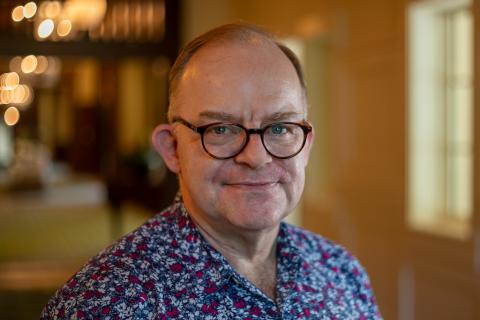
Charles Laughlin
VerifiedUniversity of Virginia · East Asian Studies
Active 1995–2023
About
Charles Laughlin is a Professor of East Asian Studies, specializing in Chinese and East Asian literature. Born and raised in Minneapolis, he earned his BA in Chinese Language and Literature from the University of Minnesota, including study abroad at Nankai University in Tianjin, China. He completed his MA, MPhil, and PhD in Chinese Literature at Columbia University, working under C.T. Hsia and David Wang. His research focuses on literary renditions of reality, including reportage, essays, and independent documentary film-making, with a particular interest in revolutionary and socialist literature from the Republican period to the Cultural Revolution. Laughlin's academic career includes ten years at Yale University, where he taught modern Chinese literature and co-taught a course with poet Zheng Chouyu. He has been actively involved in language learning initiatives, notably directing the Richard U. Light Fellowships for East Asian Language Study at Yale, which supported nearly 1,000 students. He also served as the first director of the PKU-Yale Joint Undergraduate Program at Beijing University and as director of the Inter-University Program for Chinese Language Studies at Tsinghua University. His engagement with Chinese language outreach and academic exchange has been complemented by participation in the National Committee on US-China Relations' Public Intellectuals Program. Since joining the University of Virginia in 2010, he continues to contribute to Chinese studies, sharing his expertise and fostering growth in the field.
Research topics
- History
- Sociology
- Aesthetics
- Literature
- Art
Selected publications
Reportage and the Forms of Nonfiction Art in China
2023-06-21
book-chapter1st authorCorrespondingWhen an externally introduced cultural or literary practice takes hold in a new culture, it is because the receiving culture has an existing capacity or tendency that the practice can serve and amplify; this is the case with Chinese reportage. All the different manifestations of reportage throughout the twentieth and twenty-first centuries serve as an artistic sounding board for leftist politics and a perceived need to talk back to mainstream media discourses. One may debate in many cases the degree to which artistic qualities are a concern, but it should be emphasized that style matters in all kinds of Chinese writing. The visual forms in particular lend themselves to transcultural cross-fertilization, where the conditions make it possible, such as through regional documentary film festivals in Yamagata, Pusan, Hong Kong, and Taipei, as well as international art and photography exhibitions.
Chinese Literature and Thought Today · 2023-12-01
article1st authorCorrespondingThis essay examines Yingjin Zhang’s scholarly commentary on the practice of nonfictional artistic creation under the names of reportage (baogao wenxue) and (independent) documentary film (duli jilupian). Though reportage and documentary film adopt differing media of writing, moving images, and sound, I use two key articles by Zhang, published twenty-four years apart, to argue that Zhang identifies fundamental kinships between reportage and documentary (and other visual forms, like photography). Zhang’s work shows that nonfiction texts and images play a particularly important role in the formation and development of modern Chinese culture, and their further study offers us a deeper understanding of that culture and the unique workings of realism within it.
Mapping Modern Beijing: Space, Emotion, Literary Topography
Prism · 2020-03-01 · 1 citations
articleOpen access1st authorCorrespondingThe study of urban literature, or of the city in literature, in the case of China has seen important studies, such as Leo Ou-fan Lee's Shanghai Modern: The Flowering of a New Urban Culture in China, 1930–1945 (1999) and Yingjin Zhang's The City in Modern Chinese Literature and Film: Configurations of Space, Time, and Gender (1996). Zhang's book devotes substantial attention to Beijing, particularly in reference to two writers featured in Weijie Song's book as well: Lao She 老舍 (1899–1966) and Zhang Henshui 張恨水 (1895–1967). Song, however, devotes his entire book to Beijing, a much needed development, and he also expands the scope beyond canonic works of the Republican period to include sinophone perspectives from Taiwan and Hong Kong, as well as images created by foreign or transcultural figures such as Lin Yutang 林語堂 (1895–1976), Princess Der Ling 裕德齡 (1885–1944), and Victor Segalen. This has the effect of creating more of a kaleidoscope of images of Beijing than a unified, archetypal image, which is appropriate to a transcultural, dialogic approach.Song divides his book into a theoretical introduction followed by five chapters focusing on different authors or groups of authors. Chapter 1, “A Warped Hometown: Lao She and the Beijing Complex,” discusses Lao She's major works (including those from after 1949) from the perspective of the author's affective take on the city of Beijing; chapter 2, “Urban Snapshots and Manners: Zhang Henshui and the Beijing Dream,” situates the traditional-style modern popular novelist Zhang Henshui between opposing temporalities of the “snapshot” and the “novel of manners”; chapter 3, “The Aesthetic versus the Political: Lin Huiyin and the City,” takes an interdisciplinary approach to the Beijing School polymath Lin Huiyin 林徽因 (1904–1955), whose poetry and architectural writing, not to speak of her crucial role as literary salon hostess, situate her between literary images and the actual physical configurations of the city's legacy; chapter 4, “A Comparative Imperial Capital: Lin Yutang, Princess Der Ling, Victor Segalen, and the Views from Near and Afar,” focuses the discourse on images of Beijing and particularly the Forbidden City (the “Great Within”) that demonstrate the differences created by ambiguous cultural identity or alterity, Orientalism, and cosmopolitanism but also limitations of local knowledge and experience; finally, chapter 5, “A Displaced City and Postmemory: Relocating Beijing in Sinophone Writing,” examines Beijing as the object of memory or longing from afar, particularly in the works of Taiwan and Hong Kong writers like Liang Shiqiu 梁實秋, Zhong Lihe 鍾理和, Lin Haiyin 林海音, and Jin Yong 金庸. These chapters are followed by an epilogue titled “Beijing and Beyond,” which though brief is densely packed with a comprehensive overview of other urban literature from mainland China besides that of Beijing, as well as images of Beijing in literature from after 1949, in mainland China, Hong Kong, and Taiwan.Song's introduction sets up the argument as a study of the literary configuration of space: “I aim to explore the literary topography of space and emotion, the (de)formation of modern subjectivity, individual desire and collective consciousness, political conflicts and historical violence, as well as nationalist sentiments and cultural memories centering around the ancient capital and modern city, which has framed the material infrastructures, human conditions, mental images, political regimes, cultural identities, and literary imaginations from the late Imperial and Republican periods to the Cold War era and after” (2). If the author seems unable to say enough in stating his objectives, it is characteristic of his writing style throughout the work; many of his sentences strike out in multiple directions simultaneously, and thus it takes some time to discern the configuration of his argument in the book as a whole.The introduction presents a rich overview of ideas in comparative literature and culture related to the city and its subjective impact as conveyed through writing and literature throughout Chinese history. Song focuses in particular on Raymond Williams's formulation of a “structure of feeling” and through other emotion-oriented theory segues to the meaning and history of the Chinese terminology of emotion or feeling (qing 情) and its relation to literature. Song is traveling over familiar territory here but places unusual emphasis on the relationship of space to experience, emotion, and memory as the approach he will take to the modern literary renditions of Beijing to be examined. The argument is tied together in the form of “five methods of imagining Beijing,” which correspond neatly to the above-mentioned chapters: (1) a “warped hometown,” (2) a “city of snapshots and manners,” (3) “an aesthetic city,” (4) “an imperial capital in comparative and cross-cultural perspective,” and (4) “a displaced and relocated city on the Sinophone and diasporic postmemory” (15), which brings him into a section of eloquent summaries of the subsequent chapters for the rest of the introduction.For each chapter, Song usually fixes on a central idea or tension, such as “warped,” “ide(c)ology” (I think the typesetting transformed the (c) into a ©, which was confusing), “snapshots and manners,” and “postmemory,” but these various keywords do not cohere in an overarching theoretical framework. Song's choices of examples are significantly diverse, demonstrating that he is not at all endeavoring to “capture” Beijing as an easily definable aesthetic object, and yet the themes of ancientness, of relative cultural purity vis-à-vis Shanghai and other treaty ports, of Beijing's embodiment of certain positive and negative but ancient traits of Chinese civilization, and of its apathetic immobility do come through in many of Song's examples. If the argument is organized on the basis of a kind of literary spatial discourse, it is evident only in certain moments of certain chapters. For example, when Song elaborates on the “ghost house” (haunted house?) of Yang Xingyuan in Zhang Henshui's novel Chunming waishi 春明外史 (Unofficial History of Beijing), especially asserting that “Xingyuan's ‘ghost house’ represents an alternative type of private, familial space that accommodates a new mode of enlightenment subjectivity and sociality in modern Chinese cities” (90), he is engaging brilliantly in what I would call spatial reading: he is articulating the special kinds of meaning generated by a unique, subjectively defined, and idiosyncratic space that can be said to define (in this case) Zhang Henshui's literary articulation of Beijing. A similar example is how the character Leng Qingqiu in another novel by Zhang Henshui, Jinfen shijia 金粉世家 (Grand Old Family), generates her own unique spaces: “The enclosed enclaves or historical sites in the city and within the Jin mansion constitute nurturing spaces for her to rejuvenate her mind and attain a sense of independence: the small house in the hidden historical alley where she grows up, the attic in the garden of the Jin mansion where she retreats, the secluded street at the margin of the city where she sells her calligraphy to make a living after fleeing from the grand old family in the fire” (105). Such vivification of space is evident too in the poetry of Lin Huiyin on the details of Beijing's physicality, presented in fluent translation (accompanied by the original Chinese texts): And whosmiles like the spins of thousands of Aeolian bells,from the eaves of every level of the glazed pagodawaving abovecloudy sky? (124)orNo wonder this flat expanse of tender grey sky, this skeptic springwants the mud-yellow sandstorm, trailing along the white plaster alleys,to once more bow its head and search for that lost romanceamong the indigo curtains, swastika-pattern balusters, and thresholds of old shops. (127)Song's reading even of characters in Jin Yong's martial arts novels, such as Yuan Chengzhi getting lost in the “intricate maze” of the Forbidden City (233), which resonates interestingly with the claustrophobic terror with which the narrator of Victor Segalen's Rene Leys imagines the underground city beneath the Forbidden City, shows such glimmers of brilliance.The inclusion of Lin Huiyin with the necessary extraliterary content is one of the greatest contributions of this book. Lin is discussed briefly throughout scholarship on modern Chinese literature, architecture, and history, but this book was an excellent opportunity to designate the important place for her in the cultural scene she deserves without having been a prolific literary author. The same can be said for the discussion of Zhang Henshui, so often marginalized for his “popular” profile and traditional style while only beginning to be studied as one of the major creators of modern Chinese culture. Liang Shiqiu's extensive essay writing on culinary culture (especially of Beijing) also gets short shrift in scholarship, and Song's book creates a context in which an important part of Liang's influence can be discerned. The same could be said for the fascinating sections on Princess Der Ling and Victor Segalen.In sum, this book is of great value to the evolving study of modern and contemporary Chinese culture, particularly in responding to recent emphases on global and cosmopolitan perspectives and intercultural interactions, but also in creating a context in which to showcase major cultural figures who have not necessarily gotten the attention they deserve.
CHAPTER 27 MODERN LITERARY ANTHOLOGIES
Columbia University Press eBooks · 2020-12-31
book-chapter1st authorCorresponding2020-11-20 · 2 citations
book1st authorCorrespondingChinese Reportage details for the first time in English the creation and evolution of a distinctive literary genre in twentieth-century China. Reportage literature, while sharing traditional journalism's commitment to the accurate, nonfictional portrayal of experience, was largely produced by authors outside the official news media. In identifying the literary merit of this genre and establishing its significance in China's leftist cultural legacy, Charles A. Laughlin reveals important biases that impede Western understanding of China and, at the same time, supplies an essential chapter in Chinese cultural history.Laughlin traces the roots of reportage (or baogao wenxue) to the travel literature of the Qing Dynasty but shows that its flourishing was part of the growth of Chinese communism in the twentieth century. In a modern Asian context critical of capitalism and imperialism, reportage offered the promise of radicalizing writers through a new method of literary practice and the hope that this kind of writing could in turn contribute to social revolution and China's national self-realization. Chinese Reportage explores the wide range of social engagement depicted in this literature: witnessing historic events unfolding on city streets; experiencing brutal working conditions in 1930s Shanghai factories; struggling in the battlefields and trenches of the war of resistance against Japan, the civil war, and the Korean war; and participating in revolutionary rural, social, and economic transformation. Laughlin's close readings emphasize the literary construction of social space over that of character and narrative structure, a method that brings out the critique of individualism and humanism underlying the genre's aesthetics.Chinese Reportage recaptures a critical aspect of leftist culture in China with far-reaching implications for historians and sociologists as well as literary scholars
Narrative Subjectivity and the Production of Social Space in Chinese Reportage
2020-11-26
book-chapter1st authorCorrespondingRevolution Plus Love in Village China:
Hong Kong University Press eBooks · 2019-11-16
book-chapter1st authorCorrespondingRevolution Plus Love in Village China
Hong Kong University Press eBooks · 2019-11-01
book-chapter1st authorCorrespondingThis chapter compares Zhao Shuli’s novel <italic>Sanliwan Village</italic> (1955) to its 1957 screen adaptation <italic>Huahao yueyuan</italic> (Happily Ever After, dir. Guo Wei), emphasizing how the work’s humorous aspects are enhanced by the cinematic medium through lively performance, visual negotiations of social space and romantic tension. The chapter uses the problem of leisure under socialism as a point of departure, looking at Zhao Shuli’s story both as a representation of emotionally rich social life in contemporary China and as an object of leisurely enjoyment by itself. Placing the film in the context of film comedies that emerged in the “Hundred Flowers Campaign,” it demonstrates how romantic tension can be used to humanize and ameliorate political struggle, marking a continuation of the debate on Revolution + Love in late 1920s fiction.
Chinese Literature Today · 2019-07-03 · 1 citations
article1st authorCorrespondingThere has been considerable attention in recent years to Chinese foreign economic relations as a result of the Belt-Road Initiative. China engages with emerging economies as a leader in rapid economic development and as an investor, employer, and a resource consumer. This intersects with current discussions of Chinese conceptions of world order, including prominent debates about the ancient notion of tianxia (“all under heaven”) and its relevance to China’s contemporary aspirational world view. Essays written by Chinese authors in the 1950s and early 1960s who traveled to Third World countries at the time articulate visions of China’s place in the world in concrete images and vivid emotions. This is examined within the broader context of Chinese travel writing and how, especially in the early modern and modern periods, travel writing has been used as a lens for Chinese self-imagining in the world context.
The Revolutionary Imagination in Chinese Studies in America
Chinese Literature Today · 2019-07-03
articleSenior authorIn this interview, Charles Laughlin talks with Zhang Fang about his graduate studies with C.T. Hsia and David Der-wei Wang; his research on reportage literature; desire and politics in Red Classics; and Chinese Studies as a discipline in the United States. The original interview was published in Cultural Studies (Wenhua yanjiu 文化研究) no. 4 (2016): 75–84.
Frequent coauthors
- 1 shared
Xueqing Xu
Shanghai Astronomical Observatory
- 1 shared
Fei Ge
Kunming Medical University
- 1 shared
Yingjin Zhang
Northeast Electric Power University
- 1 shared
Amy D. Dooling
- 1 shared
Lawrence Wang-chi Wong
- 1 shared
Xiaobing Tang
- 1 shared
Xu Zechen
- 1 shared
Susan Daruvala
Awards & honors
- Richard U. Light Fellowships for East Asian Language Study
- First director of the PKU-Yale Joint Undergraduate Program
- Selected to participate in the second cohort of the National…
- Resume-aware match score
- Save to shortlist
- AI-drafted outreach
See your match with Charles Laughlin
PhdFit ranks faculty by your research interests, methods, and publications — grounded in their actual work, not templates.
- Free to start
- No credit card
- 30-second signup