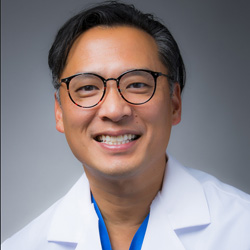
Chan W. Park
· Associate Professor (Otolaryngology)VerifiedRutgers University · Neurological Surgery
Active 2005–2024
About
Professor Chan W. Park is a faculty member at Rutgers New Jersey Medical School in the Department of Otolaryngology. He is the Director of Transoral Robotic Cancer Surgery and the Director of Head and Neck Microvascular Reconstructive Surgery. Dr. Park graduated with a medical degree from The University of North Carolina at Chapel Hill in 2007 and completed his residency in Otolaryngology at Mount Sinai Hospital in NYC in 2012, where he was a Chief Resident. He further specialized through fellowship training in cancer surgery via the American Head and Neck Society in 2013. Since joining Rutgers in 2013 as an Assistant Professor, Dr. Park has initiated the Microvascular Reconstructive Residency Program in New Jersey and has been affiliated with multiple medical centers including Hackensack University Medical Center and Saint Barnabas Medical Center. He was promoted to Associate Professor in 2018. His clinical interests include head and neck cancer, microvascular reconstructive surgery, salivary gland disease, thyroid and parathyroid disease, and transoral robotic surgery (TORS). He has been recognized for his contributions by being named the Director of TORS and Microvascular Reconstructive Surgery at Rutgers NJMS. Dr. Park is also a prolific researcher with over 120 abstracts and 60 peer-reviewed journal articles, along with several book chapters. His research focuses on head and neck cancer, microvascular reconstructive surgery, robotic surgery, and image-guided surgery. He has given numerous talks at local, national, and international meetings and has served on national committees through the American Academy of Otolaryngology/Head and Neck Surgery.
Research topics
- Computer science
- Artificial intelligence
- Physics
- Algorithm
- Mathematics
Selected publications
Publications of the Astronomical Society of the Pacific · 2023 · 114 citations
- Physics
- Astronomy
- Remote sensing
Abstract The James Webb Space Telescope (JWST) is a large, infrared space telescope that has recently started its science program which will enable breakthroughs in astrophysics and planetary science. Notably, JWST will provide the very first observations of the earliest luminous objects in the universe and start a new era of exoplanet atmospheric characterization. This transformative science is enabled by a 6.6 m telescope that is passively cooled with a 5 layer sunshield. The primary mirror is comprised of 18 controllable, low areal density hexagonal segments, that were aligned and phased relative to each other in orbit using innovative image-based wave front sensing and control algorithms. This revolutionary telescope took more than two decades to develop with a widely distributed team across engineering disciplines. We present an overview of the telescope requirements, architecture, development, superb on-orbit performance, and lessons learned. JWST successfully demonstrates a segmented aperture space telescope and establishes a path to building even larger space telescopes.
The James Webb Space Telescope Mission
Publications of the Astronomical Society of the Pacific · 2023 · 439 citations
- Computer Science
- Astronomy
- Physics
Abstract Twenty-six years ago a small committee report, building on earlier studies, expounded a compelling and poetic vision for the future of astronomy, calling for an infrared-optimized space telescope with an aperture of at least 4 m. With the support of their governments in the US, Europe, and Canada, 20,000 people realized that vision as the 6.5 m James Webb Space Telescope. A generation of astronomers will celebrate their accomplishments for the life of the mission, potentially as long as 20 yr, and beyond. This report and the scientific discoveries that follow are extended thank-you notes to the 20,000 team members. The telescope is working perfectly, with much better image quality than expected. In this and accompanying papers, we give a brief history, describe the observatory, outline its objectives and current observing program, and discuss the inventions and people who made it possible. We cite detailed reports on the design and the measured performance on orbit.
The Science Performance of JWST as Characterized in Commissioning
Publications of the Astronomical Society of the Pacific · 2023 · 405 citations
- Computer Science
- Astrobiology
- Remote sensing
Abstract This paper characterizes the actual science performance of the James Webb Space Telescope (JWST), as determined from the six month commissioning period. We summarize the performance of the spacecraft, telescope, science instruments, and ground system, with an emphasis on differences from pre-launch expectations. Commissioning has made clear that JWST is fully capable of achieving the discoveries for which it was built. Moreover, almost across the board, the science performance of JWST is better than expected; in most cases, JWST will go deeper faster than expected. The telescope and instrument suite have demonstrated the sensitivity, stability, image quality, and spectral range that are necessary to transform our understanding of the cosmos through observations spanning from near-earth asteroids to the most distant galaxies.
The Science Performance of JWST as Characterized in Commissioning
arXiv (Cornell University) · 2022 · 27 citations
- Computer Science
- Computer Science
- Astrobiology
This paper characterizes the actual science performance of the James Webb Space Telescope (JWST), as determined from the six month commissioning period. We summarize the performance of the spacecraft, telescope, science instruments, and ground system, with an emphasis on differences from pre-launch expectations. Commissioning has made clear that JWST is fully capable of achieving the discoveries for which it was built. Moreover, almost across the board, the science performance of JWST is better than expected; in most cases, JWST will go deeper faster than expected. The telescope and instrument suite have demonstrated the sensitivity, stability, image quality, and spectral range that are necessary to transform our understanding of the cosmos through observations spanning from near-earth asteroids to the most distant galaxies.
Frequent coauthors
- 18 shared
Yingda L. Xie
- 16 shared
David Elson
Rutgers New Jersey Medical School
- 14 shared
David Alland
Rutgers, The State University of New Jersey
- 12 shared
Samuel Desind
Rutgers New Jersey Medical School
- 12 shared
Naranjargal Daivaa
Rutgers New Jersey Medical School
- 12 shared
Padmapriya P. Banada
Rutgers New Jersey Medical School
- 9 shared
Michelle Huynh
Banaras Hindu University
- 9 shared
Marc Levis‐Fitzgerald
University of California, Los Angeles
Education
- 2007
M.D.
The University of North Carolina at Chapel Hill
- 2002
B.S., Biology and Chemistry
The University of North Carolina at Chapel Hill
Awards & honors
- Fellowship trained in Head and Neck Surgery through the Amer…
- Named Director of Trans Oral Robotic Surgery (TORS) at Rutge…
- Named Director of Microvascular Reconstructive Surgery at Ru…
Similar researchers at Rutgers University
- Resume-aware match score
- Save to shortlist
- AI-drafted outreach
See your match with Chan W. Park
PhdFit ranks faculty by your research interests, methods, and publications — grounded in their actual work, not templates.
- Free to start
- No credit card
- 30-second signup