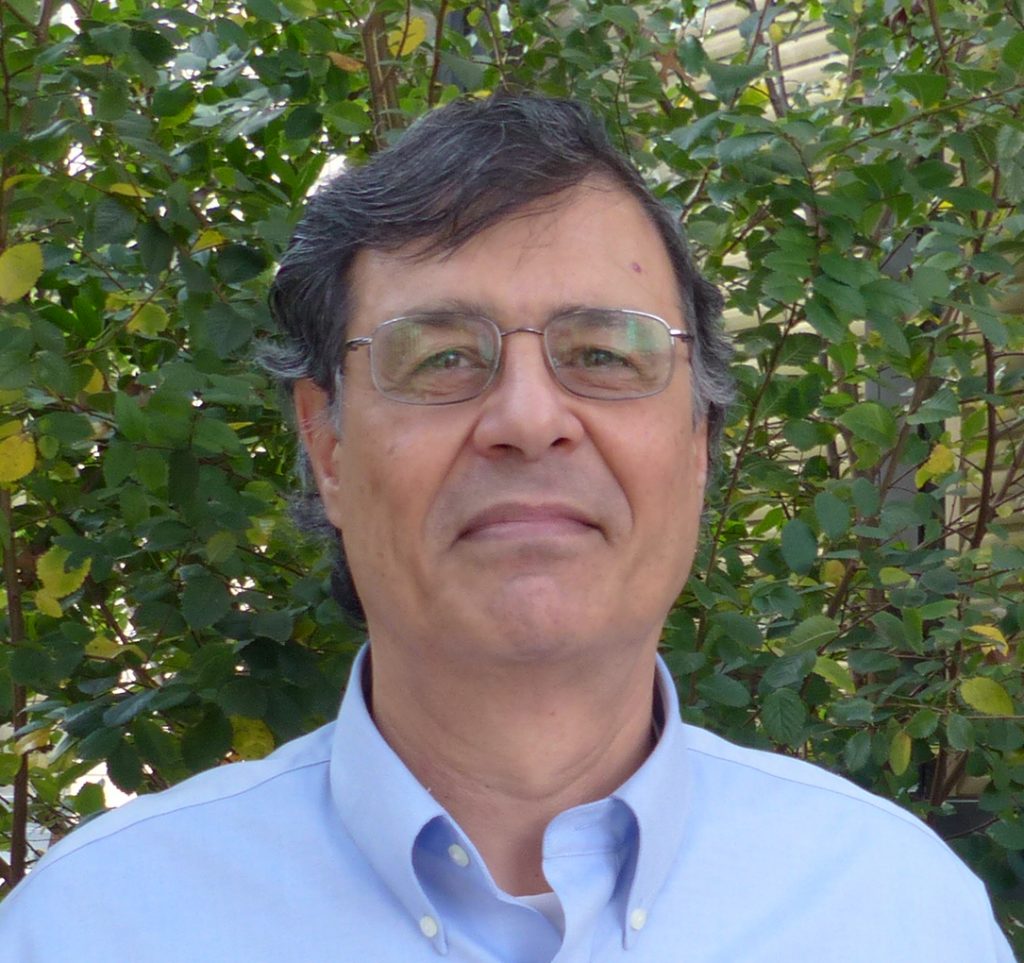
Cemal Pulak
· ProfessorVerifiedTexas A&M University · Anthropology
Active 1984–2026
About
Cemal Pulak is a Professor in the Department of Anthropology at Texas A&M University, where he is part of the Frederick R. Mayer Faculty. His research areas include Nautical Archaeology, maritime trade, seafaring, and the nautical archaeology of the eastern Mediterranean and the Aegean. He earned his PhD from Texas A&M University in 1996. Pulak has contributed extensively to the study of Late Bronze Age maritime trade and shipwrecks, with notable work on the Uluburun Shipwreck and shipwrecks from the Theodosian Harbor excavations at Yenikapı in Istanbul, Turkey. His publications reflect a focus on Byzantine shipbuilding, ancient trade routes, and maritime technology, making significant contributions to the understanding of ancient seafaring and maritime archaeology.
Research topics
- Materials science
- Metallurgy
- Geology
- Geochemistry
- Business
- Ancient history
- History
- Geography
- Archaeology
- Mineralogy
Selected publications
Journal of Archaeological Science · 2026-02-17
articleOpen accessLacking substantial local tin deposits after 2000 BC, the Eastern Mediterranean depended on the importation of large quantities of tin from extraneous sources. Situated roughly equidistant (ca. 3000 km) between the large tin deposits of Western Europe and Central Asia, both localities have been proposed as potential sources of tin metal used in Eastern Mediterranean bronze production. However, such speculation must be substantiated. Herein, we assert that the application of a central-tendency-based approach to the comparison of tin isotope analyses of artifact assemblages with those of tin ores is an effective approach to differentiating between Central Asian and European tin sources in both pure tin metal and tin alloys. We apply the TIA approach to the reinterpretation of existing tin isotope analyses of tin ingots and introduce a large body of new evidence drawn from tin isotopes analysis of ancient (2000-900 BC) bronze artifacts from the Black Sea coast of Bulgaria, Tell Atchana in the Amuq Valley of Turkey, the eastern part of the northern Adriatic/Istria and Kvarner (Croatia), Egypt and Peloponnese, Greece. A general chronological trend from high δSn in artifacts dating to 2000-1600 BC to moderate values in the Early Iron Age (1100-900 BC) indicate a gradual shift from tin dominated by Central Asian imports to tin derived from European deposits. These changes in the movement of tin are mirrored in other traceable commodities such as Baltic amber and glass. • Average δSn of surface ores better reflect composition of associated artifacts than δSn ranges. • Average δSn of Central Asian and European tin ores are distinct and can be used in provenance studies. • Tin imports into the Eastern Mediterranean region in the EBA (2000-1600 BC) were derived from Asia. • European tin imports into the region increased progressively from 1600 to 900 BC.
Copper for the early oxhide ingots traced to the South Urals
Journal of Archaeological Science Reports · 2024-05-10 · 1 citations
articleSenior authorRSC Advances · 2024-01-01 · 5 citations
articleOpen accessA new analytical method based on GC-QToF-MS is proposed for the enhanced characterisation and identification of mastic ( Pistacia sp.) resin in archaeological samples. New insights into the use of mastic in ancient Egypt are provided.
SSRN Electronic Journal · 2023-01-01
preprintOpen accessAn Asian Origin for the Oxhide Form for Ingots
SSRN Electronic Journal · 2023-01-01
preprintOpen accessSenior authorGlass ingots from the Uluburun shipwreck: Glass by the batch in the Late Bronze Age
Journal of Archaeological Science Reports · 2022-02-07 · 21 citations
articleOpen accessThe glass ingots from the Late Bronze Age Uluburun shipwreck (ca. 1300 BCE) provide crucial insight into Late Bronze Age glass production and exchange in the Mediterranean. Almost all of the approximately 200 glass ingots on board the ship were sampled as well as five of the 30 Mycenaean glass relief beads. Here we report the full chemical compositional results for these samples, along with 49 strontium isotope analyses representing at least 48 separate glass ingots. We include as well 355 unpublished analyses of Late Bronze Age Egyptian, Mesopotamian, Levantine, and Aegean glasses; these represent a total of 222 different objects since many of the core-formed vessel fragments are polychrome and each color was analysed separately. The results suggest that the Uluburun glass ingots were produced in as few as 28 discrete production events or batches. The largest batch included at least 16 ingots representing 40 kg of glass with a chemical composition as perfectly uniform as could be determined by our LA-ICP-MS analyses. Cluster analysis and comparison of Ti/Cr and Li/Zr ratios indicate that all of the ingots are Egyptian glass. In addition, based on this new dataset we have identified the first Egyptian glasses to be found at Mesopotamian sites as well as several examples of Mesopotamian glass used to produce Egyptian objects. The Mycenaean glass relief beads on board the ship were also produced with Egyptian glass, although in this case more similar to glass from Amarna than to the Uluburun ingots. These results, coupled with our finding that glass almost identical to ingots found on the ship was used to produce several of the unprovenanced Mycenaean relief beads from museum collections, presents a picture of overall technological continuity combined with geographic flexibility at the end of the Amarna Period in Egypt.
SSRN Electronic Journal · 2022-01-01
articleOpen accessSSRN Electronic Journal · 2022-01-01
articleOpen accessScience Advances · 2022 · 35 citations
- Archaeology
- Geography
- Ancient history
This paper provides the first comprehensive sourcing analysis of the tin ingots carried by the well-known Late Bronze Age shipwreck found off the Turkish coast at Uluburun (ca. 1320 BCE). Using lead isotope, trace element, and tin isotope analyses, this study demonstrates that ores from Central Asia (Uzbekistan and Tajikistan) were used to produce one-third of the Uluburun tin ingots. The remaining two-thirds were derived from the Taurus Mountains of Turkey, namely, from stream tin and residual low-grade mineralization remaining after extensive exploitation in the Early Bronze Age. The results of our metallurgical analysis, along with archaeological and textual data, illustrate that a culturally diverse, multiregional, and multivector system underpinned Eurasian tin exchange during the Late Bronze Age. The demonstrable scale of this connectivity reveals a vast and disparate network that relied as much on the participation of small regional communities as on supposedly hegemonic institutions of large, centralized states.
Journal of Archaeological Science Reports · 2022-08-13 · 6 citations
articleOpen accessOur recent LA-ICP-MS analyses of glass ingots from the Uluburun shipwreck along with additional samples from Egyptian sites, primarily Amarna, encourage us to question how and where the ingots were produced. Because almost all the approximately 200 glass ingots are either greenish blue, colored by copper, or purplish blue, colored by cobalt, we focus here on these colorants and their attendant trace elements. Based on the evidence for copper and antimony in cobalt-blue glass, we conclude that the most likely explanation is the addition of glass cullet during ingot production, in accordance with suggested evidence from glassmaking texts thought to date to the Late Bronze Age. By comparing the Uluburun ingots with glass from Amarna using multivariate statistics and trace element ratios, we determine that while a few of the ingots might be consistent with Amarna manufacture, the great majority are not, but rather represent production from other workshops, probably following those at Amarna. The importance of these workshops is suggested by our finding that over half of the cobalt-blue Mycenaean relief beads for which trace element data is available were made with Egyptian glass closer to that of the Uluburun ingots than to glass found at Amarna.
Frequent coauthors
- 14 shared
Wayne Powell
- 10 shared
Bernard Gratuze
Université d'Orléans
- 8 shared
James Lankton
- 7 shared
Gojko Barjamovic
Harvard University
- 6 shared
K. Aslıhan Yener
- 5 shared
Ryan Mathur
- 5 shared
George F. Bass
- 4 shared
Michael Jones
Labs
Nautical Archaeology & ConservationPI
- Resume-aware match score
- Save to shortlist
- AI-drafted outreach
See your match with Cemal Pulak
PhdFit ranks faculty by your research interests, methods, and publications — grounded in their actual work, not templates.
- Free to start
- No credit card
- 30-second signup