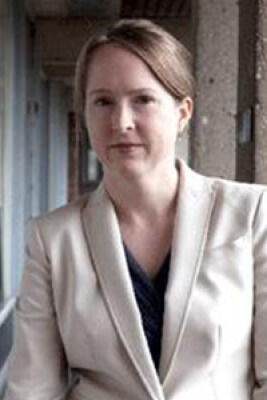
Ann Pearson
· Murray and Martha Ross Professor of Environmental Sciences; Affiliate in Environmental Science & EngineeringVerifiedHarvard University · Environmental Science & Engineering
Active 1989–2025
About
Ann Pearson is the Murray and Martha Ross Professor of Environmental Sciences at Harvard University and an affiliate in Environmental Science & Engineering. Her primary teaching areas include Environmental Science & Engineering, with research focusing on biogeochemical cycles, climate change, and oceanography. She is associated with the Harvard John A. Paulson School of Engineering and Applied Sciences, located at 150 Western Ave, Allston, MA, and also has a presence at 29 Oxford Street, Cambridge, MA. Her work involves studying the interactions within Earth's environmental systems, contributing to understanding the impacts of climate change and the dynamics of biogeochemical processes.
Research topics
- Environmental science
- Geology
- Biology
- Paleontology
- Chemistry
- Astrobiology
- Ecology
- Atmospheric sciences
- Oceanography
- Philosophy
Selected publications
Geochimica et Cosmochimica Acta · 2025-08-18 · 1 citations
articleSenior authorMarine burial of terrestrial organic carbon modulates past warm climates
Research Square · 2025-09-03
preprintOpen accessOxidation Camouflages Terrestrial Organic Matter to Appear Marine-like
Environmental Science & Technology · 2025-03-14 · 17 citations
articleOpen accessC enrichment of 4 to 9‰). This challenges the validity of conventional two-endmember mixing models, suggesting that a much larger fraction than previously estimated of the organic matter found in the ocean may originate from terrestrial sources, impacting global models of carbon cycling and sequestration.
Carbon-Climate Coupling Dynamics Revealed by Decadal-Resolution Middle Miocene Records
2025-03-14
preprintOpen accessSenior authorCorrespondingContemporary global warming is known to lag behind the rapid increase in atmospheric CO2 levels. This delay, largely due to heat uptake and storage in the vast ocean interior, remains one of the key uncertainties in projecting climate change in future decades. Here, we present decadal-resolution paleoclimate reconstructions of atmospheric CO2 and temperature to evaluate the carbon-climate coupling dynamics over an approximately 700-year time window of the middle Miocene, 16 million years ago. The middle Miocene is characterized by perturbations in the global carbon cycle caused by volcanic degassing, and global warming of about 6ºC relative to today. By analyzing fossil leaves and lipid biomarkers from the annually-varved Clarkia Lake deposit in Idaho, USA, we establish concurrent and continuous CO2 and temperature records that capture short-term fluctuations superimposed on long-term warming and CO2 increasing trends. Statistical analysis shows that CO2 consistently lead temperature variation on a multi-decadal scale. Climate model emulators further confirm the role of ocean heat storage in shaping this delayed transient response. High temporal resolution reconstructions can provide constraints on Earth’s climate changes from a distant greenhouse world yet on societally relevant time scales, offering critical insights to improve our understanding of carbon-climate coupling dynamics. Such paleoclimate constraints are crucial for reducing uncertainties in projecting the near-term climate change under increasing CO2 levels.
Archaeal tetraether lipids as tracers for past marine environmental change
2025-11-25
preprintOpen accessArchaea are single-celled microorganisms that are abundant in marine environments and play a key role in the carbon and nitrogen cycles. Archaea can biosynthesize a wide variety of isoprenoid membrane lipids, including isoprenoid glycerol dibiphytanyl glycerol tetraethers (isoGDGTs). Experimental and empirical evidence demonstrates that the number of cyclopentane moieties in isoGDGTs is related to growth temperature, leading to the formulation and development of the TEX86 ocean temperature proxy. The TEX86 proxy has been widely applied to marine sediments spanning the last 190 million years and has revealed unique insights into the evolution of ocean temperatures over diverse timescales. Other indices have been developed using archaeal lipids to reconstruct ecological and biogeochemical processes that operate within the marine realm. However, several knowledge gaps limit the application of archaeal lipid-based proxies in modern and ancient marine environments. In this review, we critically assess the utility of archaeal lipids as tracers for (paleo)environmental change, with an emphasis on the TEX86 temperature proxy.
Biomaterials for organically generated habitats beyond Earth
Science Advances · 2025-07-02 · 1 citations
articleOpen accessSustaining life beyond Earth requires the creation of habitats, which is typically assumed to require costly transport of high-mass components from Earth. Here, we investigate an alternative approach based on in situ fabrication using biologically generated materials. We show that several common biomaterials are capable of blocking UV radiation, transmitting visible light, and maintaining pressure differences sufficient to permanently stabilize liquid H 2 O in a vacuum or low-pressure environment. As a proof of concept, we then demonstrate growth of eukaryotic green alga in a 3D printed PLA bioplastic habitat under Mars-relevant conditions of a 600 Pa CO 2 background atmosphere. Our results demonstrate that products of biology itself can be used to create habitats in extraterrestrial environments. This approach is scalable, sustainable, and plausibly could be extended to construction of human habitats in the future.
C <sub>40</sub> ALKENONES AS A POTENTIAL SEA SURFACE TEMPERATURE PROXY FOR THE CRETACEOUS
2025-01-01
articleTracking Photo-Oxidation Reactions of Aquatic Organic Matter Using Triple Oxygen Isotopes
ACS Earth and Space Chemistry · 2025-06-24 · 4 citations
articleThe three-isotope system of oxygen (16O, 17O, 18O) is a powerful tool to study environmental oxidation chemistry and cycling of oxygen-bearing species (e.g., sulfates, nitrates, carbonates, etc.). Despite its evident utility, little work has focused on extending the triple oxygen isotope (Δ’17O) tool to oxygen contained in organic matter (OM). This is largely due to methodological challenges with isolating OM-bound oxygen and preparing it for isotopic analysis. Herein, we report on a newly developed method for high-precision Δ’17O measurements of OM (Δ’17O precision of 0.020‰) and apply this technique to investigate partial photochemical oxidation of Suwannee River natural OM in air-equilibrated aquatic samples. Through this, we reveal that the oxygen isotope evolution of the Suwannee OM supports a model whereby OM partial photo-oxidation proceeds via one or more reactive oxygen intermediates. Our measurements further highlight the potential of triple oxygen isotope analyses on OM-bound oxygen to fingerprint OM oxidation pathways, redox chemistry, and source and synthesis reactions.
Sub-century Timescale Carbon-Climate Coupling Dynamics during Middle Miocene Volcanism
2025-01-01
articleSenior authorNitrogen Cycle Perturbation During the Paleocene-Eocene Thermal Maximum
2025-01-01
article
Recent grants
NSF · $516k · 2009–2012
NSF · $215k · 2008–2010
NSF · $332k · 2017–2020
Environmental Phylogeny, Physiology, and Evolutionary Significance of Polycyclic Triterpenoids
NSF · $280k · 2007–2010
NSF · $349k · 2014–2017
Frequent coauthors
- 144 shared
Felix J. Elling
Kiel University
- 86 shared
S. R. Shah
Air University
- 56 shared
Yuki Weber
- 53 shared
William D. Leavitt
- 47 shared
Timothy I. Eglinton
- 42 shared
Mark Pagani
Yale University
- 41 shared
Richard D. Pancost
The Open University
- 40 shared
Sarah J. Hurley
- Resume-aware match score
- Save to shortlist
- AI-drafted outreach
See your match with Ann Pearson
PhdFit ranks faculty by your research interests, methods, and publications — grounded in their actual work, not templates.
- Free to start
- No credit card
- 30-second signup