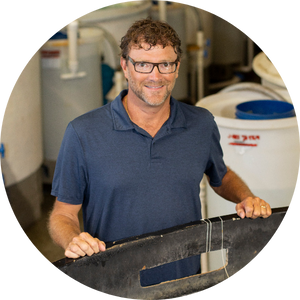
Cortney Ohs
· Associate Professor, Aquaculture Florida SeaGrant Affiliate FacultyVerifiedUniversity of Florida · Forest Resources and Conservation
Active 1998–2026
About
Dr. Cortney Ohs is a Professor of Aquaculture at the University of Florida Institute of Food and Agricultural Sciences Indian River Research and Education Center (UF/IFAS-IRREC) located in Fort Pierce, Florida. She leads one of the most extensive aquaculture programs in the state, focusing on both research and Extension programs. Her role involves managing and advancing aquaculture education and research initiatives within the UF/IFAS system, contributing significantly to the development of aquaculture curriculum and resources for educators worldwide through the Teach Aquaculture program.
Research topics
- Fishery
- Ecology
- Biology
- Geography
Selected publications
First evaluation of commercially available diets fed to juvenile Hogfish
North American Journal of Aquaculture · 2026-05-14
articleABSTRACT Objective The Hogfish Lachnolaimus maximus is a species that is new to aquaculture. They are naturally found on the western side of the Atlantic ocean, mostly in tropical waters. Fishing pressure has led to population declines across most of their range in North America. The development and refinement of aquaculture protocols for early juvenile grow-out of Hogfish would lead to a better understanding of the feasibility of commercial production and stock enhancement. Methods Two dietetics experiments were conducted to evaluate the commercially available dry diets (brands: Otohime and Purina AquaMax) and associated feeding rates for juvenile Hogfish to determine a feeding regime for early grow-out of this new aquaculture species. The mean Hogfish starting weights for two grow-out experiments were 0.28 ± 0.13 g (mean ± standard deviation) and 1.31 ± 0.88 g, respectively. The first experiment compared two commercially available diets that were fed at 6% body weight (BW)/d. A second experiment evaluated a single diet at feeding rates of 6% and 10% BW/d using the best performing diet from the first experiment. Results In the first experiment, significantly different values for final total length (4.41 ± 0.92 cm vs. 4.05 ± 0.77 cm [mean ± standard deviation]) were observed between the diets. Weights increased from 0.28 ± 0.13 g to 1.52 ± 1.06 g versus 1.13 ± 0.64 g but did not differ significantly between the diets. Survival between the fish that were fed with the two diets did not differ significantly at 68.5 ± 12.1% versus 56.0 ± 21.8%. In the second experiment, there were no significant differences in mean total length or weight and the fish grew from 1.31 ± 0.88 g to 5.70 ± 4.21 g. The survival rate of the fish that were fed 6% or 10% BW/d was identical (87.5%), indicating that a ration of 6% BW/d was sufficient. Conclusions Hogfish were able to be reared on commercially available diets from starting weights that were less than 0.5 g to final weights that were greater than 5 g, with survival rates that are promising for intensive production. This is the first published research evaluating feeding commercially available diets to early juvenile Hogfish.
Aquaculture Reports · 2025-08-23
articleOpen accessSenior authorCorrespondingSuccessful aquaculture of marine fish is reliant on feeding live food organisms to small larvae while maximizing survival. Currently most larvae are fed live rotifers and Artemia nauplii, and occasionally copepod nauplii. Larvae consume various zooplankton in the wild, including copepod nauplii, ciliates, and less commonly rotifers in their initial feeding stage. Research was conducted to define the dietary preferences of early larval stages of each fish species to improve aquaculture. This study used fluorescent microspheres to mark various prey organisms and then feed them to larvae. A fluorescent microscope was used to identify prey consumed by yellow domino damsel ( Dascyllus auripinnis ) larvae at 1 and 3 days post hatch (dph), spinecheek clownfish ( Amphiprion biaculeatus ) larvae at 0 dph, and pigfish ( Orthopristis chrysoptera ) larvae at 3 dph. Rotifers ( Brachionus rotundiformis ) were the least preferred by all fish species. Copepod nauplii ( Parvocalanus crassirostris ) were favored by yellow domino damsel larvae at 3 dph, spinecheek clownfish larvae at 0 dph and pigfish larvae at 3 dph, confirming their importance as a primary feed organism. Ciliates ( Euplotes sp.), a novel live food organism not commonly used in aquaculture, were preferred by yellow domino damsel larvae at 1 dph and 3 dph and spinecheek clownfish larvae at 0 dph, highlighting their potential as a valuable prey organism especially for larvae that cannot consume larger prey due to their small mouth gape. Variations in prey preferences by species at different developmental stages highlights the need for further research to investigate feeding novel prey organisms to enhance larval culture methods. ● Fluorescent microspheres marked copepod nauplii, rotifers, and ciliates and identified what marine fish larvae consumed. ● Rotifers were the least preferred prey organism at first feeding for three marine fish larvae. ● Marine fish larvae preferred ciliates and/or calanoid copepod nauplii at first feeding. ● Feeding preference of yellow domino damselfish larvae shifted during their first three days of development.
Evaluation of calcein marking protocols for Hogfish
North American Journal of Fisheries Management · 2025-07-08
articleABSTRACT Objective Hogfish Lachnolaimus maximus, popular as a sport and food fish, have historically experienced overfishing throughout portions of their range, prompting management agencies to seek interventions to support disrupted populations. Aquaculture and subsequent stock enhancement potentially support intervention efforts, but evaluations of stocking success first require effective assessment tools (e.g., mark–recapture experiments). Various marking methods are available, but their utility may be limited by cost, labor, and species-specific methodologies. Calcein is an efficient, nonlethal, fluorescent chemical marker that potentially addresses problems commonly associated with more traditional marking methods. Standard calcein marking practices use osmotic induction; however, protocols, marking efficacy, and retention may be specific to species and environment. Methods First, a trial was completed to determine the most efficient salinity pretreatment for the osmotic induction of calcein. A second trial determined the calcein concentration that resulted in the brightest mark. Two subsequent trials examined the effects of time and lighting scenarios on calcein mark retention. Results Osmotic induction experiments showed positive correlations between mark brightness, calcein concentration, and salinity pretreatment. Retention experiments suggested vulnerability of marks, with rapid degradation of mark brightness over 3 to 8 weeks. Conclusions These results, along with calcein’s current regulatory status, cast doubt on the viability of calcein as an external mark for stock assessment studies in Hogfish, although more research is needed to assess its viability in natural settings. The results from this research will help guide future aquaculture and stock enhancement efforts for Hogfish and add to the growing body of literature for this valuable marine species.
Developing larval nutrition protocols for Hogfish, a new candidate for marine finfish aquaculture
North American Journal of Aquaculture · 2025-04-01 · 6 citations
articleABSTRACT Objective Hogfish Lachnolaimus maximus are large wrasses native to the western Atlantic Ocean, including the Caribbean Sea and Gulf of Mexico. These fish are a popular recreational and commercial spearfishing target in Florida and fishing pressure has led to population declines over the past several decades. The development of aquaculture protocols for Hogfish would allow for commercial production to meet market demands while simultaneously creating opportunities for stock enhancement and wild population management. Methods First, the larval development and ontogeny of the digestive tract was examined during a 45-d trial. Digestive enzyme activities were analyzed using standard microplate spectrometric assays, and changes in digestive tract morphology were examined via histology. Two subsequent weaning trials were conducted to determine the appropriate types of feeds and timing of feed introduction during the larval period. Results Digestive tract maturation occurred by 24 d posthatch, indicated by rapid increases of trypsin and lipase and increased intestinal coiling and folding. Subsequent weaning trials determined that enriched rotifers should be offered to Hogfish larvae from 3 to 24 d posthatch, after which a microdiet can be introduced. Conclusions This study represents the first to investigate larval nutritional protocols for Hogfish, and results indicate that this species has a relatively brief larval period and is not dependent on copepod nauplii like many other pelagically spawning reef fish species. These results suggest that Hogfish are a promising candidate species for marine finfish aquaculture.
Characterizing Hogfish salinity tolerance for the development of low-salinity culture protocols
North American Journal of Aquaculture · 2025-04-01 · 1 citations
articleABSTRACT Objective The Hogfish Lachnolaimus maximus is a popular sport and food fish and has historically experienced overfishing in parts of its range. Hogfish are a new candidate for aquaculture, and culture techniques are in the early stages of development. Understanding the osmoregulatory capacity of aquaculture species is important, as salinity can influence metabolic rates, which can impact somatic growth and production efficiency. Low-salinity culture could lower production costs by reducing the need for artificial salt water and may enhance somatic growth by reducing metabolic energy for osmoregulation. Methods Four experiments were conducted to examine the osmoregulatory capacity of cultured Hogfish across various salinity regimes. Experiment 1 assessed fish survival after an acute transfer to six salinity levels from 0 to 32 g/L. Experiment 2 evaluated the physiological response of Hogfish to reduced salinity in a 96-h challenge at 8 and 16 g/L. The physiological effects of gradual salinity change from 32 to 12 g/L were determined in experiment 3. Lastly, experiment 4 assessed growth over 65 d at a salinity of 16 g/L. Results After acute transfer to lower salinity treatments, Hogfish survived at salinities of at least 8 g/L for 96 h; however, plasma chloride, plasma osmolality, and muscle water content were significantly altered at 8 g/L, and mortalities were noted during long-term retention at 8 g/L. Gradual transfer from 34 to 12 g/L yielded no significant physiological alterations compared with acute transfer to the same salinity for the physiological parameters measured. Growth indices for Hogfish cultured in 16 and 32 g/L were similar, though variance in metrics suggests a need for further exploration. Conclusions Hogfish should be tolerant of rapid transfer to salinities as low as 12 g/L, and growth may be unaffected when the fish are cultured at 16 g/L. Further research on feed types, lowering of feed conversion ratio values, and ontogeny of salinity tolerance is warranted.
SSRN Electronic Journal · 2025-01-01
preprintOpen access1st authorCorrespondingCandidate Species for Florida Aquaculture: American Horseshoe Crab Limulus polyphemus
EDIS · 2022-12-23
articleOpen accessSenior authorThe American horseshoe crab, Limulus polyphemus, is a member of the phylum Arthropoda, subphylum Chelicerata, and class Merostomata. Although there are four horseshoe crab species worldwide, the American horseshoe crab is primarily found in the Atlantic Ocean along the East Coast of North America. The species ranges from Maine to Mexico, but is absent between Texas in the United States and Tabasco in Mexico. They mainly inhabit estuarine areas; however, juveniles and adults can venture into the shallow oceanic environments. Embryo development occurs in the intertidal zone of sandy beaches. Sandy or muddy bottom habitats are necessary for burrowing and benthic feeding. This publication will cover their natural history, aquaculture techniques, common diseases, and their uses and markets.
North American Journal of Aquaculture · 2022-01-29 · 2 citations
articleOpen accessCorrespondingAbstract The Hogfish Lachnolaimus maximus is a high-value food fish with significant recreational and commercial fishing pressure and is a candidate species for marine aquaculture. There is a need to define safe and effective methods of anesthesia for handling of this species for aquaculture. Anesthesia efficacy was assessed with wild-collected adult (>20 cm; 0.2–1.2 kg) and juvenile F1 (<11 cm; 5–50 g) Hogfish by using tricaine methanesulfonate (Tricaine-S) at 25, 50, 100, 125, and 150 mg/L and AQUI-S 20E (10% eugenol) at 50, 75, 100, 200, 300, 400, and 500 mg/L to determine favorable doses for minor handling. Favorable doses resulted in induction of light anesthesia and recovery times each under 5 min, zero mortality, and limited excitation behavior. For adult Hogfish, Tricaine-S was effective at inducing light anesthesia at 100–150 mg/L and was preferred over the effective range of AQUI-S 20E doses (100–200 mg/L) based on fish behavioral observations while undergoing anesthesia. Additionally, induction of deep anesthesia was explored to inform potential doses for major and potentially lethal procedures. These same ranges were effective at inducing deep anesthesia in adults. Juvenile fish were effectively anesthetized at the same doses of Tricaine-S (100–150 mg/L) and were induced to light and deep anesthesia faster than adults at the same dose levels. AQUI-S 20E was effective at inducing light anesthesia in juveniles at all levels tested; however, no favorable dose for deep anesthesia was found. Overall, Hogfish were anesthetized with Tricaine-S at similar doses used with other species and responded to AQUI-S 20E similarly in terms of efficacy but unfavorably in terms of behavior.
North American Journal of Aquaculture · 2022-02-01 · 3 citations
articleCorrespondingAbstract Experiments were conducted on Guinean Fingerfish Monodactylus sebae to evaluate egg and larval stocking densities, stocking methods, water quality effects on egg hatching success, and the effects of different live food organisms on larval growth and survival. Egg hatching percentage was determined for four egg stocking densities (10, 20, 30, and 40 eggs/L). The lowest stocking density, 10 eggs/L, had a significantly higher mean hatching percentage (65.0 ± 18.54%) than the 30- and 40-eggs/L treatments but did not vary significantly from the 20-eggs/L treatment. Eggs were incubated in salinities of 0, 5, 10, 15, 20, 30, 40, 45, and 50 g/L to evaluate the effect on hatching success. The hatching success was over 70% for salinities of 0–30 g/L. The highest hatching success (98%) occurred in the 5-g/L treatment, and the 40- and 50-g/L treatments had significantly lower hatching success than all other treatments. Three live food organisms were fed to larvae to determine effects on growth and survival over a 9-d period. Diets were enriched rotifers Brachionus plicatilis, nauplii of the copepod Parvocalanus crassirostris, and nauplii of the copepod Pseudodiaptomus pelagicus fed at equal densities of 10 organisms/mL once daily. Larvae were stocked at 20 fish/L. At 9 d posthatch (dph), survival was not significantly different among treatments and larvae fed P. pelagicus had a significantly longer SL (mean ± SD = 4.28 ± 0.42 mm). Larvae were netted and exposed to air as a stressor at 6, 14, 22, 30, 38, and 46 dph for durations of 30, 60, 120, and 240 s. The 30-dph treatment had the lowest survival among all treatments regardless of experimental duration, followed by the 38-dph treatment. Results suggest that to avoid high handling mortality, Guinean Fingerfish should not be handled during metamorphosis (30–38 dph).
Candidate Species for Florida Aquaculture: Almaco Jack, Seriola rivoliana
EDIS · 2022-12-02 · 1 citations
articleOpen accessAlmaco jack, Seriola rivoliana, is a perciform within the order Perciformes, family Carangidae; which includes jacks and pompanos. They are members of the genus Seriola, a species of interest for aquaculture diversification worldwide. Like other commercially farmed Seriola species, almaco jack (also known as longfin yellowtail and kampachi) are fast growers, have a high market value, and are increasingly well-regarded among chefs for their versatility in both cooked and raw preparations. These characteristics, among others, have made them favorable candidates for both land-based and offshore aquaculture.
Frequent coauthors
- 97 shared
Matthew A. DiMaggio
University of Florida
- 58 shared
Jason S. Broach
- 33 shared
Scott W. Grabe
University of Florida
- 21 shared
R. LeRoy Creswell
- 19 shared
Louis R. D′Abramo
Mississippi State University
- 18 shared
Andrew L. Rhyne
Roger Williams University
- 17 shared
Eric J. Cassiano
University of Florida
- 14 shared
Craig A. Watson
University of Florida
Education
- 2003
PhD, Wildlife, Fisheries, Aquaculture
Mississippi State University
- 1995
MS, Wildlife, Fisheries, Aquaculture
Mississippi State University
- 1992
BS, Biology
Nebraska Wesleyan University
- Resume-aware match score
- Save to shortlist
- AI-drafted outreach
See your match with Cortney Ohs
PhdFit ranks faculty by your research interests, methods, and publications — grounded in their actual work, not templates.
- Free to start
- No credit card
- 30-second signup