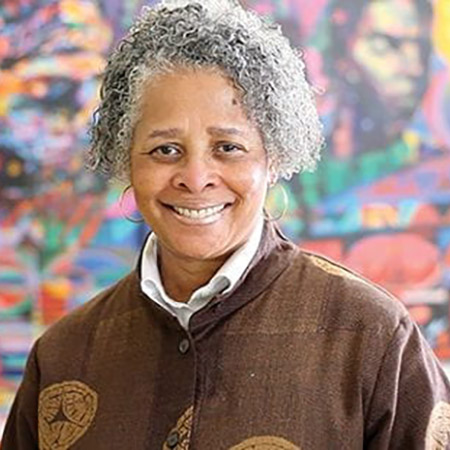
Carol D. Lee
· Professor Emeritus, Learning Sciences...Northwestern University · Social Policy Analysis and Evaluation
Active 1992–2024
Research topics
- Sociology
- Cognitive science
- Psychology
- Epistemology
- Philosophy
- Pedagogy
Selected publications
Rethinking Learning: What the Interdisciplinary Science Tells Us
Educational Researcher · 2021 · 125 citations
- Sociology
- Psychology
- Sociology
Theories of learning developed in education and psychology for the past 100 years are woefully inadequate to support the design of schools and classrooms that foster deep learning and equity. Needed is learning theory that can guide us in creating schools and classrooms where deep learning occurs, where learners’ full selves are engaged, and that disrupt existing patterns of inequality and oppression. In this article, we build on recent research in education, neuroscience, psychology, and anthropology to articulate a theory of learning that has the potential to move us toward that goal. We elaborate four key principles of learning: (1) learning is rooted in evolutionary, biological, and neurological systems; (2) learning is integrated with other developmental processes whereby the whole child (emotion, identity, cognition) must be taken into account; (3) learning is shaped in culturally organized practice across people’s lives; and (4) learning is experienced as embodied and coordinated through social interaction. Taken together, these principles help us understand learning in a way that foregrounds the range of community and cultural experiences people have throughout the life course and across the multiple settings of life and accounts for learning as set within systems of injustice.
Handbook of the Cultural Foundations of Learning
Routledge eBooks · 2020 · 209 citations
- Sociology
- Psychology
- Epistemology
Edited by a diverse group of expert collaborators, the Handbook of the Cultural Foundations of Learning is a landmark volume that brings together cutting-edge research examining learning as entailing inherently cultural processes. Conceptualizing culture as both a set of social practices and connected to learner identities, the chapters synthesize contemporary research in elaborating a new vision of the cultural nature of learning, moving beyond summary to reshape the field toward studies that situate culture in the learning sciences alongside equity of educational processes and outcomes. With the recent increased focus on culture and equity within the educational research community, this volume presents a comprehensive, innovative treatment of what has become one of the field’s most timely and relevant topics.
Frequent coauthors
- 17 shared
Na’ilah Suad Nasir
Spencer Foundation
- 10 shared
Susan R. Goldman
- 7 shared
Arnetha F. Ball
- 7 shared
Ann S. Rosebery
- 7 shared
Beth Warren
- 6 shared
Megan Bang
Northwestern University
- 5 shared
Maxine McKinney de Royston
University of Wisconsin–Madison
- 4 shared
Cynthia Greenleaf
Similar researchers at Northwestern University
- Resume-aware match score
- Save to shortlist
- AI-drafted outreach
See your match with Carol D. Lee
PhdFit ranks faculty by your research interests, methods, and publications — grounded in their actual work, not templates.
- Free to start
- No credit card
- 30-second signup