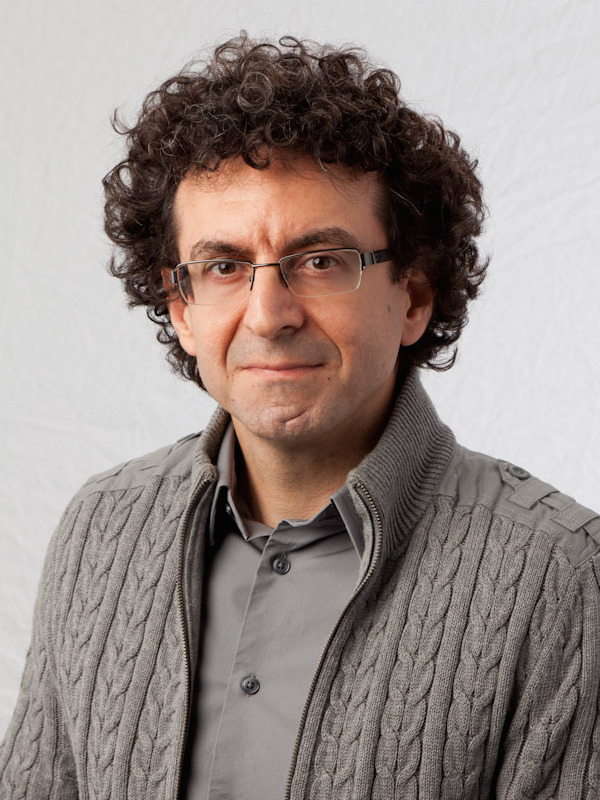
Burak Guneralp
· Associate ProfessorVerifiedTexas A&M University · Geography
Active 2003–2026
About
Burak Güneralp is an Associate Professor in the Department of Geography at Texas A&M University within the College of Arts and Sciences. His research interests encompass urbanization, global change, and sustainability, with a focus on human-environment interactions, systems analysis of socio-ecological problems, and geospatial analysis of land change. Güneralp has contributed to understanding the environmental impacts of urban growth, including urban land expansion, exposure to flood and drought hazards, and the implications for biodiversity and carbon pools. His work involves system dynamics and spatial logistic approaches to capture multiscalar feedbacks in urban land change, aiming to inform sustainable urban planning and environmental conservation.
Research topics
- Geography
- Computer Science
- Ecology
- Environmental science
- Artificial Intelligence
- Economics
- Cartography
- Agroforestry
- Demography
- Agronomy
- Economic growth
- Archaeology
- Development economics
- Economic geography
- Biology
- Mathematics
- Forestry
- Environmental protection
- Geology
- Computer vision
- Combinatorics
Selected publications
FlowsDT: A geospatial digital twin for navigating urban flood dynamics
Computers Environment and Urban Systems · 2026-02-20
articleOpen accessSenior authorCommunities worldwide increasingly confront flood hazards intensified by climate change, urban expansion, and environmental degradation. Addressing these challenges requires real-time flood analysis, precise flood forecasting, and robust risk communications with stakeholders to implement efficient mitigation strategies. Recent advances in hydrodynamic modeling and digital twins afford new opportunities for high-resolution flood simulation and visualization at the street and basement levels. Focusing on Galveston City, a barrier island in Texas, U.S., this study created a geospatial digital twin supported by 1D 2D coupled hydrodynamic models to strengthen urban resilience to pluvial and fluvial flooding. The objectives include: (1) developing a Geospatial Digital Twin (FlowsDT-Galveston) incorporating topography, hydrography, and infrastructure; (2) validating the twin using historical flood events and social sensing; (3) modeling hyperlocal flood conditions under 2-, 10-, 25-, 50-, and 100-year return period rainfall scenarios; and (4) identifying at-risk zones under different scenarios. This study employs the PCSWMM to create dynamic virtual replicas of urban landscapes and accurate flood modeling. By integrating high-resolution LiDAR data, land cover, and storm sewer geometries, the model can simulate flood depth, extent, duration, and velocity in a 4-D environment across different historical and design storms. Results show buildings inundated over 0.3 m (1 ft) increased by 5.7% from 2- to 100-year flood. Road inundations above 0.3 m (1 ft) increased by 6.7% from 2- to 100-year floods. The proposed model can support proactive flood management and urban planning in Galveston; and inform disaster resilience efforts and guide sustainable infrastructure development. The framework can be extended to other communities facing similar challenges. • Developed high-resolution geospatial digital twin for urban flood dynamics. • Integrated 1D- 2D hydrodynamic modeling with LiDAR and storm sewer data. • Simulated hyperlocal flood scenarios from 2-year to 100-year rainfall events. • Validated flood extents using social sensing and historical flood events. • Enabled real-time forecasting and immersive 4D flood visualization platform.
Accelerating urbanization drives physical isolation of global protected area networks
Research Square · 2026-05-04
preprintOpen accessSenior authorEnvironmental Research Letters · 2025-07-18 · 1 citations
articleOpen accessAbstract Forest restoration is widely recognized as a global priority to sequester carbon, conserve biodiversity, and support the livelihoods of rural and indigenous people. Contemporary interventions often target landscapes with a substantial human presence, and they regularly call for stakeholder participation during project implementation. However, there is a lack of empirical evidence linking local involvement with multiple forest benefits over long time horizons. Using a unique dataset of four decades of government-sponsored tree planting in North India, we find that both substantive local influence over planning projects and sustained control over management into the present—a favorable combination of long-term, empowered local governance—is associated with greater livelihood benefits and improvements in forest canopy cover over time. Our work points toward complex socio-ecological relationships, which may be explained by a positive interaction between empowered local governance, interventions that align with local needs, and long-term local care for planted forests. This implies that current financial commitments may need to be accompanied by institutional reforms that give communities meaningful control over planning and build capacities for self-governance that can endure into the future. In light of this work, we suggest that a paradigm of ‘people-centered restoration’ may offer the best opportunity to support long-term environmental goals in densely settled landscapes in the Global South.
Urban land-change futures: current understanding, challenges, and implications
npj Urban Sustainability · 2025-12-20 · 4 citations
articleOpen access1st authorCorrespondingUrban land-change forecasts can facilitate understanding causes and consequences of land changes due to urbanization. Yet, we do not know why these forecasts are generated, how reliable they are, and what they collectively tell us about future urbanization. Through a systematic review, we identified 601 papers reporting urban land-change forecasts: 518 papers for 322 case-study locations in 73 countries, 71 for large regions, and 12 for global analysis. In 44% of these, the motivation is simply forecasting future urban land. Accuracy and uncertainty assessments continue to be neglected. An ensemble of global forecasts suggests urban land may range from about 0.9(1) to over 2.5(5) million km2 by 2050(2100). Forecasts from the Global South are increasing but understanding of future urban land expansion remains uneven across city sizes and geographies. Progress on real-world relevance, reliability, and representativeness of urban land-change forecasts will greatly advance their potential to inform policies.
Aquatic Conservation Marine and Freshwater Ecosystems · 2025-11-01
articleABSTRACT Streams and rivers are increasingly threatened by intensifying land cover and land use (LCLU) change and streamflow alteration at a global scale. Stream fishes provide several ecosystem services and thus understanding fish responses to these anthropogenic changes benefits freshwater conservation and management. We compared historical survey data from 1956 to 1957 to replicated surveys conducted in 2023 to assess long‐term changes in taxonomic and functional fish assemblage structure brought on by anthropogenic alterations in the Neches River Basin of Texas. We assessed components of temporal beta diversity to find the predominant form of assemblage change, nestedness or replacement, and related the predominant component to LCLU and streamflow change at whole basin and river mainstem extents. We then examined the relationship between temporal beta diversity and functional dispersion for traits related to fish stream size preference, substrate preference, and capacity to host mussels. Replacement was the primary form of temporal beta diversity at both spatial extents. At the basin extent, streamflow alteration was negatively correlated with replacement, while at the mainstem extent, urbanisation was positively correlated with replacement. Taxonomic replacement was positively correlated with functional dispersion change at high urbanisation levels but showed no relationship at low urbanisation levels or across a gradient of streamflow change. This study leverages rare long‐term data to test for patterns in temporal beta diversity at taxonomic and functional levels rather than the more commonly used space‐for‐time substitutions and provides insight for management actions aimed at conserving stream fish assemblages in the face of LCLU and streamflow alterations.
Reimagining urban science for global sustainability: Five strategic research areas
Global Sustainability · 2025-01-01 · 2 citations
articleOpen accessAbstract Non-technical summary Cities, as complex systems, are faced with increasingly diverse and connected challenges across social, economic, environmental, and health domains. To help cities address these challenges, the Future Earth Urban Knowledge-Action Network developed a cross-disciplinary urban research agenda through expert elicitations and extensive consultation. Five research themes to guide urban sustainability research were identified including: (1) advancing urban sustainability transformations, (2) ensuring equity, (3) boosting innovation in low to lower-middle income countries, (4) managing complexity and systemic risks, and (5) navigating environmental change. Advancing this agenda will require collaboration across disciplines and geographies, transdisciplinary coproduction, and enhanced support to urban science. Technical Abstract Cities and urban regions are at the forefront of transformations toward global sustainability. As urbanization accelerates, there is increasing demand for cities to play multiple, complex and synthetic roles across social and environmental domains within and beyond their boundaries, for example driving economic development while mitigating and adapting to global environmental changes. To help cities in meeting this challenge, urban science, a rapidly growing field that includes inter- and transdisciplinary research, needs to expand and evolve, with clear priorities. Combining expert elicitation and community consultation, the Future Earth Urban Knowledge-Action Network developed a strategic research agenda for urban science for the next decade. The urban science research agenda describes five critical research themes for scientific advances: (1) accelerate urban sustainability transformations, (2) ensure equity and inclusivity, (3) amplify innovation from the low to lower-middle income countries, (4) negotiate complexity and systemic risks, and (5) navigate environmental change. Under each research theme, we review the state of the art, identify remaining gaps, and outline key research questions needing to be addressed to advance science toward urban transformations. Interconnections across, and enabling conditions to advance, these priority research themes are discussed. Social media summary Globally co-designed urban research agenda reveals pressing priorities for sustainability and resilience.
2024-03-08
preprintOpen accessSenior authorUrban growth and infrastructure development, especially road network growth, are two interactive, coevolving processes, and to understand long-term urban growth dynamics, it is crucial to model these two processes codependently. Hence, in this study, we present a modeling framework that is capable of capturing the feedback between urban land and road network in forecasting the amount and spatial patterns at large regional scales. While this proposed model with road length as a model parameter forecasts up to 1.2 times new urban areas globally under different scenarios, traditional models with no road length consideration forecasted 1.5–3.7 times more urban areas in 2050. We also forecasted the growth in road network length and pattern considering urban areas as the attraction point. Our model forecasted a substantial amount of new roads to be added to existing global road inventory by 2050– ranging between 1.67 million km and 3.37 million km under five Shared Socio-economic Pathways (SSPs) scenarios. We present Nigeria, Brazil and Bangladesh as case studies where significant new road development is forecasted in currently underdeveloped areas. The overall output from this codependent modeling process will inform the updated connectivity pattern along with an urban growth forecast. This approach enables us to capture the influence of transportation development and the ongoing large-scale transportation infrastructure development projects on urban growth at large, regional- and global- levels for more realistic assessments of the impacts of these projects on the environment.
Urban forestry & urban greening · 2024-02-23 · 8 citations
articleSenior authorInternational Journal of Disaster Risk Reduction · 2023-06-15 · 10 citations
reviewOpen accessIntensity of coastal hazards driven by changes in climate and land use have been increasing in many parts of the world, including the United States (U.S.), where 40% of the population lives near the coast. While many U.S. coastal settlements already have or are preparing hazard mitigation and adaptation plans, a comprehensive understanding of the challenges and opportunities in active participation of local communities to coastal hazard mitigation and adaptation has been lacking. We carried out a systematic review and identified 61 papers that studied local participation in mitigation and adaptation to coastal hazards in 61 locations across the U.S. We identified three prominent issues hampering effective participation in coastal hazard mitigation and adaptation. Of the 61 papers, half focused on a single issue, and nearly half elicited a single participant group, most commonly community residents. Our findings indicate that greater institutional capacity across all levels of governance, more efficient funding allocation mechanisms, and more bilateral communication between scientists and local stakeholders—including local decisionmakers and community residents—are the most essential challenges in developing effective participation in mitigation and adaptation to coastal hazards. We illustrate their importance in the context of resettlement, which presents particularly urgent governance, finance , and equity challenges, especially for remote Indigenous communities. Our findings highlight inequalities and challenges in governance and financing that are present even in a developed, prosperous country and are thus indicative of the type of challenges to local participation that can be experienced in any coastal mitigation and adaptation context.
Public Works Management & Policy · 2023-03-17 · 4 citations
articleOpen accessA properly functioning local stormwater drainage system is essential for mitigating flood risks. This study evaluates the quality of roadside drainage channels in three underserved communities in Texas: the Sunnyside neighborhood in Houston (Harris County), a neighborhood in the City of Rockport (Aransas County), and the Hoehn colonia (Hidalgo County). These communities have a history of flooding, are highly socially vulnerable, and rely on roadside ditches as their principal stormwater drainage system for runoff control. Mobile lidar (Light Detection and Ranging) measurements were collected for 6.09 miles of roadside channels in these communities. The raw lidar measurements were processed to evaluate drainage conditions based on the channel’s geometric properties, hydraulic capacity, and level of service. The assessment results are linked to a Geographic Information System (GIS) tool for enhanced visualization. Finally, the paper provides insights regarding the quality of stormwater infrastructure in the study communities and discusses their practical implications.
Frequent coauthors
- 58 shared
Anthony M. Filippi
- 54 shared
Forrest Fleischman
- 52 shared
Vijay Ramprasad
- 52 shared
Harry W. Fischer
- 52 shared
Pushpendra Rana
- 52 shared
Eric A. Coleman
- 51 shared
Bill Schultz
- 51 shared
Andong Ma
Zhujiang Hospital
Awards & honors
- Chinese Academy Of Sciences Fellowship for Young Internation…
- Honorable Mention, Dana Meadows Student Paper Award (2006)
- System Dynamics Society (2006)
- Honorable Mention, Dana Meadows Student Paper Award (2005)
- System Dynamics Society (2005)
- Resume-aware match score
- Save to shortlist
- AI-drafted outreach
See your match with Burak Guneralp
PhdFit ranks faculty by your research interests, methods, and publications — grounded in their actual work, not templates.
- Free to start
- No credit card
- 30-second signup