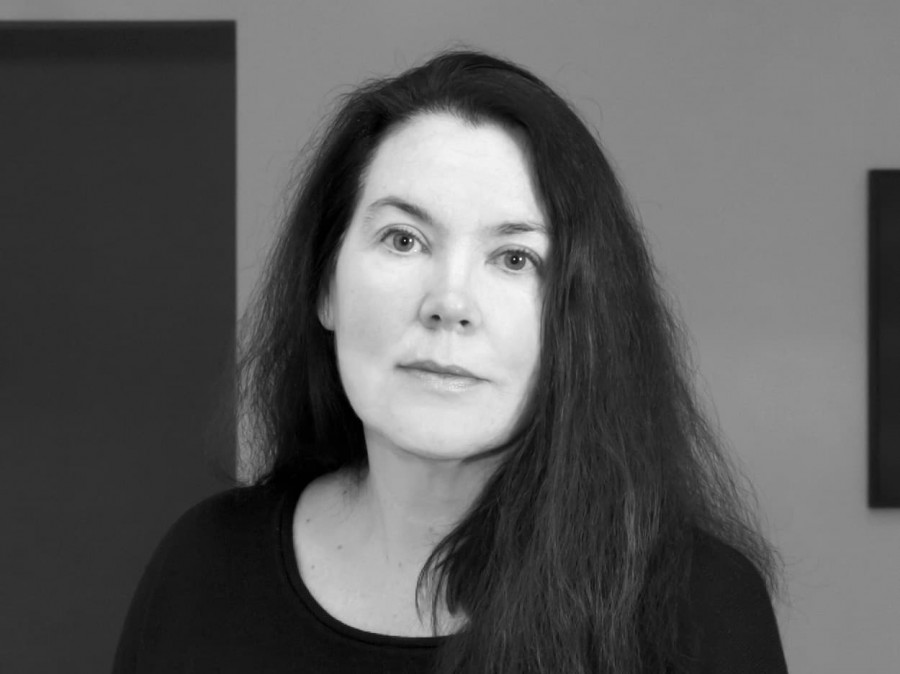
Brigid Doherty
· Associate ProfessorPrinceton University · German
Active 1995–2022
About
Brigid Doherty is an Associate Professor of German and Art & Archaeology at Princeton University, holding a joint appointment in both departments. She joined Princeton in 2003, coming from her previous position as Associate Professor in the Department of the History of Art and the Humanities Center at The Johns Hopkins University. Professor Doherty is an Associated Faculty member in the School of Architecture and serves on the Executive Committees of the Program in European Cultural Studies and the Program in Media + Modernity, as well as being a member of the Council on International Teaching and Research. From 2012 to 2019, she served as Director of the Program in European Cultural Studies and in 2019 received the President’s Award for Distinguished Teaching. Her research and teaching focus on the interdisciplinary study of twentieth-century art and literature, with particular emphasis on the history of German modernism and the relationships among visual arts, literature, and aesthetic and psychoanalytic theories. She has held numerous fellowships and visiting positions, including at the Courtauld Institute of Art, Harvard University, the Zentrum für Literatur- und Kulturforschung in Berlin, the Max Planck Institute for the History of Science, and the Clark Art Institute. Currently, she is completing a book on contemporary artist Rosemarie Trockel’s “Rorschach Pictures” for the One Work series published by Afterall Books.
Research topics
- Political Science
- Law
- Engineering
- Medicine
- Mechanical engineering
Selected publications
2. The Work of Art and the Problem of Politics in Berlin Dada
Berghahn Books · 2022 · 2 citations
1st authorCorresponding- Political Science
- Political Science
- Engineering
Berghahn Books · 2022
- Medicine
transcript Verlag eBooks · 2016-12-31
book-chapter1st authorCorrespondingManchester University Press eBooks · 2016-05-16
paratextOpen accessImage · 2016-06-15
book-chapter1st authorCorrespondingRilke’s Magic Lantern: Figural Language and the Projection of “Interior Action” in the Rodin Lecture
2015-11-11
book-chapter1st authorCorrespondingLess Sauvages than Others: Rosemarie Trockel’s ‘A Cosmos’
Afterall A Journal of Art Context and Enquiry · 2014-03-01
article1st authorCorrespondingBrigid Doherty examines the dynamics of authorship, influence and reproduction in Rosemarie Trockel’s exhibition ‘A Cosmos’ (2012–13).
2013-01-01 · 3 citations
bookWährend das Gesicht gern als natürlicher Ausdruck von Persönlichkeit und Charakter betrachtet wird, sind uns die Gesichter der nicht mehr Lebenden nur als Artefakte bekannt: als Produkte handwerklicher, künstlerischer, poetischer, medialer, technischer Verfahren. Ob Antlitz oder Mimik: Das Gesicht ist ein Bedeutungsfeld, auf dem die Spannung der menschlichen Gestalt - zwischen Kreatürlichkeit und Gottähnlichkeit, Erhabenheit und Infamie, Starre und Bewegung - ausgetragen wird. Gesichter untersucht Urszenen und Stationen aus der Kulturgeschichte des Gesichts und konzentriert sich dabei auf Übergänge zwischen leiblichen, materiellen Spuren und ikonischen bzw. textuellen Bildern, auf Verfahren, mit denen das Gesicht oder einzelne seiner Teile semantisiert, codiert, symbolisiert werden. Mit Beiträgen von Hans Belting, Georges Didi-Huberman, Brigid Doherty, Carlo Ginzburg, Jeanette Kohl, Albrecht Koschorke, Helmut Lethen, Thomas Macho, Gerhard Neumann, Anne-Kathrin Reulecke, Katharina Sykora, Monika Wagner, Sigrid Weigel und Hanns Zischler.
Monster, Medusa, Vera icon Gesichter und deren Verlegung in Rosemarie Trockels Kunst
2013-01-01 · 18 citations
book-chapter1st authorCorrespondingGesichter spielen eine herausragende Rolle in Rosemarie Trockels Kunst, wobei deren Unsichtbarkeit genau so pointiert Bedeutung anzeigen kann wie die Erscheinung von Gesichtsmerkmalen. Ihr Werk reflektiert oftmals die Bedingungen, unter denen Subjektivität entstehen kann. Solche Reflektionen ergeben sich über den Bezug zur Geschichte der bildenden Künste, zur Literatur und zur Psychoanalyse. Ich sehe Effekte dieses künstlerischen Ansatzes nicht alleine in den Werken, in welchen Trockel sich explizit mit Kunstgeschichte und literarischen Texten sowie psychoanalytischen Theorien auseinandersetzt, sondern auch dort, wo dies offenkundig nicht geplant oder bewusst geschieht – vielleicht sogar gerade hier. Im Folgenden konzentriere ich mich auf ein paar Werke Trockels, in denen, wie ich meine, die scheinbare An- oder Abwesenheit von Gesichtszügen entscheidend ist für die durch die Werke aufgeworfenen Fragen der Subjektivität und Sexualität, insgesamt deren Präsentation als Kunstwerk.
Paragraph · 2009-11-01 · 2 citations
article1st authorCorrespondingThis article analyses a footnote to the third version of the ‘Work of Art’ essay in which Walter Benjamin presents an account of ‘a certain oscillation’ between ‘cult value’ and ‘exhibition value’ as typical of the reception of all works of art. Benjamin's example in that footnote is the Sistine Madonna (1512–13), a painting by Raphael in the Dresden Gemäldegalerie that has played an important part in German aesthetics since Winckelmann. Benjamin's footnote on the Sistine Madonna, along with his critique of Hegel's aesthetics in that context, demand to be understood in relation to his remarks on Dada elsewhere in the artwork essay, and to his claim that technological reproducibility leads to the ‘actualization’ of the original reproduced. In that connection, the article concludes with an analysis of Kurt Schwitters's 1921 montage picture Knave Child Madonna with Horse.
Frequent coauthors
- 9 shared
Kerstin Barndt
Software (Spain)
- 9 shared
Manuela Achilles
University of Virginia
- 9 shared
Rainer María Rilke
- 9 shared
Hanne Darboven
University of Virginia
- 1 shared
Molly Nesbit
- 1 shared
Linda Nochlin
- 1 shared
Jill Dolan
- 1 shared
Katie Chenoweth
Princeton University
Awards & honors
- President’s Award for Distinguished Teaching (2019)
- Research Forum Visiting Professorship in Modern and Contempo…
- David and Roberta Logie Fellow at the Radcliffe Institute at…
- Affiliate Scholar at the Boston Psychoanalytic Society and I…
- Participant in Manifesta 7, the European Biennial of Contemp…
- Resume-aware match score
- Save to shortlist
- AI-drafted outreach
See your match with Brigid Doherty
PhdFit ranks faculty by your research interests, methods, and publications — grounded in their actual work, not templates.
- Free to start
- No credit card
- 30-second signup